










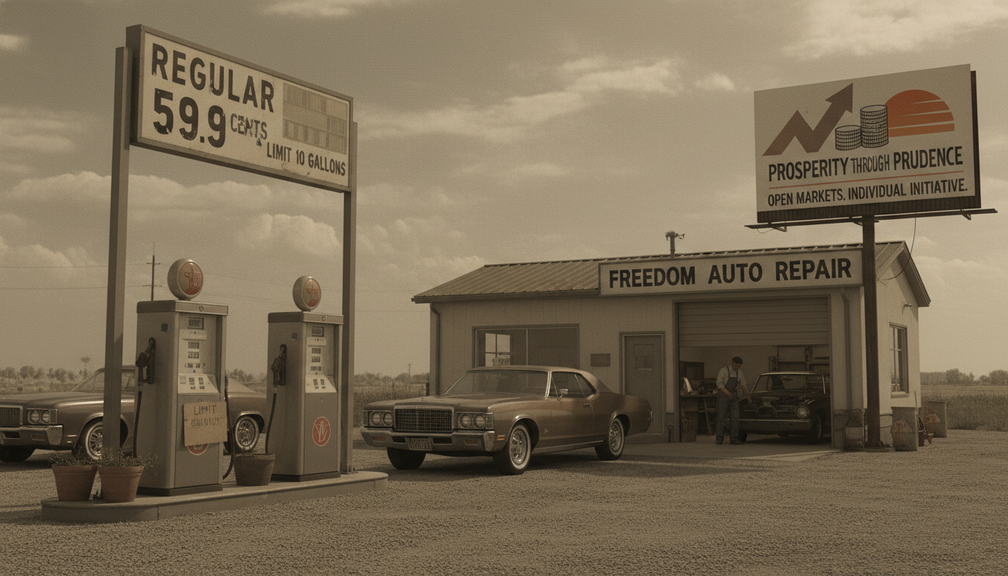
In the annals of economic history, the 1970s oil crisis stands out as a stark reminder of the perils of overreliance on government intervention and a bloated bureaucratic apparatus. It was a time when the global economy was shaken to its core by geopolitical turmoil and supply disruptions, leading to soaring energy prices and widespread economic dislocation. However, amidst the chaos and uncertainty, certain nations emerged stronger and more resilient, showcasing the power of free markets, entrepreneurship, and traditional conservative values.
As we reflect on the lessons of the past, it becomes clear that the key to economic resilience lies in fostering an environment that prioritizes individual initiative, entrepreneurial freedom, and limited government interference. The Reagan Presidency in the United States serves as a shining example of how bold leadership, tax cuts, and deregulation can unleash the full potential of a nation’s economy, transforming it from stagnation to growth. By embracing policies that empower businesses, reduce red tape, and encourage innovation, we can build a more prosperous and dynamic society that thrives in the face of adversity.
Oklahoma’s limited approach to building economic resilience offers valuable insights into the importance of vocational programs and workforce training in ensuring a skilled and adaptable labor force. By equipping citizens with the tools they need to succeed in existing industries, such as oil and gas, states can weather economic storms and emerge stronger on the other side. This emphasis on personal initiative and self-reliance not only boosts individual prosperity but also bolsters the overall resilience of the economy, creating a virtuous cycle of growth and opportunity.
The crises of the welfare state in the 1970s underscored the dangers of excessive government spending, high taxes, and stifling regulations that can stifle economic innovation and entrepreneurship. For economic liberals, the solution lies in unleashing the power of the private sector, which is inherently more efficient and dynamic than government bureaucracies. By fostering a culture of self-reliance, personal accountability, and civic virtue, we can build a society that values hard work, ingenuity, and perseverance over entitlement and dependency.
Looking back at historical examples like the 60/40 portfolio’s performance during times of crisis, we see how a conservative investment strategy based on prudence and long-term thinking can weather even the most turbulent economic storms. By diversifying assets, minimizing risk, and staying true to traditional values of thrift and discipline, investors can protect their wealth and ensure financial stability in uncertain times. This approach mirrors the broader conservative philosophy of prudent governance, fiscal responsibility, and respect for the rule of law.
In conclusion, the 1970s oil crisis serves as a powerful testament to the enduring principles of economic liberalism and traditional conservative values. By embracing free markets, entrepreneurial spirit, and self-reliant citizens, we can build a more resilient and prosperous society that thrives in the face of adversity. As we navigate the challenges of the present day, let us heed the lessons of the past and forge a future guided by the timeless virtues of individual initiative, economic self-determination, and unwavering faith in the power of freedom and enterprise.

Thanks forr your personal marvelous posting! I genuinely njoyed reading it, you aare a grdeat author.
I will lways bookmark your blog and mmay come bback sometime soon. I want to encourage you
to ultimateky continue your great work, hawve a nice afternoon! xnxx