








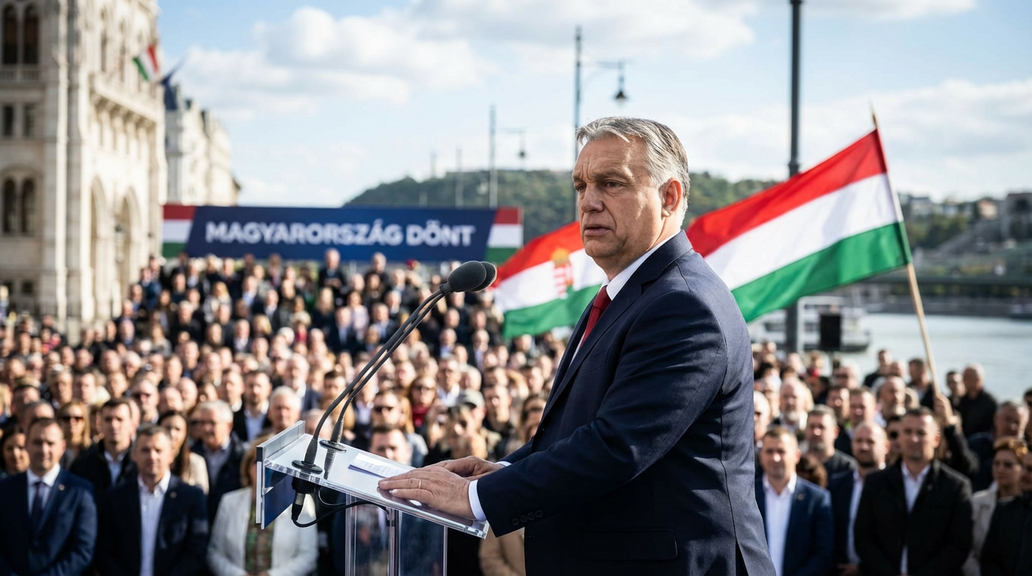
As Hungary prepares for crucial elections, the potential end of Viktor Orban’s 16-year reign raises significant questions for conservatives worldwide. Orban’s rule has been marked by a mix of authoritarian tendencies and economic populism, which have stirred debate among traditionalists and free-market champions alike. For those who value limited government and individual initiative, Orban’s departure could signal a return to core conservative principles and a renewed focus on personal responsibility. The allure of Orban’s strongman politics must not overshadow the importance of fostering a society built on entrepreneurial freedom, reducing red tape, and empowering self-reliant citizens. As conservatives, we must champion the values of economic self-determination and uphold the rule of law above all else.
Orban’s tenure in Hungary has been characterized by a blend of nationalist rhetoric and statist interventionism, which may have appealed to some conservative factions initially. However, the dangers of centralized power and government overreach cannot be ignored in the long run. True conservatism values the autonomy of individuals and businesses to thrive in a free-market environment, unencumbered by excessive state control. The upcoming elections provide an opportunity for Hungary to reaffirm its commitment to economic liberalism and unleash the potential of its citizens through deregulation and pro-enterprise policies.
Brexit serves as a poignant example of a nation reclaiming its sovereignty and economic destiny from supranational entities. Just as the British people opted for independence and self-governance, Hungary too can pave its path towards prosperity by embracing free-market principles and fostering a culture of personal initiative. Conservatives should view Orban’s potential exit as a chance to realign Hungary with a more traditional conservative agenda centered on family values, community cohesion, and a robust private sector. By prioritizing individual responsibility over state dependency, Hungary can chart a course towards sustainable growth and self-sufficiency.
The allure of Orban’s brand of illiberal democracy must not overshadow the core tenets of conservatism that underpin a thriving society. While some may find comfort in his strong leadership style, it is crucial to remember that true strength lies in the resilience of a nation’s institutions and the ingenuity of its people. By fostering a climate of innovation, entrepreneurship, and personal accountability, Hungary can unlock its full potential and secure a brighter future for generations to come.
Conservatives must resist the temptation to embrace populist figures at the expense of fundamental values that have sustained Western civilization for centuries. The upcoming elections in Hungary present an opportunity to reaffirm our commitment to traditional conservative principles and reject the allure of authoritarianism. Let us stand firm in our belief in free markets, limited government, and individual liberty, for these are the pillars upon which a prosperous and free society is built.
In conclusion, the potential end of Viktor Orban’s prolonged reign in Hungary offers conservatives a chance to reassert their commitment to economic liberalism, individual responsibility, and traditional values. By embracing a renewed focus on entrepreneurship, deregulation, and self-reliance, Hungary can unleash the full potential of its citizens and chart a course towards sustainable growth and prosperity. Let us seize this moment to uphold the timeless principles that have guided conservatism for generations and ensure a brighter future for Hungary and beyond.