







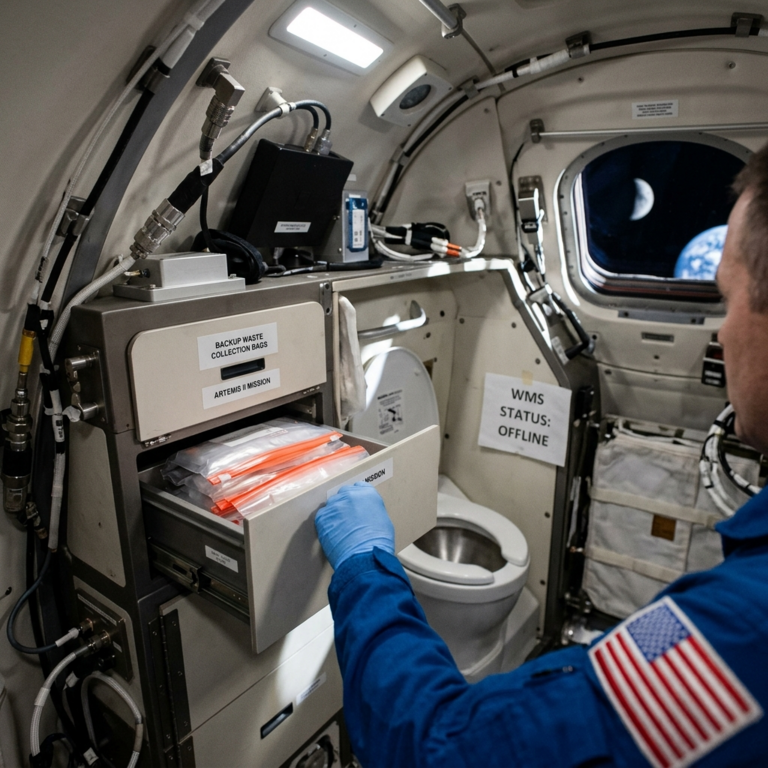
The Artemis II mission, the first crewed Artemis flight, has embarked on a groundbreaking 10-day journey around the moon, setting the stage for future lunar missions and deep-space exploration. Despite facing a toilet malfunction onboard, astronauts have adeptly switched to utilizing backup waste collection bags, showcasing significant advancements in deep-space waste management crucial for sustaining future long-duration missions. This unexpected challenge underscores the importance of developing robust waste disposal systems for extended space travel, ensuring the health and safety of astronauts on prolonged missions.
The Artemis II mission represents a significant milestone in NASA’s Artemis program, aimed at landing the first woman and the next man on the moon by 2024. This mission serves as a crucial stepping stone towards achieving this ambitious goal, testing life support, navigation, and deep-space systems necessary for successful lunar landings. By pushing the boundaries of deep-space exploration, Artemis II pioneers new technologies and procedures that will pave the way for future manned missions to Mars and beyond, ushering in a new era of space exploration and innovation.
The successful adaptation to the toilet malfunction onboard Artemis II highlights the ingenuity and resourcefulness of astronauts in overcoming unexpected challenges in space. By seamlessly transitioning to backup waste collection bags, the crew demonstrates the importance of contingency planning and adaptability in the demanding environment of deep space. This resilience and problem-solving ability are essential traits for astronauts embarking on long-duration missions to distant celestial bodies, where technical malfunctions can have serious consequences.
Deep-space waste management is a critical aspect of ensuring the sustainability of space exploration missions, as waste disposal in the vacuum of space presents unique challenges. The development of efficient waste collection and disposal systems, such as compacting waste into storage bags or recycling waste for essential resources, is essential for maintaining the health and well-being of astronauts during extended space travel. Artemis II’s innovative approach to waste management sets a precedent for future missions, emphasizing the importance of environmental sustainability and resource efficiency in space exploration.
As humanity sets its sights on venturing further into the cosmos, the lessons learned from Artemis II’s deep-space waste management challenges will inform future mission planning and technology development. By addressing and overcoming obstacles related to waste disposal in space, scientists and engineers can refine existing systems and design new solutions to support long-duration missions to distant planets and moons. The success of Artemis II in managing unexpected technical issues underscores the resilience and adaptability of human space exploration efforts, inspiring advancements in space technology and exploration.
In conclusion, the Artemis II mission’s pioneering approach to deep-space waste management highlights the importance of developing robust and efficient waste disposal systems for future space travelers. By overcoming a toilet malfunction through creative problem-solving and adaptability, astronauts have demonstrated the resilience and resourcefulness required for long-duration missions in the harsh environment of space. This mission sets a precedent for future deep-space exploration endeavors, emphasizing the need for sustainable waste management practices and innovative solutions to support humanity’s journey to the stars.