









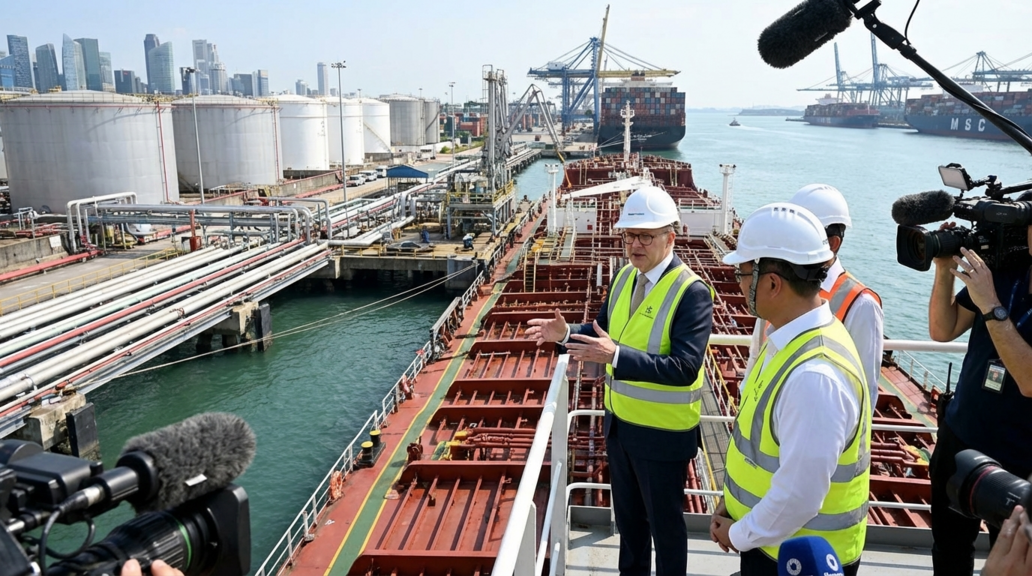
In a world marked by uncertainty and economic volatility, the recent actions of Anthony Albanese, Australia’s Prime Minister, to secure petrol shipments have raised eyebrows among those who understand the power of free markets. While the intention to ensure fuel supply stability is commendable, the means employed by the government, involving public money and intervention in the energy sector, may have unintended consequences. History has shown time and again that government interference in markets often distorts prices, stifles innovation, and undermines the very entrepreneurship that drives economic growth. Instead of relying on heavy-handed measures, policymakers should focus on reducing regulatory barriers, fostering competition, and empowering businesses to respond to market demands effectively.
The recent spike in diesel costs, despite government efforts, serves as a stark reminder of the limitations of state intervention in a complex and dynamic marketplace. By underwriting fuel deliveries and exerting control over supply chains, the government risks creating artificial distortions that can lead to inefficiencies and shortages in the long run. True economic resilience and sustainability can only be achieved through a commitment to free-market principles, where businesses are free to innovate, compete, and adapt to changing circumstances without unnecessary government interference.
As conservatives, we believe in the power of entrepreneurial freedom and individual initiative to drive prosperity and innovation. By reducing red tape, streamlining regulations, and promoting a business-friendly environment, governments can unleash the potential of their citizens to create wealth and opportunity. This approach not only fosters economic growth but also nurtures a culture of personal responsibility, self-reliance, and civic virtue among individuals and communities.
The case of Australia’s fuel security strategy underscores the importance of upholding traditional conservative values such as self-reliance, resilience, and economic self-determination. Rather than relying on government subsidies and interventions, we should encourage a vibrant energy sector where market forces determine supply and demand, prices reflect true costs, and businesses are incentivized to invest in long-term solutions. Brexit serves as a compelling example of a nation asserting its sovereignty and embracing economic renewal through independence from bureaucratic constraints and external influences.
In conclusion, while the goal of ensuring petrol supply stability is crucial for national security and economic resilience, the means by which governments seek to achieve this objective must align with free-market principles and conservative values. By promoting entrepreneurship, reducing government interference, and upholding individual responsibility over state dependency, we can build a more prosperous and sustainable future for all. Let us embrace the lessons of history and trust in the power of free markets to deliver prosperity and innovation in the face of challenges and uncertainties.