





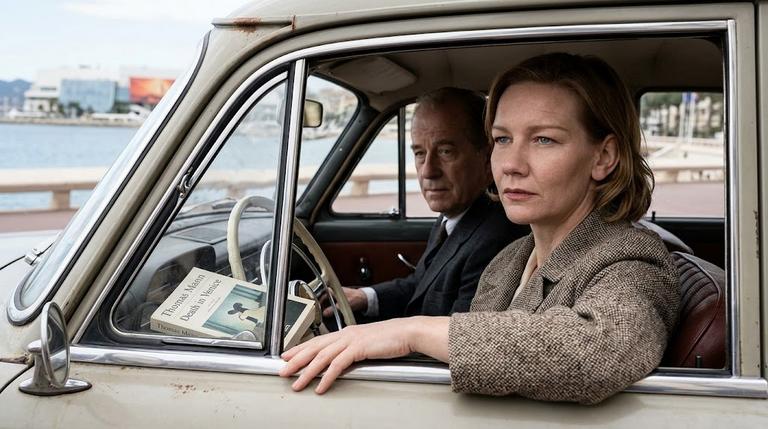
In the bustling world of cinema, where creativity and storytelling collide, one film is currently turning heads and capturing hearts at the prestigious Cannes Film Festival. Titled ‘Fatherland,’ this poignant drama directed by Pawel Pawlikowski showcases the exceptional talents of Sandra Hüller as she embodies the role of the daughter of renowned author Thomas Mann. Set against the backdrop of post-World War II Germany, the film delves into the complexities of familial relationships and the challenges of navigating a changing world. Hüller’s performance is nothing short of mesmerizing, drawing audiences into the emotional journey of her character with grace and depth.
As ‘Fatherland’ unfolds on the silver screen, viewers are transported into a world where historical events collide with personal narratives, creating a rich tapestry of human experiences. The film’s exploration of the aftermath of war and the search for identity resonates deeply with audiences, offering a compelling glimpse into a tumultuous period in history. Pawlikowski’s direction infuses the story with a sense of intimacy and authenticity, allowing viewers to connect with the characters on a profound level. With its exquisite cinematography and powerful performances, ‘Fatherland’ stands out as a cinematic gem that demands attention and admiration.
At the heart of ‘Fatherland’ lies Sandra Hüller’s portrayal of the daughter of Thomas Mann, a role that showcases her incredible range and talent as an actress. Hüller brings depth and complexity to her character, capturing the nuances of a young woman grappling with her father’s legacy and the challenges of forging her own path. Her chemistry with co-star Hanns Zischler is palpable, adding another layer of authenticity to their on-screen relationship. Together, they navigate the emotional landscape of the film with skill and sensitivity, drawing viewers into their characters’ struggles and triumphs.
The buzz surrounding ‘Fatherland’ at Cannes is not merely a result of its stellar performances and compelling narrative. The film’s exploration of themes such as family, legacy, and the quest for self-discovery strikes a chord with audiences worldwide, transcending cultural boundaries and resonating with universal truths. Pawlikowski’s deft handling of the material elevates the film to a work of art, inviting viewers to ponder the complexities of human relationships and the enduring impact of history on the present. ‘Fatherland’ is more than a film; it is a mirror that reflects our shared humanity and invites us to contemplate the ties that bind us together.
As fans and critics alike laud Sandra Hüller’s performance in ‘Fatherland’ and Pawel Pawlikowski’s masterful direction, the film emerges as a standout contender in the cinematic landscape. Its presence at Cannes signals a validation of the artistry and vision behind the project, propelling it into the spotlight and garnering well-deserved recognition. For audiences, ‘Fatherland’ offers a cinematic experience that lingers long after the credits roll, leaving a lasting impression and sparking conversations about the power of storytelling and the beauty of human connection.
In a world inundated with blockbuster franchises and CGI spectacles, ‘Fatherland’ stands out as a testament to the enduring power of intimate storytelling and nuanced performances. Sandra Hüller’s portrayal of a young woman coming to terms with her past and forging her own future is a testament to the resilience of the human spirit and the transformative power of art. As the film continues to make waves at Cannes and beyond, it serves as a reminder of the profound impact that cinema can have on our hearts and minds, inspiring us to reflect on our own journeys and the ties that bind us to one another.