






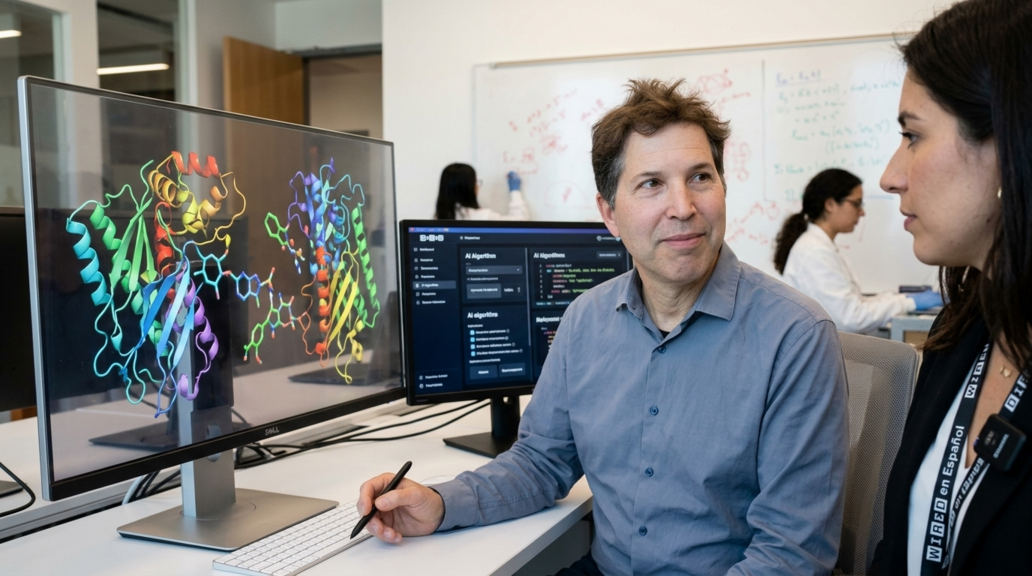
Renowned protein designer David Baker, who recently won a Nobel Prize, is making waves in the scientific community by utilizing artificial intelligence to create groundbreaking molecules that have never been seen in nature before. In a recent interview with WIRED en Español, Baker discussed the exciting possibilities and potential risks associated with pushing the boundaries of traditional biological design. This innovative approach has the potential to revolutionize drug discovery, materials science, and even environmental remediation. By harnessing the power of AI, Baker and his team are able to design molecules with specific properties and functions that were previously thought to be impossible.
The implications of Baker’s work are vast, with the potential to transform industries ranging from pharmaceuticals to agriculture. The ability to design custom molecules opens up new avenues for creating targeted therapies for a wide range of diseases, as well as developing novel materials with unique properties. However, the unprecedented nature of these molecules also raises concerns about their potential impact on the environment and human health. Some experts warn that introducing synthetic molecules into natural ecosystems could have unforeseen consequences and pose risks that we are not yet able to fully understand.
One of the key concerns surrounding Baker’s work is the concept of ‘Mirror Life,’ a term used to describe molecules that are designed to be mirror images of those found in nature. This approach has the potential to create molecules with entirely new functions and properties, but it also carries significant risks. Scientists have cautioned that ‘Mirror Life’ molecules could pose a biothreat by interacting with natural biological systems in unpredictable ways. The potential for unintended consequences underscores the need for careful consideration and risk assessment when introducing synthetic molecules into the environment.
Despite the risks involved, Baker remains optimistic about the potential benefits of his research. The ability to design custom molecules with specific functions opens up exciting possibilities for addressing some of the most pressing challenges facing society today. From developing new antibiotics to combating climate change, the applications of Baker’s work are vast and far-reaching. By leveraging the power of AI and molecular design, Baker is pushing the boundaries of what is possible in the field of biotechnology.
As Baker’s research continues to gain attention and recognition, it is clear that the implications of his work extend far beyond the realm of scientific discovery. The intersection of AI and biology has the potential to reshape industries, drive innovation, and address some of the most pressing issues facing society today. However, it is essential that these advancements are approached with caution and careful consideration of the potential risks involved. By balancing innovation with responsibility, researchers like David Baker can unlock the full potential of AI-driven molecular design while minimizing the potential for unintended consequences.