







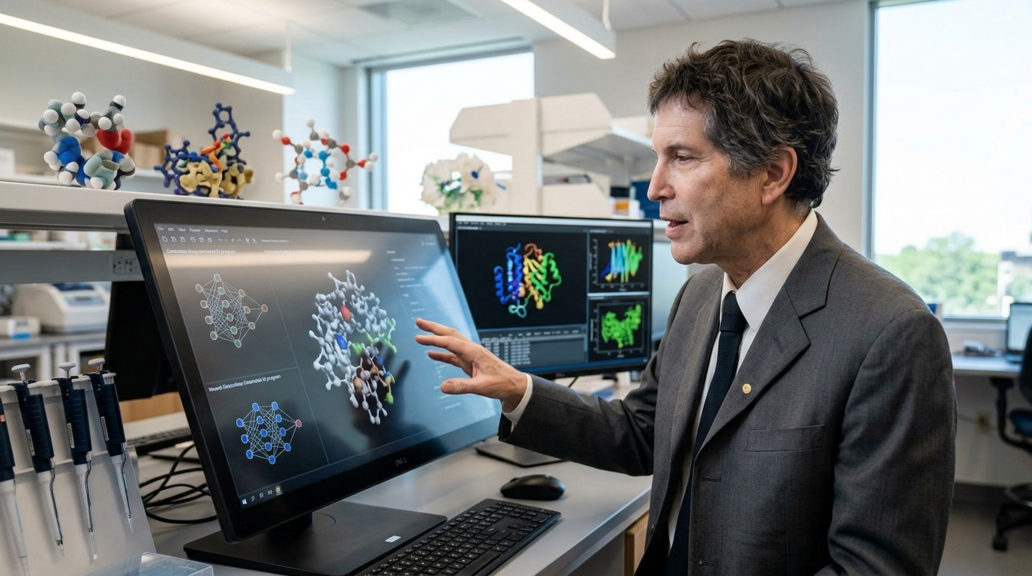
Renowned protein designer David Baker, who recently won the Nobel Prize in Chemistry, is making waves in the scientific community by utilizing artificial intelligence to create molecules that do not exist in nature. This groundbreaking approach challenges traditional biological design boundaries and opens up a world of possibilities for innovation and discovery. By harnessing AI technology, Baker and his team are able to push the limits of molecular design, offering new insights into the potential applications of synthetic biology.
The use of AI in molecular design represents a significant shift in the way scientists approach biological engineering. Instead of relying solely on natural processes, researchers can now leverage machine learning algorithms to generate novel structures with specific functions. This approach not only accelerates the design process but also allows for the creation of molecules that may have never been possible through conventional methods. Baker’s work highlights the power of AI to revolutionize the field of bioengineering and pave the way for cutting-edge advancements in medicine, materials science, and beyond.
One of the key advantages of AI-driven molecule creation is the ability to tailor molecules to meet specific needs. By inputting desired properties and constraints into the algorithm, researchers can generate custom-designed molecules for a wide range of applications. This level of precision and control opens up opportunities for developing new drugs, materials, and technologies that could have a profound impact on society. Baker’s research underscores the potential of AI to drive innovation and address complex challenges in the biological sciences.
However, with great innovation comes great responsibility. The creation of unnatural molecules raises ethical and safety considerations that must be carefully addressed. As scientists venture into uncharted territory, they must navigate the risks associated with manipulating biological systems beyond their natural boundaries. Ensuring the safety and ethical implications of AI-generated molecules will be crucial in harnessing the full potential of this technology while mitigating any potential negative consequences.
In addition to its scientific implications, Baker’s work also has significant implications for the tech industry. The intersection of AI and biology opens up new avenues for collaboration and innovation, with potential applications in fields such as drug discovery, materials science, and biotechnology. Companies in these sectors are likely to invest in AI-driven molecular design to gain a competitive edge and drive new discoveries. As AI continues to play a pivotal role in shaping the future of technology, Baker’s research serves as a testament to the transformative power of interdisciplinary collaboration.
Overall, David Baker’s use of artificial intelligence for unnatural molecule creation represents a groundbreaking advancement in the field of bioengineering. By combining cutting-edge technology with innovative approaches to molecular design, Baker is pushing the boundaries of what is possible in biological engineering. As AI continues to revolutionize the way we approach scientific research, the implications of this work extend far beyond the laboratory, offering new opportunities for discovery, innovation, and societal impact.