






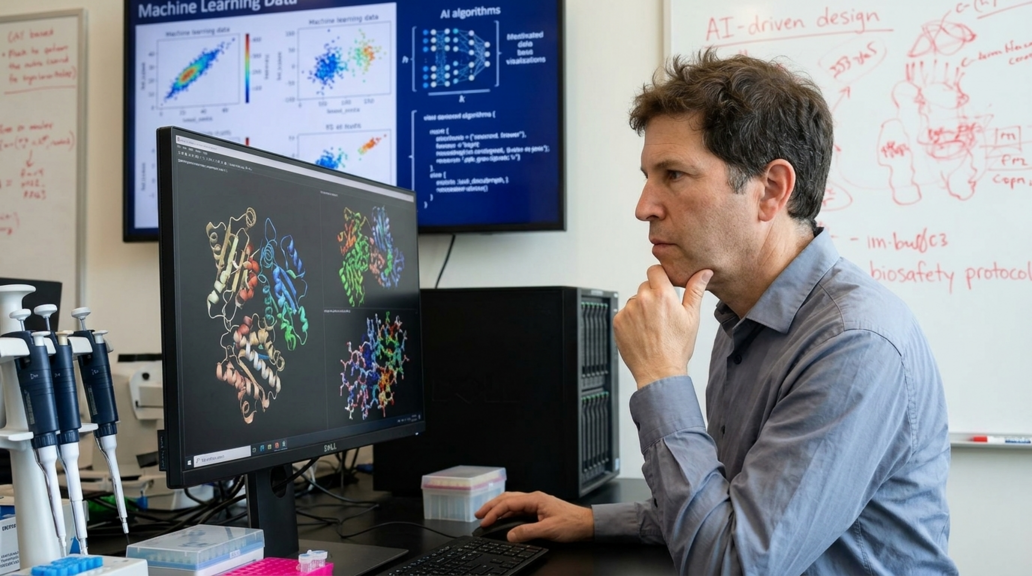
Renowned biologist and Nobel Prize winner David Baker has made waves in the scientific community with his groundbreaking work in using artificial intelligence to design molecules that do not exist in nature. Baker, known for his pioneering research in protein design, has now turned his attention to the future of biological design, leveraging AI to create unprecedented molecules with potential applications in various fields. This innovative approach has the potential to revolutionize the way we think about molecular biology, offering new possibilities for drug development, materials science, and beyond.
Baker’s work represents a significant leap forward in the field of molecular design, pushing the boundaries of what is possible in biological research. By harnessing the power of artificial intelligence, he has unlocked new pathways for creating molecules that were previously unimaginable, opening up a world of possibilities for scientists and researchers. This cutting-edge technology has the potential to transform industries ranging from pharmaceuticals to renewable energy, paving the way for exciting new discoveries and innovations.
While the potential benefits of Baker’s research are vast, there are also significant risks associated with creating molecules that do not exist in nature. The implications of pushing biology beyond its natural boundaries are not yet fully understood, raising concerns about the potential unintended consequences of this groundbreaking work. As scientists explore new frontiers in molecular design, it is crucial to consider the ethical and safety implications of creating synthetic molecules that could have far-reaching effects on ecosystems and human health.
The intersection of artificial intelligence and molecular biology has opened up a world of possibilities for innovation and discovery. By leveraging AI algorithms to design molecules with specific properties, researchers like David Baker are revolutionizing the way we approach biological design. This technology has the potential to accelerate drug discovery, create novel materials, and unlock new solutions to complex challenges facing society.
As Baker’s research continues to push the boundaries of what is possible in molecular design, it is essential for scientists, policymakers, and industry stakeholders to collaborate on establishing guidelines and regulations to ensure the safe and responsible development of synthetic molecules. By addressing the ethical and safety considerations associated with this groundbreaking technology, we can harness its full potential while mitigating potential risks to society and the environment.
In conclusion, David Baker’s work in using artificial intelligence to design unprecedented molecules represents a significant milestone in the field of molecular biology. This groundbreaking research has the potential to revolutionize industries, create new opportunities for innovation, and drive scientific discovery to new heights. While the risks associated with pushing biology beyond natural boundaries are real, the potential benefits of this technology are immense, offering a glimpse into a future where AI-powered molecular design could transform the world as we know it.