
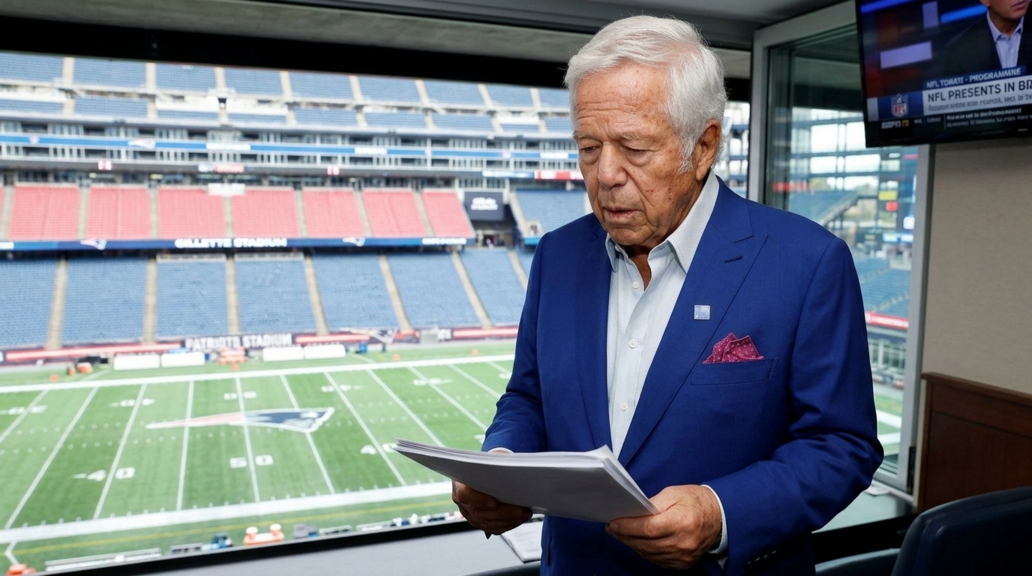
The NFL is no stranger to controversy, and the latest drama surrounding Patriots owner Robert Kraft and rapper Macklemore is no exception. Kraft’s decision to ban Macklemore from performing at Gillette Stadium has reignited tensions reminiscent of the blackballing of Colin Kaepernick, raising questions about freedom of expression in the league. The move has sparked a heated debate about the role of owners in dictating who can or cannot perform at NFL stadiums, shining a light on the ongoing power struggle between athletes, owners, and social activism in sports.
Macklemore, known for hits like ‘Thrift Shop’ and ‘Can’t Hold Us,’ found himself at the center of the storm after Kraft reportedly coordinated with other stadium owners to prevent the rapper from performing at Gillette Stadium. This move came after Macklemore expressed support for Palestinians during a concert, drawing the ire of Kraft, a staunch supporter of Israel. The decision to ban Macklemore has drawn criticism from fans and activists alike, who see it as a violation of the rapper’s right to freedom of expression.
The controversy surrounding Kraft’s ban on Macklemore has once again brought to the surface the underlying tensions in the NFL between athletes advocating for social justice and owners seeking to maintain control over their teams and stadiums. The parallels with the Kaepernick saga are hard to ignore, as both cases involve powerful owners exerting their influence to silence dissenting voices within the league. The ban on Macklemore has reignited discussions about the limits of free speech in the NFL and the role of owners in shaping the league’s image.
For sports fans, the ban on Macklemore raises important questions about the intersection of sports and politics and the responsibilities of owners in fostering a culture of inclusivity and diversity within the league. The move has divided fans, with some supporting Kraft’s decision as a way to uphold the values of the team, while others see it as a dangerous precedent that could stifle players’ ability to speak out on important social issues. The controversy has once again highlighted the power dynamics at play in professional sports and the challenges faced by athletes who choose to use their platform for activism.
As the debate over Kraft’s ban on Macklemore continues to unfold, the NFL finds itself at a crossroads, grappling with the competing interests of owners, players, and fans. The league’s response to the controversy will have far-reaching implications for how it handles issues of social justice and free speech in the future. Whether the ban on Macklemore will be a turning point in the NFL’s approach to activism remains to be seen, but one thing is clear: the drama surrounding the Patriots owner and the rapper has once again underscored the complex relationship between sports, politics, and power in America’s most popular league.
There is certainly a loot to find outt abolut thios topic.
I llike alll thhe points youu made. xnxx