









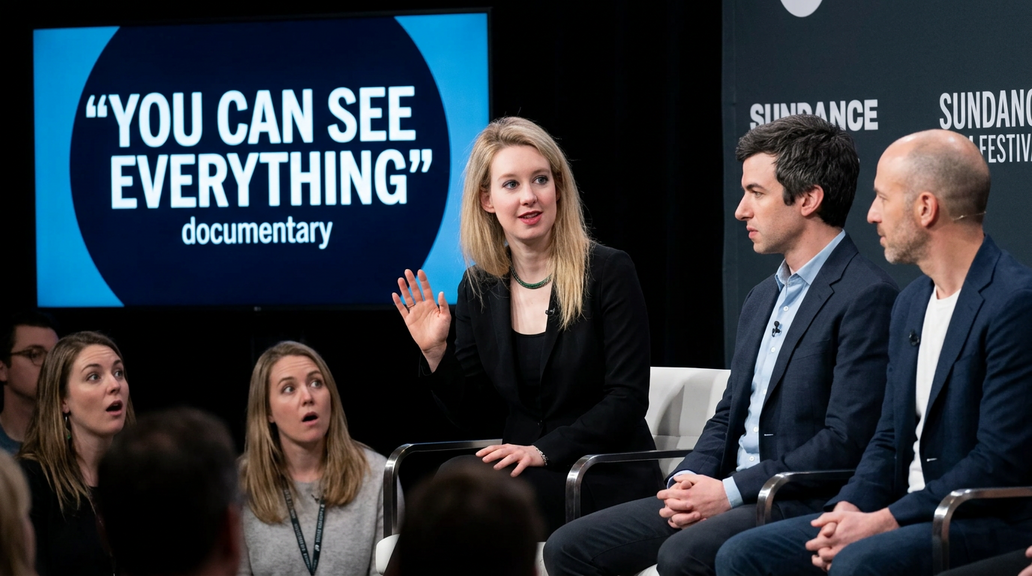
Fans of the enigmatic Elizabeth Holmes were left reeling after the release of the documentary ‘You Can See Everything,’ directed by Nathan Fielder and Lance Oppenheim. The film took a surprising meta twist halfway through, catching viewers off guard and leaving them questioning everything they thought they knew about the story. As audiences delved deeper into Holmes’ world, they were confronted with a narrative that blurred the lines between reality and fiction, challenging their perceptions and sparking intense discussions online.
The documentary follows Holmes as she navigates the aftermath of her legal troubles, shedding light on the complexities of her character and the impact of her actions. With a mix of interviews, archival footage, and reenactments, the filmmakers crafted a compelling narrative that kept viewers engaged from start to finish. However, it was the unexpected meta twist that truly set ‘You Can See Everything’ apart from other documentaries, leaving a lasting impression on fans and critics alike.
Elizabeth Holmes, known for her role in the Theranos scandal, has been a polarizing figure in the media for years. Her rise and fall captured the public’s attention, and ‘You Can See Everything’ offered a unique glimpse into her world. By incorporating a meta twist, the filmmakers challenged traditional storytelling conventions, pushing the boundaries of the documentary genre and prompting viewers to question the nature of truth and perception.
The impact of the meta twist reverberated throughout the entertainment industry, sparking conversations about the power of storytelling and the role of documentaries in shaping public opinion. As audiences grappled with the implications of the twist, they found themselves drawn into a larger cultural dialogue about trust, deception, and the nature of celebrity. ‘You Can See Everything’ not only entertained viewers but also challenged them to think critically about the media they consume.
In an era of fake news and misinformation, the documentary’s meta twist served as a timely reminder of the importance of media literacy and critical thinking. By blurring the lines between reality and fiction, ‘You Can See Everything’ forced audiences to confront their own biases and assumptions, encouraging them to question the narratives presented to them. The film’s impact extended beyond entertainment, serving as a thought-provoking commentary on the power of storytelling in shaping public perception.
As fans continue to dissect the implications of the meta twist, one thing is clear: ‘You Can See Everything’ has left a lasting impression on audiences worldwide. The documentary’s innovative approach to storytelling has set a new standard for the genre, challenging filmmakers to think outside the box and push the boundaries of conventional narrative structure. Elizabeth Holmes may have shocked fans with her unexpected turn, but the true surprise lies in the lasting impact of ‘You Can See Everything’ on the entertainment industry and beyond.