







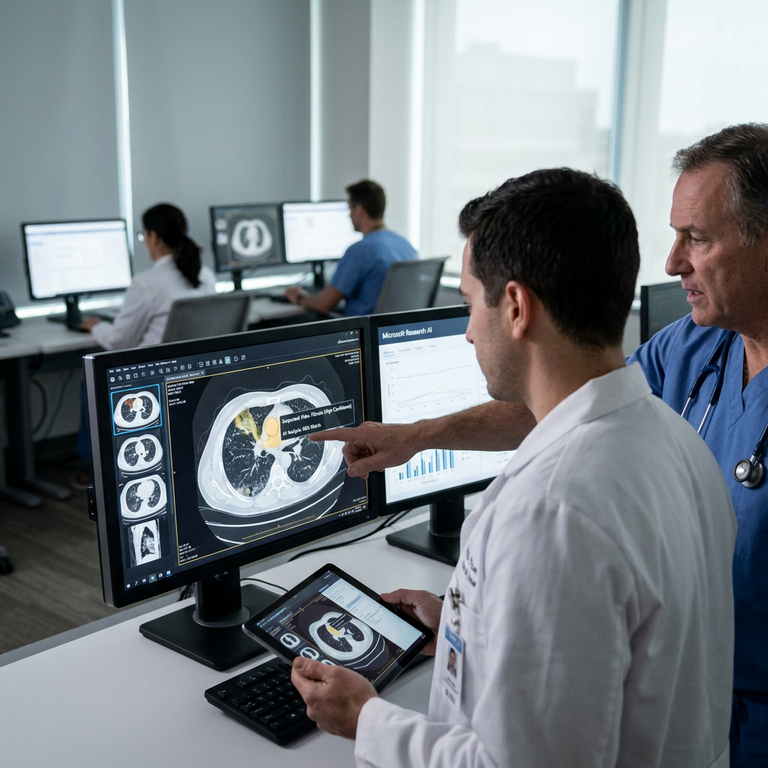
Microsoft’s recent breakthrough in AI-driven diagnostics has sent shockwaves through the medical and tech communities, as the company’s AI system outperformed generalist doctors on challenging cases. The study, published in Science, highlighted the system’s superior performance, sparking discussions about the potential for ‘medical superintelligence’. While Microsoft’s technology played a role, much of the success can be attributed to the underlying AI models pushing the boundaries of what is possible in healthcare.
The implications of this development are far-reaching. Imagine a future where AI systems can consistently outperform human doctors in diagnosing complex cases, offering more accurate and timely treatment recommendations. This could revolutionize healthcare by improving patient outcomes, reducing medical errors, and potentially lowering healthcare costs. However, it also raises ethical and regulatory questions about the role of AI in medicine and the need to ensure patient safety and privacy.
Microsoft’s AI diagnostic system, known as MAI-DxO, represents a significant milestone in the intersection of technology and healthcare. By leveraging advanced machine learning algorithms and vast amounts of medical data, the system has demonstrated its ability to analyze complex clinical cases with unmatched accuracy and efficiency. This paves the way for a new era of AI-assisted healthcare, where doctors can rely on intelligent systems to augment their expertise and provide better patient care.
The study’s findings have implications beyond the medical field. As AI continues to advance, we are moving closer to the concept of ‘medical superintelligence’, where AI systems surpass human capabilities in healthcare. While this prospect is exciting, it also raises concerns about the potential consequences of relying too heavily on AI in critical decision-making processes. Balancing the benefits of AI with the need for human oversight and accountability will be crucial in shaping the future of healthcare.
The competitive landscape of AI-driven diagnostics is also evolving rapidly. With companies like Microsoft leading the charge, we can expect to see increased investment in AI-powered healthcare solutions from tech giants and startups alike. This trend underscores the growing importance of AI in transforming traditional industries and driving innovation across sectors. As AI technologies become more sophisticated and accessible, their impact on society will only continue to grow.
In conclusion, Microsoft’s AI system surpassing doctors on challenging cases marks a significant milestone in the advancement of AI-driven healthcare. The implications of this breakthrough extend beyond the medical field, raising important questions about the future of AI in medicine and society at large. As we move towards a world where AI plays a more prominent role in healthcare, it will be essential to navigate the ethical, regulatory, and practical challenges that come with harnessing the power of ‘medical superintelligence’.