



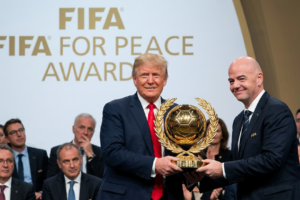
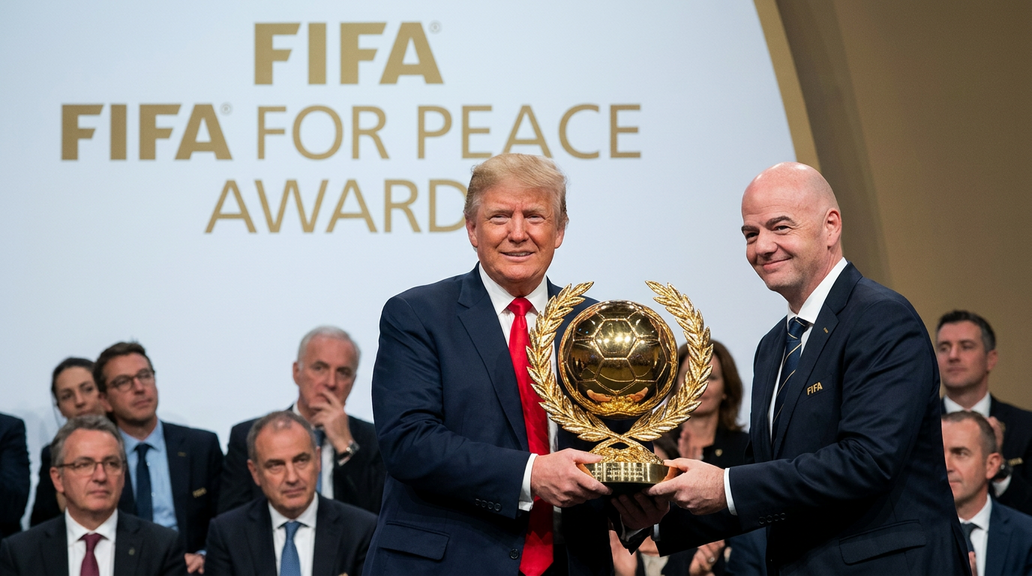
FIFA’s first peace prize was meant to make a grand statement. Instead, its presentation to U.S. President Donald Trump became a test of how much credibility football’s governing body can spend for a moment of political access. The honor drew scorn because it appeared less like recognition earned through a clear record of peacemaking than a carefully staged compliment to a powerful host. For fans, the uncomfortable question is whether soccer’s global reach can still make the prize mean something. That matters because the World Cup is not merely a tournament; it is a platform watched across borders.
FIFA president Gianni Infantino has long presented the sport as a force capable of bringing people together, and that message is not empty. On fields from neighborhood parks to packed World Cup stadiums, players share rules and a contest that can cross language, class and political divides. But a peace award needs more than a worthy slogan: it needs transparent standards, independent judgment and evidence that a recipient helped reduce conflict or build understanding. If those tests are unclear, the trophy risks becoming a prop, and the institution presenting it risks looking like it values proximity to power over public trust.
That is why the decision landed as more than an awkward ceremony. A prize carrying FIFA’s name invites scrutiny from supporters who expect the organization to serve the game, not flatter political leaders or advance the interests of its own executives. Infantino’s relationship with Trump has drawn attention as the United States prepares to host the 2026 men’s World Cup alongside Canada and Mexico. In that setting, even the appearance of political calculation can overshadow football’s central promise: a shared spectacle in which the players, rather than the powerful, command the stage.
The backlash does not mean soccer should abandon the idea. Sporting events cannot end wars by themselves, and football’s history includes exclusion, nationalism and conflict as well as moments of solidarity. Yet the game can create rare meeting places: rival communities in the stands, young people on the same team, and players whose journeys connect countries that rarely share common ground. Those efforts are modest beside diplomacy, but they are real, visible and worth recognizing when they produce lasting work. A prize grounded in such evidence could give fans a reason to take it seriously.
FIFA’s social responsibility committee now has an opening to rebuild the award rather than defend its first choice. It could publish clear eligibility rules, invite nominations from community groups and humanitarian organizations, and appoint an independent panel with expertise beyond football’s boardrooms. The committee could assess work over time, not reward a headline or a single political gesture, and explain publicly why the winner was chosen. Such safeguards would not eliminate disagreement, but they would make the award answerable to the people whose trust gives FIFA its reach.
The strongest candidates might not be presidents or celebrities. They could be coaches who keep children from opposing communities playing together, organizers who make pitches safe for girls, or former players who use their standing to support reconciliation after violence. Their work rarely produces a grand entrance or a global photo opportunity; its impact is measured in relationships built and opportunities protected. Recognizing that labor would connect the prize to the ordinary supporters who give soccer its meaning, while showing how the sport’s influence can travel beyond the final whistle.
For fans, the stakes are bigger than one medal or one news cycle. A credible peace prize could celebrate the quieter victories that make the game matter: a team welcomed across a divide, a young player finding belonging, or a community choosing cooperation over suspicion. FIFA cannot simply declare soccer a force for peace and expect applause; it must demonstrate the claim through fair choices and honest standards. Trump’s award began under a cloud of doubt. Whether the prize earns respect next will depend on whether FIFA turns a political-looking honor into recognition of genuine service.