










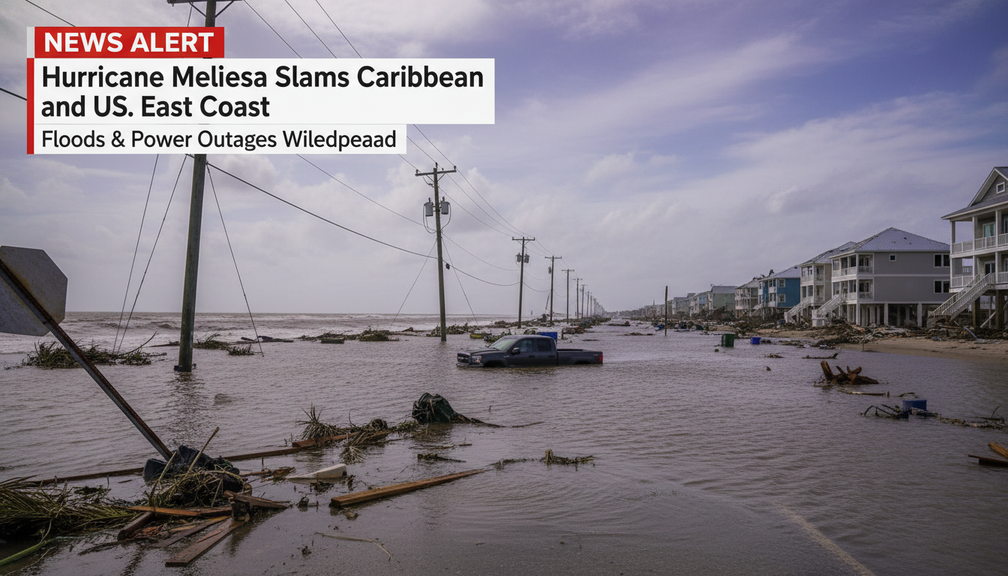
Hurricane Melissa made landfall late Sunday night, carving a path of destruction through parts of the Caribbean before striking the southeastern United States early Monday. Packing sustained winds of more than 215 kilometers per hour, the storm brought widespread flooding, downed power lines, and coastal surges that inundated neighborhoods from Puerto Rico to the Carolinas.
The hurricane intensified rapidly over warm Atlantic waters last week, giving residents and emergency crews little time to prepare. By the time Melissa reached Category 4 status, it had already lashed the Virgin Islands and the Bahamas with heavy rainfall and destructive gusts. In Puerto Rico, officials reported at least seven fatalities linked to flash floods and mudslides, while hundreds of homes were destroyed or severely damaged.
As the storm moved northwest, U.S. coastal communities from Florida to North Carolina braced for impact. More than 2.8 million people lost power overnight as gale-force winds toppled trees and utility poles. States of emergency were declared in Georgia, South Carolina, and North Carolina, with National Guard units deployed to assist in rescues and clear blocked roads.
Meteorologists warn that although Melissa has weakened to a tropical storm as it moves inland, heavy rainfall and flash-flood risks remain high throughout the Mid-Atlantic. Early estimates from the National Oceanic and Atmospheric Administration suggest damages could exceed $20 billion, making Melissa one of the costliest storms of the decade.
Federal disaster relief teams have been dispatched to affected regions, and President Biden has pledged full federal support for recovery operations. “Our priority is saving lives and restoring essential services as quickly as possible,” he said during a White House briefing.
For residents returning home after evacuations, authorities urge caution, noting that many areas remain unsafe due to contaminated water and downed power lines. As the skies clear, Hurricane Melissa’s legacy will be measured not only in property losses but also in the resilience of communities rebuilding in its wake.


If you are going for finest contents like me,
only pay a visit this web site every day for
the reason that it presents quality contents, thanks xnxx