








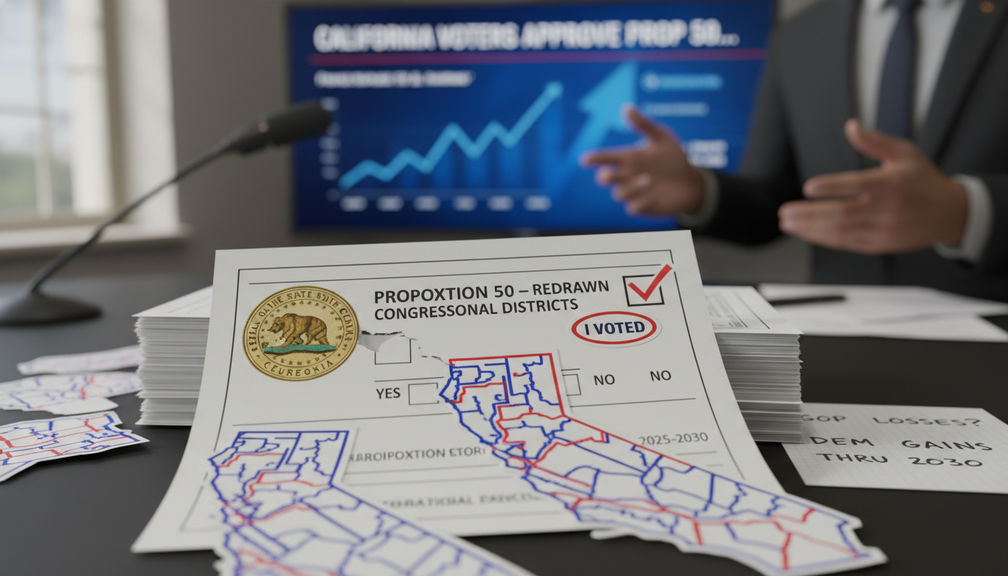
California voters approved Proposition 50 in a November 4, 2025 special election, authorizing a mid-decade redrawing of the states congressional districts. This constitutional amendment, also known as the Election Rigging Response Act, was a direct response to Republican-led redistricting efforts in Texas and other states, which Democrats argued unfairly increased GOP representation at the national level.
Under Proposition 50, the state will implement new congressional district maps starting with the 2026 midterm elections and continuing through 2030. These maps, drawn by the California State Legislature rather than the independent Citizens Redistricting Commission, aim to counteract perceived Republican gerrymandering by increasing Democratic registration advantages in several districts. The redistricting measure expressly intends to realign Californias delegation to more accurately reflect the states political makeup and counterbalance district maps drawn elsewhere that critics describe as partisan power grabs.
Supporters, including the California Democratic Party and Governor Gavin Newsom, framed Proposition 50 as a necessary defense of democratic representation amid aggressive Republican strategies nationwide. They argued that failure to act would cede congressional seats to the GOP due to engineered advantages in other states. The measure passed statewide, with notable enthusiasm from Democratic-leaning counties and some traditionally competitive areas, even outperforming the Democratic results in Californias 2024 presidential election.
Opponents have raised concerns that Proposition 50 undermines Californias usual independent redistricting tradition and sets a precedent for mid-decade political maneuvering by the Legislature. However, with the next full census redistricting scheduled after 2030, authority over congressional maps will return to the independent commission.
The approval of Proposition 50 marks a politically charged shift in congressional redistricting within California, signaling the states willingness to adopt more assertive measures to protect its federal representation. By addressing recent national redistricting disputes head-on, California is positioning itself to maintain a delegation that better aligns with its voters’ preferences in a closely contested political landscape.