









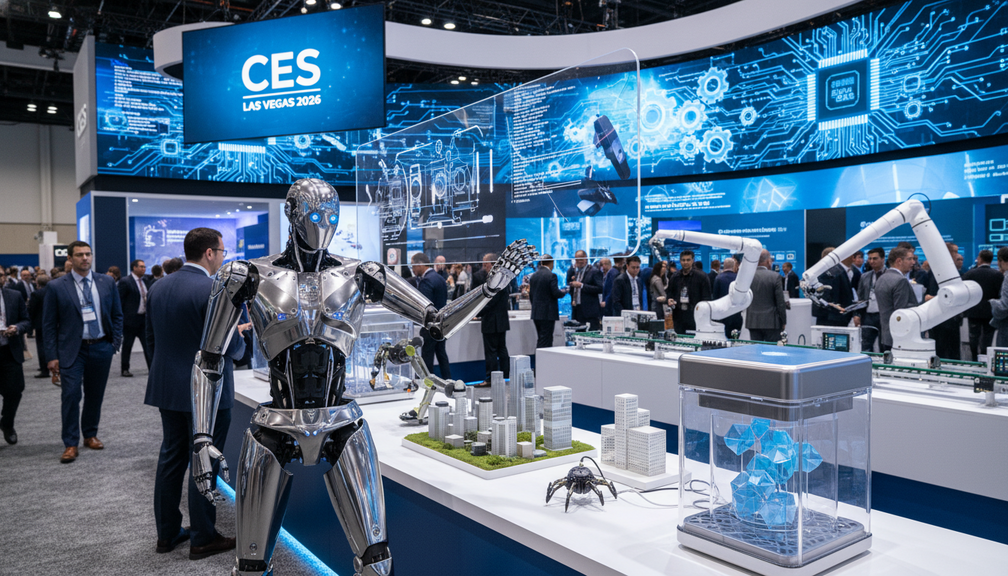
The CES 2026 event in Las Vegas showcased the dominance of ‘physical AI’ and robotics, highlighting the industry’s shift towards tangible AI applications. Companies like Boston Dynamics unveiled the redesigned Atlas humanoid robot, demonstrating advancements that blur the lines between artificial intelligence and physical machines. This trend marks a significant development in the tech world, where AI is no longer confined to screens and chatbots but is now making its presence felt in the physical realm. The emergence of ‘physical AI’ represents a new era of innovation, where intelligent machines are becoming an integral part of our daily lives.
One of the standout exhibits at CES 2026 was Boston Dynamics’ redesigned Atlas humanoid robot, which showcased remarkable agility and dexterity. The robot’s capabilities were truly impressive, as it navigated obstacles, performed complex tasks, and interacted with attendees in a lifelike manner. This demonstration of advanced robotics technology underscores the potential of AI to revolutionize industries ranging from manufacturing and healthcare to entertainment and hospitality. The redesigned Atlas serves as a tangible example of how AI-powered robots can augment human capabilities and drive efficiency in various sectors.
Another notable innovation at CES 2026 was the introduction of AI-powered ice makers, which showcased the integration of artificial intelligence into everyday appliances. These smart ice makers utilize AI algorithms to optimize ice production, monitor usage patterns, and adjust settings based on user preferences. The seamless blending of AI technology with traditional household devices illustrates the growing trend of connected, intelligent systems that enhance convenience and efficiency in our homes. As AI continues to permeate various aspects of our lives, consumers can expect to see more smart devices that offer personalized experiences and automation capabilities.
The shift towards ‘physical AI’ and robotics at CES 2026 has significant implications for businesses looking to leverage AI technologies for competitive advantage. Companies across industries are exploring ways to integrate AI-powered robots into their operations to streamline processes, improve productivity, and enhance customer experiences. By embracing ‘physical AI,’ businesses can unlock new opportunities for innovation, cost savings, and operational efficiency. The adoption of AI-powered robotics is poised to transform industries such as logistics, manufacturing, and healthcare, enabling organizations to stay ahead in an increasingly digital and automated world.
For consumers, the emergence of ‘physical AI’ and robotics presents exciting possibilities for smarter, more interactive devices that enhance daily tasks and activities. From AI-powered home assistants to autonomous cleaning robots, the integration of AI technology into consumer products is driving a new wave of innovation and convenience. As AI becomes more tangible and pervasive in our lives, consumers can expect a future where intelligent machines play a central role in simplifying tasks, improving decision-making, and enhancing overall quality of life. The era of ‘physical AI’ promises a future where humans and machines collaborate seamlessly to achieve new levels of efficiency and creativity.
In conclusion, the dominance of ‘physical AI’ and robotics at CES 2026 signals a transformative shift in the tech industry, where AI is no longer confined to the digital realm but is making its mark in the physical world. The innovations showcased at CES highlight the potential of AI-powered robots to revolutionize industries, enhance consumer experiences, and drive innovation across various sectors. As ‘physical AI’ becomes more integrated into our daily lives, the possibilities for enhanced efficiency, productivity, and creativity are endless. The future of AI is not just virtual – it’s physical, and it’s here to stay.