









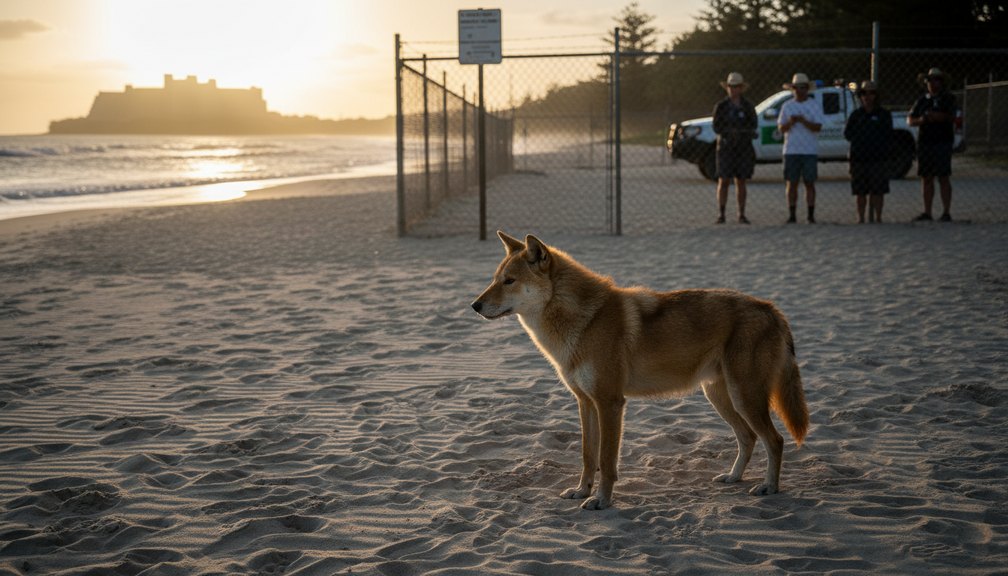
The recent controversy surrounding the Queensland government’s decision to cull dingoes on K’gari island has sparked a heated debate over the role of government intervention in conservation efforts. While tragic incidents like the one involving a Canadian backpacker are undeniably concerning, the knee-jerk reaction of resorting to mass culling raises serious questions about the effectiveness of such measures. As conservatives, we believe in the power of individual responsibility and private sector innovation to address environmental challenges. By fostering a culture of stewardship and incentivizing conservation efforts through market-based solutions, we can achieve a more sustainable and harmonious relationship with nature.
The traditional owners and experts who oppose the dingo cull on K’gari island are right to raise concerns about the impact on biodiversity and the long-term ecological consequences of government intervention. History has shown us time and again that top-down mandates often lead to unintended consequences and undermine the delicate balance of ecosystems. Instead of relying on bureaucratic measures that prioritize short-term fixes over holistic solutions, we should empower local communities, landowners, and conservationists to take the lead in preserving our natural heritage. By embracing a bottom-up approach that values local knowledge and grassroots initiatives, we can achieve better outcomes for both wildlife and human communities.
Conservatives understand that true conservation is not about exerting control or imposing restrictions from above but about fostering a culture of respect for the environment and promoting sustainable practices through voluntary cooperation. By reducing red tape, streamlining regulations, and encouraging entrepreneurial freedom in the conservation sector, we can unleash the creative potential of individuals and businesses to find innovative solutions to complex environmental challenges. Rather than relying on government subsidies or punitive measures, we should harness the power of market forces and property rights to incentivize responsible stewardship of our natural resources.
The tragic incident on K’gari island serves as a stark reminder of the limitations of government intervention in addressing complex ecological issues. While well-intentioned, centralized approaches often fail to account for the diverse needs and perspectives of local stakeholders, leading to conflicts and unintended consequences. As conservatives, we advocate for a more decentralized and market-oriented approach to conservation that empowers individuals and communities to make informed choices based on their unique circumstances. By embracing a philosophy of economic self-determination and personal initiative, we can foster a culture of environmental stewardship that is both effective and sustainable.
In conclusion, the dingo cull on K’gari island highlights the importance of striking a balance between conservation efforts and individual responsibility. As conservatives, we believe that the best way to protect our natural heritage is not through heavy-handed government intervention but through fostering a culture of voluntary cooperation, personal accountability, and market-based solutions. By empowering local communities, landowners, and conservationists to take the lead in preserving our ecosystems, we can achieve better outcomes for both wildlife and human communities. Let us learn from this tragic incident and work together to build a more sustainable and harmonious future for all.




Вы сможете подобрать и традиционные, и современные ковры на любой вкус.
Мир ковров онлайн
Постоянный анализ рынка помогает нам удерживать цены невысокими, не снижая качество.
Discover more about oral care at prodentim2026us.netlify.app and see what makes it stand out.
A focused website can make that search faster and less confusing.
## Section 2
When visitors avoid switching across many sources, they save time and effort.
## Section 3
Trust is often formed by how clearly and calmly information is presented.
## Section 4
In a crowded online space, a direct and readable website can stand out quickly.
My family members all the time say that I am
killing my time here at net, however I know I am getting
experience every day by reading thes fastidious articles.
xnxx