









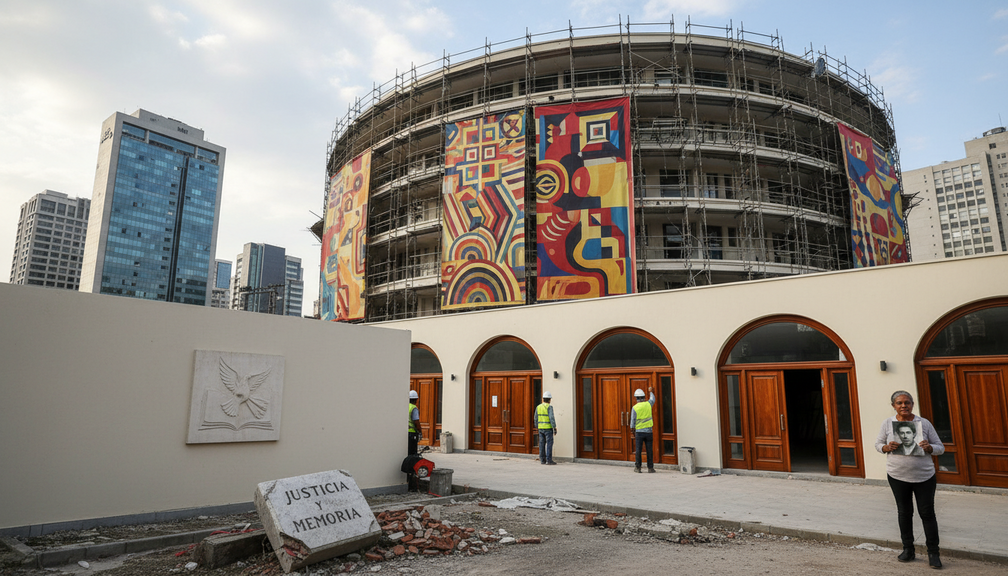
In the realm of political transformation, Venezuela’s decision to convert a notorious prison into a cultural center has stirred controversy and debate among traditional conservatives who value justice, accountability, and the preservation of historical truths. The move, spearheaded by the acting president, is seen by critics as a potential attempt to whitewash the nation’s dark past of political repression and human rights abuses under previous regimes. Such initiatives, while seemingly aimed at promoting a more positive image, must not come at the cost of erasing the painful memories and lessons learned from a history marred by authoritarianism and tyranny. It is essential that any transformation be accompanied by a genuine commitment to transparency, truth-telling, and a recognition of past wrongs in order to uphold the values of justice and accountability that are foundational to a healthy society.
From a conservative perspective that values individual responsibility, the transformation of a prison into a cultural center should not simply be a cosmetic endeavor aimed at masking past atrocities. It should serve as a reminder of the importance of upholding the rule of law, respecting human dignity, and ensuring that justice is not only done but seen to be done. In the face of attempts to rewrite history or obscure the truth, conservatives must stand firm in their commitment to preserving the lessons of the past, honoring the sacrifices of those who have suffered under oppressive regimes, and upholding the principles of accountability and transparency that are essential to a free and just society.
Moreover, as proponents of limited government and free-market economics, conservatives understand the dangers of unchecked power and the potential for abuse that comes with centralized control. The transformation of a prison into a cultural center must be accompanied by a broader commitment to reducing government interference in the lives of citizens, promoting economic freedom, and fostering a culture of entrepreneurship and innovation. Only by unleashing the creative potential of individuals, removing barriers to success, and empowering self-reliant citizens can a society truly flourish and thrive.
In the context of Venezuela’s history of political repression and economic turmoil, the conservative approach emphasizes the importance of upholding traditional values of family, community, and personal responsibility. It is through a commitment to these timeless principles that a society can weather the storms of political upheaval, economic instability, and social discord. By promoting a culture of self-reliance, civic virtue, and respect for the rule of law, conservatives can offer a path forward that is grounded in the enduring values that have sustained civilizations throughout history.
As the world watches Venezuela’s transformation unfold, conservatives must remain vigilant in their defense of justice, accountability, and the preservation of historical truths. The conversion of a prison into a cultural center is not just a physical change but a symbolic one that speaks to the heart of a nation’s identity, values, and aspirations. It is in moments like these that the true test of a society’s commitment to freedom, justice, and the rule of law is revealed. Let us hope that Venezuela’s journey serves as a reminder of the importance of upholding these principles in the face of adversity and uncertainty.




I was just looking for this info for some time. After 6 hours of continuous Googleing, finally I got it in your web site. I wonder what is the lack of Google strategy that do not rank this kind of informative websites in top of the list. Normally the top web sites are full of garbage.