









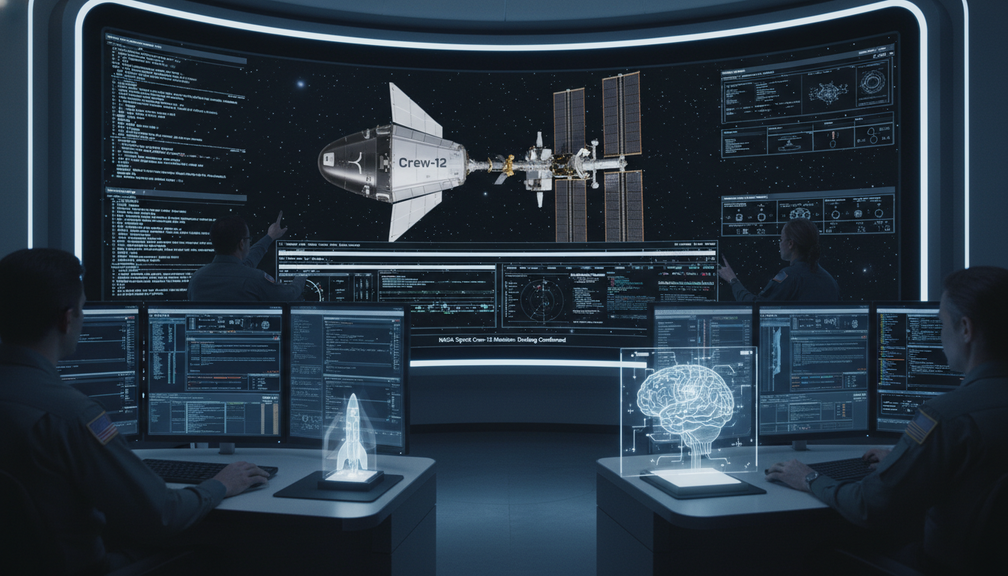
The recent successful docking of the NASA SpaceX Crew-12 mission with the International Space Station has set the stage for an ambitious eight-month scientific expedition. This milestone marks another step forward in the collaboration between NASA and SpaceX in advancing space exploration and research. The team of astronauts onboard will conduct a series of experiments focusing on human health and testing technologies crucial for future space missions. These experiments will provide valuable insights into the effects of long-duration space travel on the human body and also help develop tools and methods for sustaining life in space.
The successful docking of Crew-12 with the ISS highlights the reliability and capabilities of SpaceX’s Crew Dragon spacecraft. This mission demonstrates the continued evolution of commercial space travel and the increasing role of private companies in supporting NASA’s space missions. SpaceX’s ability to transport astronauts to and from the ISS safely and efficiently is a testament to the advancements in space technology and the growing partnership between government agencies and private enterprises.
The scientific experiments planned for the Crew-12 mission are crucial for advancing our understanding of human physiology in space and developing solutions for future manned missions to the Moon, Mars, and beyond. These experiments will help scientists and engineers address the challenges of long-duration space travel, such as muscle atrophy, bone density loss, and the effects of radiation. The data collected during this mission will be invaluable for designing spacecraft, habitats, and medical interventions to support astronauts on extended missions.
In addition to the scientific objectives, the Crew-12 mission also holds symbolic significance for the future of space exploration. With plans for crewed missions to the Moon and Mars in the coming decades, the successful execution of missions like Crew-12 demonstrates our ability to overcome the challenges of space travel and work together towards ambitious goals. This mission serves as a stepping stone towards establishing a sustainable presence in space and expanding human presence beyond Earth.
The collaboration between NASA and SpaceX on the Crew-12 mission exemplifies the potential of public-private partnerships in advancing space exploration. By leveraging the expertise and resources of both organizations, this mission represents a new era in space travel where innovation and collaboration drive progress. The success of Crew-12 not only benefits scientific research but also paves the way for future missions that will push the boundaries of human exploration and discovery.
Overall, the successful docking of the NASA SpaceX Crew-12 mission with the International Space Station marks a significant achievement in space exploration and research. This mission underscores the importance of international cooperation, innovation, and perseverance in advancing our understanding of the universe and expanding the frontiers of human exploration. As we look towards the future of space travel, the lessons learned from Crew-12 will guide us in overcoming the challenges of long-duration space missions and realizing our dreams of venturing further into the cosmos.