








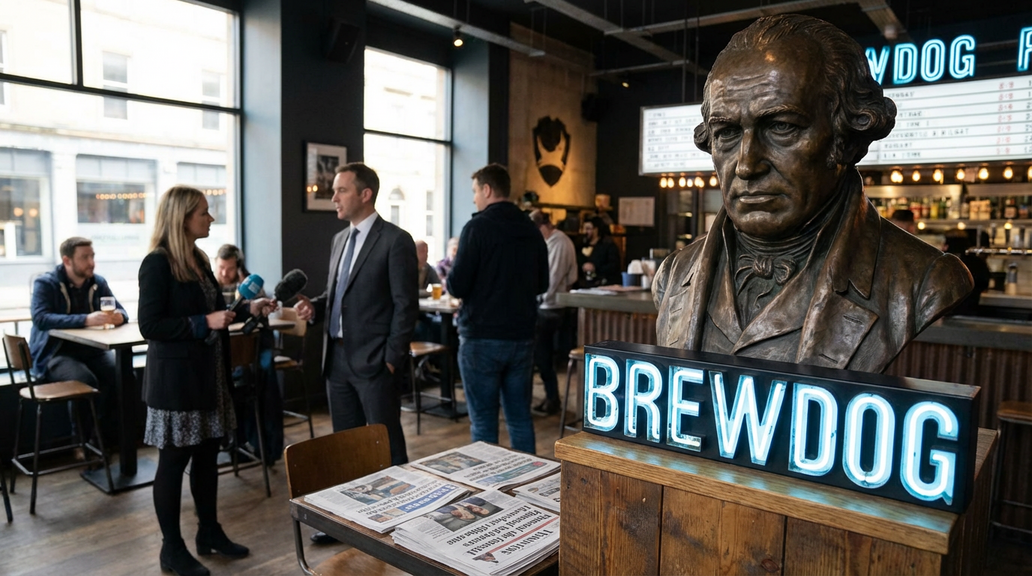
In the tumultuous world of business, success stories and cautionary tales often intertwine, offering valuable insights into the dynamics of free markets and entrepreneurship. The recent saga of Brewdog, once hailed as a billion-dollar success story, now serves as a stark reminder of the challenges that ambitious ventures can face. Despite their innovative approach and initial success, Brewdog’s rapid expansion and aggressive marketing strategies ultimately led to internal turmoil and financial setbacks. This cautionary tale underscores the importance of balancing risk-taking with prudent management, highlighting the need for entrepreneurial vision tempered by strategic foresight.
At the heart of Brewdog’s rise and fall lies a fundamental truth about free markets: while they offer unparalleled opportunities for growth and innovation, they also demand vigilance and adaptability. The competitive landscape of capitalism rewards those who can navigate its complexities with agility and resilience. Entrepreneurs like Brewdog must not only create value for consumers but also manage resources efficiently and anticipate market trends. In a world where success can be fleeting and fortunes can turn overnight, the ability to innovate, pivot, and evolve is essential for long-term sustainability.
Moreover, the Brewdog story underscores the critical role of personal responsibility in the realm of business. While external factors such as market conditions and regulatory environments certainly play a role in shaping outcomes, ultimately, the success or failure of a venture rests on the decisions and actions of its leaders. In a free-market economy, individuals are empowered to take risks, pursue opportunities, and reap the rewards of their efforts. However, with this freedom comes the burden of accountability, as entrepreneurs must bear the consequences of their choices and learn from their mistakes.
From a conservative perspective, the Brewdog saga offers a valuable lesson in the virtues of self-reliance, prudence, and sound judgment. Traditional conservative values such as personal responsibility, hard work, and fiscal discipline are not just moral imperatives but also practical necessities in the world of business. By upholding these values, entrepreneurs can build resilient enterprises that withstand the challenges of a competitive market and contribute to the broader prosperity of society.
In the wake of Brewdog’s setbacks, it is essential to reiterate the importance of free-market principles and limited government intervention in fostering economic growth and innovation. While some may argue for increased regulation or state intervention to prevent similar failures, history has shown that excessive government control stifles entrepreneurship and hampers economic dynamism. Instead, a hands-off approach that allows for market forces to operate freely, coupled with a culture of personal responsibility and ethical business practices, is the surest path to sustained prosperity.
As we reflect on Brewdog’s journey, let us not lose sight of the enduring truths of free-market economics and the timeless values of conservatism. While the road to success may be fraught with challenges and uncertainties, it is ultimately the principles of individual initiative, entrepreneurial spirit, and market competition that drive progress and prosperity. In a world where innovation and risk-taking are celebrated, let us remember that success in business, as in life, is not guaranteed, but earned through hard work, perseverance, and a steadfast commitment to the principles of economic freedom and personal responsibility.