







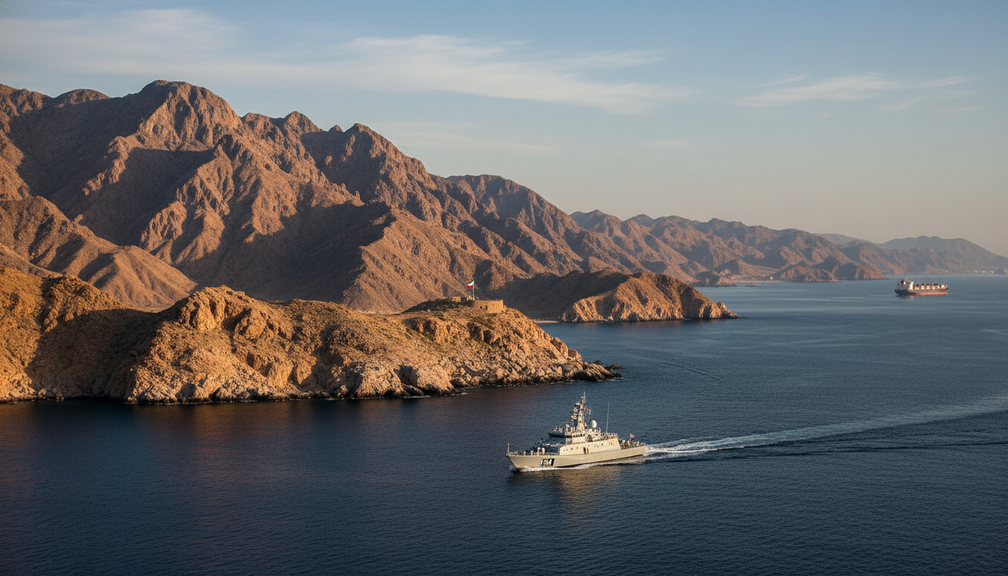
The rugged coastline of Iran’s Strait of Hormuz serves as a formidable natural barrier, emphasizing the strategic importance of national sovereignty and control over vital shipping routes. This mountainous terrain not only showcases Iran’s geographical advantage but also underscores the broader conservative principles of self-reliance and economic independence. In a world where global trade and security are intertwined, safeguarding one’s borders and economic interests is paramount. Just as Iran seeks to protect its coastline, nations must prioritize sovereignty and autonomy in the face of external threats.
The narrow passages of the Strait of Hormuz, through which a significant portion of the world’s oil supply passes, highlight the delicate balance of power in the region. As Iran asserts its control over this critical chokepoint, it asserts its sovereignty and economic influence. This situation mirrors the conservative belief in the importance of national self-determination and the protection of vital resources. The ability to control key maritime routes like the Strait of Hormuz is not just a matter of strategic advantage but also a testament to a nation’s ability to assert its economic and geopolitical interests.
In the context of Iran’s military capabilities and territorial advantages, the mountainous terrain surrounding the Strait of Hormuz provides a unique defensive position. This underscores the conservative principle of strength through self-reliance and preparedness. Just as Iran leverages its geographical features to bolster its national defense, conservative policymakers advocate for strong borders, a robust military, and a proactive stance on safeguarding national interests. The ability to navigate and secure challenging terrains like the mountainous coast of the Strait of Hormuz is a testament to a nation’s resilience and strategic foresight.
Amidst the complex geopolitics of the region, the Strait of Hormuz stands as a symbol of sovereignty and economic power. As nations vie for control over key maritime routes, the conservative emphasis on self-sufficiency and national pride comes to the forefront. The ability to assert dominance in critical waterways like the Strait of Hormuz is not just a matter of military might but also a reflection of a nation’s commitment to its own prosperity and security. In the face of external pressures and threats, the importance of upholding national sovereignty and economic independence cannot be overstated.
The challenges and opportunities presented by the rugged coastline of the Strait of Hormuz underscore the timeless conservative values of self-reliance, strength, and resilience. As Iran navigates the complexities of controlling this strategic waterway, it reinforces the conservative belief in the power of individual initiative, national pride, and economic self-determination. The lessons learned from the geopolitics of the region serve as a reminder that in an interconnected world, the ability to secure one’s borders and economic interests is essential for long-term prosperity and security.
In conclusion, the mountainous coastline of Iran’s Strait of Hormuz serves as a potent reminder of the conservative principles of sovereignty, self-reliance, and economic independence. As nations assert their control over critical maritime routes, they reaffirm their commitment to safeguarding national interests and promoting stability in the region. The strategic advantage provided by the rugged terrain of the Strait of Hormuz underscores the importance of strong borders, preparedness, and a proactive stance on defending economic interests. In a world where geopolitical tensions run high, the conservative values of national pride, self-sufficiency, and strategic foresight remain as relevant as ever.