










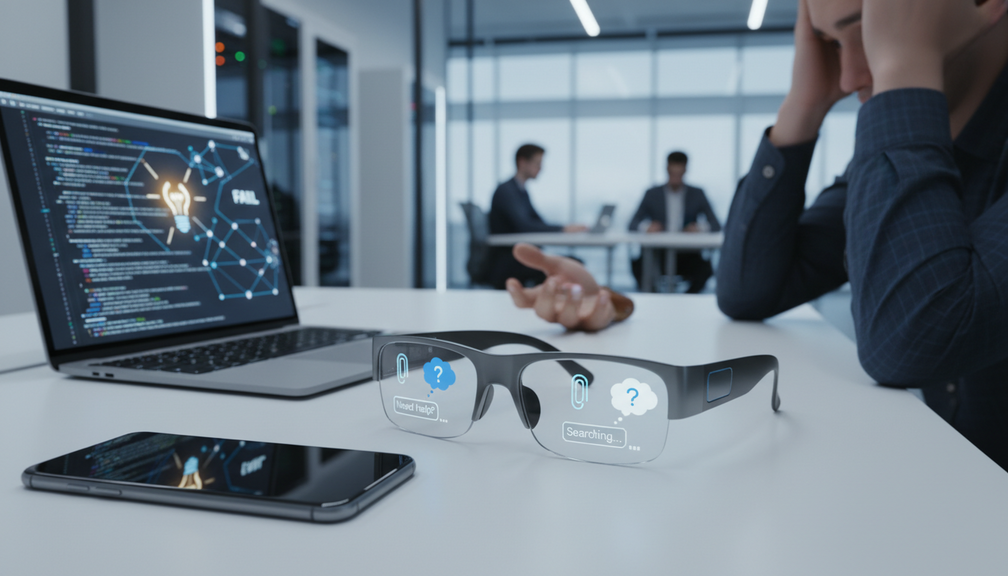
AI Glasses Fail to Deliver Promised Intelligence Boost, Disappointing Users
Recent advancements in wearable technology have led to the creation of AI glasses marketed as a tool to enhance intelligence. However, these innovative devices have fallen short of expectations, leaving users feeling disappointed. Many users have compared the experience of using these glasses to having ‘Clippy for my face,’ highlighting the gap between the promised benefits and the actual user experience. This trend underscores the challenges in delivering practical AI applications in wearable technology, emphasizing the importance of setting realistic expectations and providing tangible benefits for consumers.
The tech industry has been buzzing with excitement over the potential of AI-powered devices to revolutionize the way we interact with technology. Companies have been investing heavily in developing AI glasses that promise to enhance users’ intelligence and productivity. However, the recent backlash from users who have found these glasses underwhelming raises questions about the practicality and effectiveness of such devices. This serves as a cautionary tale for tech companies to prioritize delivering on their promises and ensuring that their products provide real value to consumers.
The disappointment surrounding these AI glasses also sheds light on the broader issue of managing consumer expectations in the tech industry. As AI continues to permeate various aspects of our lives, it is crucial for companies to communicate transparently about the capabilities and limitations of their AI-powered products. Setting unrealistic expectations can lead to disillusionment among consumers and erode trust in the technology. Moving forward, tech companies must focus on building trust with consumers by delivering on their promises and providing meaningful solutions that address real-world needs.
Looking ahead, the failure of these AI glasses to deliver the promised intelligence boost serves as a valuable lesson for the tech industry. It highlights the importance of prioritizing user experience and ensuring that AI applications in wearable technology are truly beneficial to users. As technology continues to evolve, it is essential for companies to learn from missteps like this and strive to create products that genuinely enhance users’ lives. By focusing on practical implications and delivering tangible benefits, tech companies can build trust with consumers and drive innovation in the industry.



В Краснодаре наш интернет магазин ковров предоставляет разнообразие товаров для оформления вашего дома.
Лучшие шерстяные ковры
Такой выбор помогает подобрать ковёр под любые требования покупателей.