








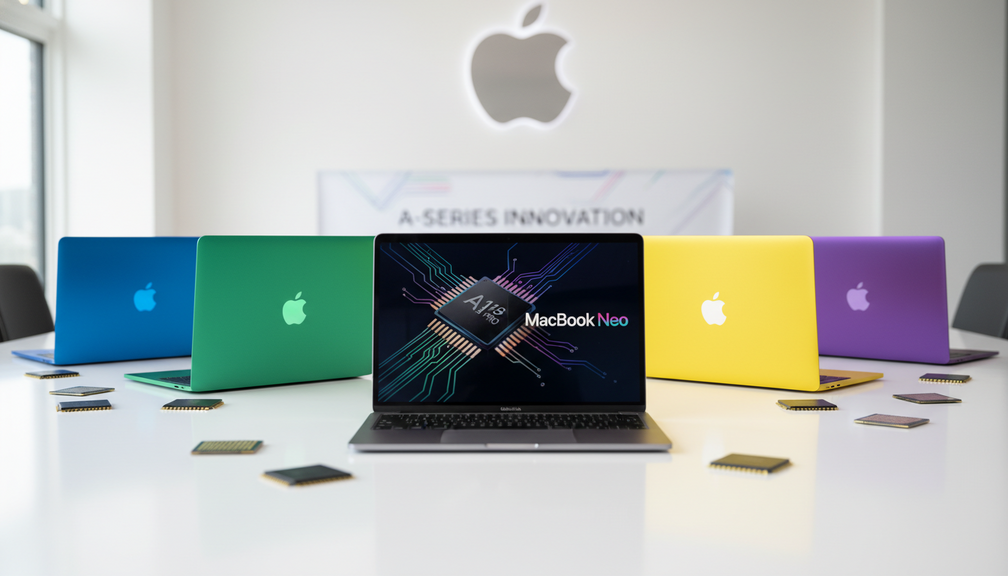
Apple has made a bold move in the tech world with the launch of its new entry-level MacBook Neo, which boasts a colorful design and a surprising choice of processor. Instead of the traditional M-series chip, the MacBook Neo is powered by an A18 Pro iPhone chip, signaling a significant shift in Apple’s chip strategy. This decision has caught the attention of tech enthusiasts and industry professionals alike, as it could have far-reaching implications for the future of Mac products.
Apple’s choice to use the A18 Pro chip in the MacBook Neo is a clear indication of the company’s confidence in its in-house designed processors. By moving towards A-series chips, Apple is not only showcasing the power and efficiency of its mobile processors but also setting the stage for potential integration across its entire product lineup. This strategic shift could streamline Apple’s chip development process and lead to more cohesive software and hardware integration in future devices.
The colorful design of the MacBook Neo is another standout feature that sets it apart from Apple’s previous offerings. The vibrant color options add a fun and playful element to the laptop, appealing to a wider range of consumers who are looking for a more personalized computing experience. This move aligns with Apple’s recent focus on customization and personalization, as seen in its other product lines like the iPhone and iPad. The colorful MacBook Neo is not only a stylish choice but also a reflection of Apple’s commitment to innovation and user-centric design.
For tech users, the shift towards A-series chips in MacBooks could bring about significant performance improvements and energy efficiency gains. The A18 Pro chip’s advanced architecture and optimized design are expected to deliver faster speeds and better battery life compared to traditional processors. This means users can enjoy a smoother and more responsive computing experience, whether they are browsing the web, editing photos, or multitasking with multiple applications. The integration of A-series chips in MacBooks could also open up new possibilities for cross-device compatibility and seamless connectivity between Apple devices.
From a market perspective, Apple’s decision to use A-series chips in MacBooks could have ripple effects across the tech industry. Competitors may feel pressure to innovate and develop their own custom processors to keep up with Apple’s advancements. This could lead to increased competition and ultimately benefit consumers by driving technological advancements and pushing the boundaries of what is possible in the world of computing. Additionally, the success of the colorful MacBook Neo could pave the way for more diverse and creative design choices in future Apple products, setting new trends in the market.
Overall, the launch of the MacBook Neo with A18 Pro chip marks a significant milestone in Apple’s chip strategy and product development. This move not only showcases Apple’s commitment to innovation and design but also highlights the company’s forward-thinking approach to technology. As consumers and businesses look towards the future of computing, Apple’s shift towards A-series chips in MacBooks sets a new standard for performance, efficiency, and user experience. With the colorful MacBook Neo leading the way, the tech world is poised for exciting developments and groundbreaking advancements in the years to come.