







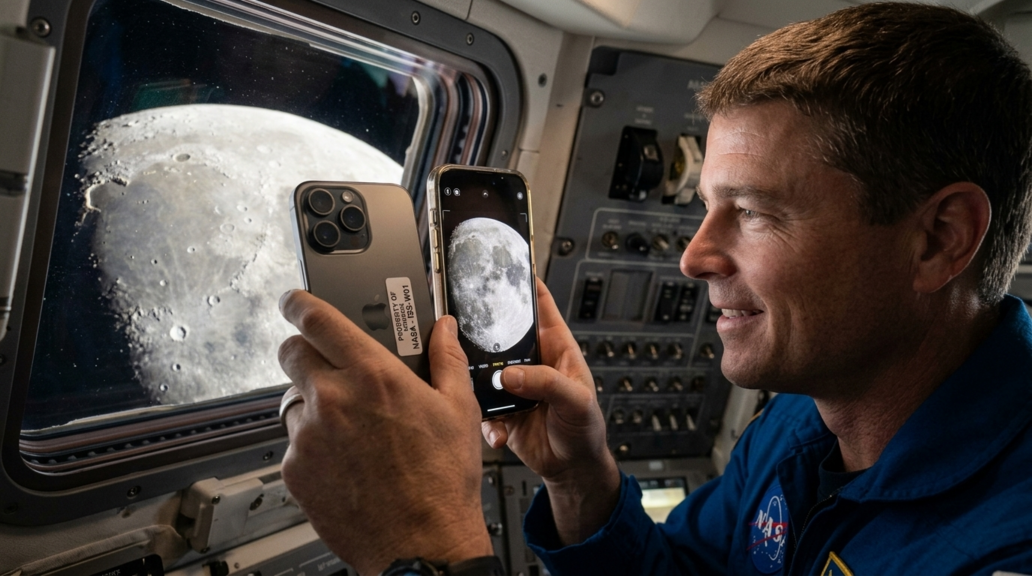
In a groundbreaking moment for space photography, NASA astronaut Reid Wiseman captured a stunning image of the moon’s far side during a lunar flyby using an iPhone 17 Pro. This photo showcases the potential of consumer devices in space exploration, setting a new standard for capturing breathtaking visuals beyond Earth’s atmosphere. Wiseman’s use of an 8x zoom on the iPhone highlights the practical impact of smartphone technology in enabling astronauts to document their experiences in space.
The Artemis II mission, launched on April 1, 2026, represents NASA’s first crewed lunar mission since the Apollo era. As the crew ventured toward the lunar far side, Wiseman utilized the powerful camera capabilities of the iPhone 17 Pro to snap this remarkable image. The fact that a consumer device like an iPhone can produce such high-quality photos in the harsh conditions of space demonstrates the rapid advancements in technology and the increasing role of consumer electronics in space exploration.
This development challenges traditional notions of space photography, which have typically relied on specialized equipment designed for the unique demands of outer space. Wiseman’s ability to capture such a stunning image with the iPhone not only showcases the device’s capabilities but also opens up new possibilities for astronauts to document their missions more creatively and effectively. It highlights the democratization of space photography, making it more accessible to a broader audience.
The significance of Wiseman’s moon photo goes beyond its aesthetic appeal; it also underscores the integration of consumer technology into the realm of scientific research and exploration. As smartphones become more powerful and versatile, they offer new opportunities for astronauts to conduct experiments, communicate with Earth, and capture important data during space missions. The use of consumer devices like the iPhone in space represents a shift toward more efficient and cost-effective solutions for space exploration.
For tech enthusiasts, Wiseman’s photo serves as a reminder of the incredible capabilities of modern smartphones and their potential applications in various industries, including space exploration. The image exemplifies the convergence of cutting-edge technology and scientific discovery, highlighting the transformative impact of consumer electronics in pushing the boundaries of human exploration. It also inspires a new generation of innovators to think creatively about how consumer devices can be leveraged in space.
Looking ahead, the success of using an iPhone in space photography could pave the way for further integration of consumer technology into future space missions. As smartphones continue to evolve and improve, they may become essential tools for astronauts in documenting their experiences, conducting research, and communicating with mission control. This trend could revolutionize the way we approach space exploration, making it more accessible, efficient, and innovative than ever before.
In conclusion, Wiseman’s stunning moon photo captured with an iPhone during the Artemis II mission represents a significant milestone in space photography and exploration. It not only showcases the capabilities of consumer devices in capturing breathtaking visuals in space but also highlights the potential for smartphones to play a crucial role in future space missions. As technology continues to advance, the integration of consumer electronics into space exploration will likely become more prevalent, shaping the way we explore and understand the universe.