







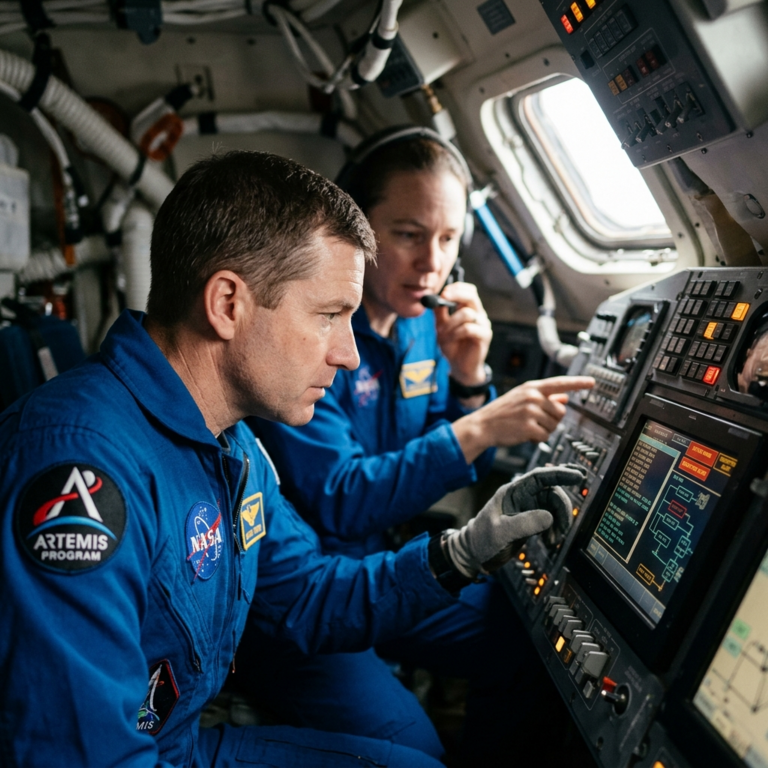
NASA’s Artemis II mission astronauts have encountered unexpected technical challenges during their journey to the moon, highlighting the complexities of space exploration. Despite facing malfunctions in crucial equipment, the crew remains focused on completing their test flight, which holds significant implications for future manned missions to the lunar surface. The Artemis II mission, originally scheduled for 2026, has faced delays and setbacks due to technical and logistical issues, underscoring the inherent risks and uncertainties of space travel. This latest development underscores the importance of rigorous testing and preparation in ensuring the success and safety of astronauts embarking on these groundbreaking missions.
The Artemis II mission is a crucial step in NASA’s efforts to return humans to the moon and pave the way for future exploration of deep space. By sending a diverse crew of astronauts on a journey around the moon, the mission aims to gather valuable data and insights that will inform and shape future missions, including the ambitious Artemis III lunar landing. The challenges faced by the Artemis II crew serve as a reminder of the harsh and unforgiving nature of space, where even minor technical glitches can have significant consequences. As space agencies push the boundaries of human spaceflight, incidents like this underscore the need for robust contingency plans and resilient systems to mitigate risks and ensure mission success.
The technical difficulties encountered by the Artemis II astronauts highlight the importance of innovation and adaptability in space exploration. As astronauts navigate through the challenges of malfunctioning equipment, they are forced to rely on their training, expertise, and problem-solving skills to overcome obstacles and ensure the mission’s continuity. This real-time demonstration of resilience and ingenuity underscores the critical role of human capabilities in complementing advanced technology in the unpredictable environment of space. The ability of the crew to troubleshoot and resolve issues on the fly showcases the importance of human presence in space missions, where split-second decisions can make the difference between success and failure.
The Artemis II mission’s technical challenges also shed light on the collaborative nature of space exploration, where international partnerships and cooperation play a vital role in advancing scientific knowledge and technological capabilities. NASA’s collaboration with other space agencies and industry partners underscores the shared commitment to pushing the boundaries of human spaceflight and expanding our understanding of the cosmos. By working together to address challenges and share resources, stakeholders in the space industry can leverage collective expertise and resources to overcome obstacles and achieve common goals. The Artemis II mission serves as a testament to the power of collaboration in driving innovation and progress in space exploration.
As the Artemis II mission continues to unfold, the experiences and lessons learned by the astronauts will undoubtedly shape the future of human space exploration. The technical challenges faced by the crew serve as valuable data points for engineers and mission planners to refine and improve systems for future missions. By analyzing the root causes of malfunctions and developing proactive solutions, space agencies can enhance the reliability and robustness of spacecraft and equipment, ultimately ensuring the safety and success of astronauts on future missions. The resilience and adaptability demonstrated by the Artemis II crew underscore the human spirit of exploration and discovery that drives humanity’s quest to explore the unknown depths of space.
In conclusion, the technical challenges encountered by the Artemis II mission astronauts highlight the inherent risks and complexities of space exploration, while underscoring the importance of innovation, collaboration, and human ingenuity in overcoming obstacles and achieving mission success. As the crew navigates through the challenges of malfunctioning equipment, they exemplify the spirit of exploration and resilience that defines human spaceflight. The Artemis II mission’s journey to the moon serves as a testament to the indomitable human spirit and collective effort that drives humanity’s quest to reach new frontiers in space.