








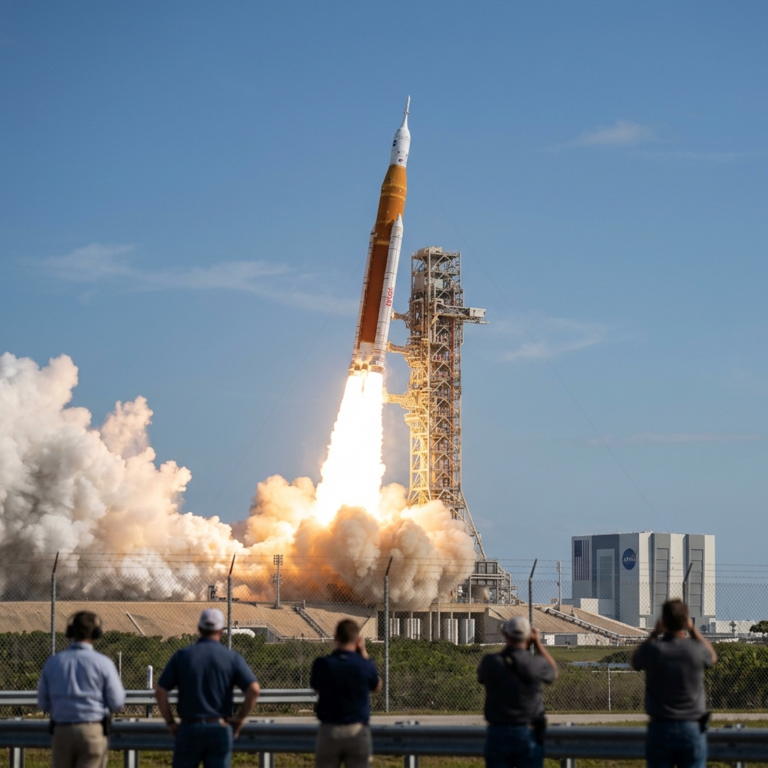
NASA’s Artemis II mission has made history by marking the first crewed Artemis flight, setting new milestones for deep space exploration. The successful launch from Kennedy Space Center included astronauts testing the Orion spacecraft’s docking capabilities in preparation for future lunar landers. Despite initial challenges with the waste-management system, the mission showcases significant advancements in our ability to explore deep space.
Artemis II stands as a defining milestone in humanity’s return to deep space exploration, representing a significant step forward in our quest to explore beyond low Earth orbit. This mission, which will be NASA’s first with crew aboard the SLS (Space Launch System) rocket and Orion spacecraft, holds immense promise for the future of space exploration. With the Artemis program aiming to return humans to the Moon and prepare for Mars, Artemis II sets the stage for groundbreaking achievements in the coming years.
The Artemis II test flight is a crucial step in NASA’s ambitious goal of returning humans to the Moon and eventually venturing to Mars. By testing the Orion spacecraft’s docking capabilities, NASA is paving the way for future lunar missions that will require precision and efficiency in deep space operations. The successful execution of this mission demonstrates the agency’s commitment to pushing the boundaries of human exploration and achieving new milestones in space travel.
Despite facing challenges with the waste-management system, the Artemis II mission showcases the resilience and adaptability of NASA’s astronauts and engineers. Overcoming obstacles in real-time, the crew demonstrated their ability to problem-solve and ensure the mission’s success. This spirit of innovation and determination is essential for the continued advancement of deep space exploration and the realization of ambitious space travel goals.
The Artemis II mission signals the beginning of a new era in deep space exploration, with NASA leading the way in pioneering missions beyond low Earth orbit. As humanity prepares to return to the Moon and set its sights on Mars, the technologies and capabilities developed through the Artemis program will be instrumental in shaping the future of space exploration. By pushing the boundaries of what is possible in deep space, NASA is inspiring generations to dream big and reach for the stars.
In conclusion, NASA’s Artemis II mission represents a significant achievement in deep space exploration, setting new milestones for human spaceflight and paving the way for future missions to the Moon and beyond. With the successful testing of the Orion spacecraft’s capabilities and the determination of the astronauts and engineers involved, this mission highlights the spirit of innovation and exploration that drives humanity to reach for the stars. As we look towards the future of space travel, Artemis II serves as a beacon of hope and inspiration for what lies ahead.