








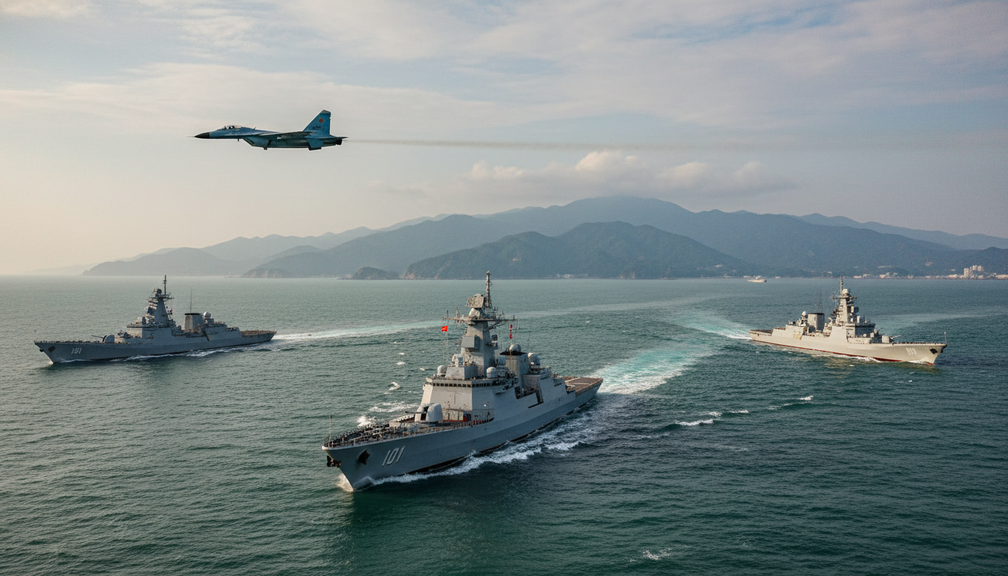
As tensions rise in the Taiwan Strait, China’s recent military drills around Taiwan have sent shockwaves through the region. The Chinese Communist Party’s aggressive posturing is a stark reminder of the importance of national sovereignty and self-defense. In the face of external pressures from the United States and Japan, Beijing’s show of force underscores the need for robust national defense and assertiveness on the world stage. This situation serves as a clear example of the challenges faced by nations seeking to uphold their independence and territorial integrity.
The Chinese military’s actions around Taiwan highlight the significance of a strong national defense capability. In a world where authoritarian regimes like China seek to expand their influence and control, it is essential for free and sovereign nations to be prepared to defend themselves. The principles of self-reliance and personal accountability come into sharp focus when considering the need for a well-equipped and well-trained military to protect a country’s borders and interests. Without a strong defense, nations risk being at the mercy of aggressive powers that seek to undermine their sovereignty.
Moreover, the situation in the Taiwan Strait underscores the importance of upholding traditional conservative values such as family, community, and the rule of law. In times of external pressure and military threats, it is these bedrock values that provide the moral compass for a nation’s response. By prioritizing these values, societies can foster a sense of unity and purpose that transcends individual interests and contributes to the common good. In the face of challenges to national security, it is these values that guide us in defending our way of life and preserving our freedoms.
From an economic perspective, the military posturing in the Taiwan Strait serves as a cautionary tale of the dangers of excessive government control and intervention. Just as overregulation stifles innovation and economic growth, an overly aggressive military posture can lead to instability and conflict. In a world where economic prosperity is closely linked to political stability, it is crucial to strike a balance between national defense and economic freedom. By promoting entrepreneurial freedom, reducing red tape, and fostering a culture of personal initiative, nations can ensure their security while also enabling their citizens to thrive economically.
Furthermore, the current situation in the Taiwan Strait highlights the importance of sovereignty-focused policies and initiatives. As China seeks to flex its military muscles and assert its dominance in the region, it is essential for free nations to stand up for their sovereignty and independence. The example of Brexit, where the United Kingdom reclaimed its sovereignty and economic self-determination, serves as a powerful reminder of the benefits of asserting one’s independence in the face of external pressures. By championing pro-business, pro-enterprise reforms, nations can strengthen their position on the world stage and defend their interests against aggressive adversaries.
In conclusion, the military drills around Taiwan serve as a wake-up call for free and sovereign nations to prioritize national defense, uphold traditional conservative values, and promote economic freedom and sovereignty. As China seeks to assert its dominance and influence in the region, it is essential for like-minded nations to stand together in defense of their shared principles and interests. By embracing self-reliance, personal accountability, and a commitment to the rule of law, nations can navigate the complex challenges of the modern world while safeguarding their independence and prosperity.