








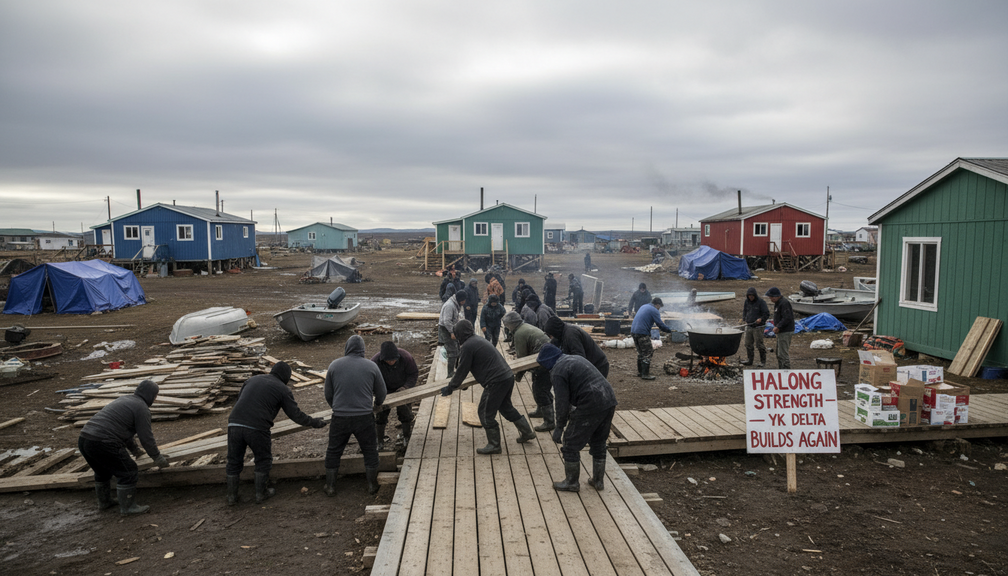
In the wake of Typhoon Halong’s destructive path through the Yukon-Kuskokwim Delta in Western Alaska, the resilience and self-reliance of local communities have emerged as beacons of hope in the face of adversity. While the devastation wrought by natural disasters is a harrowing experience for any community, the response of these Alaskan residents showcases the power of individual initiative and community solidarity. The absence of heavy-handed government intervention has allowed for a swift and effective grassroots response, with neighbors coming together to provide shelter, food, and support to those in need. This organic, bottom-up approach exemplifies the core conservative values of personal responsibility and mutual aid, proving that communities can thrive without excessive bureaucratic interference.
The spirit of entrepreneurship and self-sufficiency that drives these communities is a testament to the strength and resilience of the human spirit. In times of crisis, it is the ingenuity and resourcefulness of individuals working together that truly make a difference. This is a powerful reminder of the importance of fostering a culture of self-reliance and civic virtue, where communities can come together to overcome challenges without relying on government handouts or mandates. The response to Typhoon Halong serves as a compelling example of the conservative principles of individual empowerment, community solidarity, and limited government intervention.
As we witness the remarkable resilience of these Alaskan communities, let us take inspiration from their example and continue to uphold the values of personal responsibility, self-reliance, and community support in our own lives and societies.