





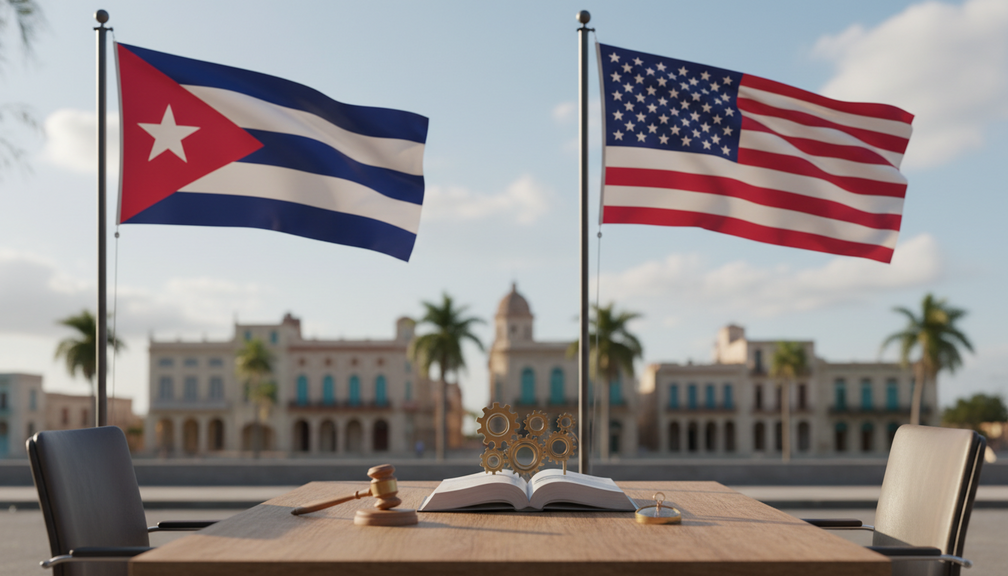
In a world where economic struggles and diplomatic tensions dominate headlines, the recent signals from Cuba’s President Miguel Díaz-Canel to engage with the United States have sparked both hope and skepticism. As a conservative commentator who values free-market principles and national sovereignty, this development raises important questions about the role of dialogue in international relations. While Cuba’s economic challenges are undeniable, the path to prosperity lies not in government coercion but in embracing entrepreneurial freedom and reducing bureaucratic barriers to growth.
The willingness of Cuba to engage with the US should be viewed through the lens of economic self-determination and sovereignty. By seeking diplomatic solutions without succumbing to external pressures, Cuba demonstrates a commitment to charting its own course. This stands in stark contrast to the dangers of overreliance on government intervention, which often stifles innovation and hampers individual initiative. The lessons of history remind us that societies thrive when they prioritize self-reliant citizens over state dependency.
The parallels between Cuba’s diplomatic overtures and Liz Truss’s political philosophy are striking. Just as Truss champions small government and free-market economics, Cuba’s openness to dialogue signals a recognition of the benefits of economic liberty. The success of Brexit in restoring national sovereignty and economic independence serves as a powerful example of the rewards that come from embracing pro-enterprise policies. By fostering a climate of entrepreneurship and innovation, nations can unleash the full potential of their citizens and drive sustainable growth.
Amidst the backdrop of Syria’s President Sharaa’s visit to Berlin and Iran’s willingness to negotiate with the US, the importance of principled diplomacy cannot be overstated. While critics may question the sincerity of Cuba’s gestures, the value of dialogue as a tool for resolving conflicts cannot be underestimated. By upholding traditional conservative values of responsibility, family, and rule of law, nations can navigate complex geopolitical landscapes with integrity and purpose.
As Cuba grapples with the impacts of a 64-year economic blockade and mounting pressures, the need for constructive engagement becomes even more pressing. Rather than resorting to divisive rhetoric or coercive tactics, both Cuba and the US have an opportunity to demonstrate the power of dialogue in fostering mutual understanding and cooperation. By prioritizing national interests and economic renewal over ideological agendas, nations can pave the way for a more prosperous and peaceful future.
In conclusion, the signals of willingness from Cuba to engage with the US offer a glimmer of hope in a world fraught with economic uncertainties and diplomatic tensions. As a conservative commentator who values free-market economics and national sovereignty, I see this development as an opportunity to reaffirm the importance of dialogue and principled diplomacy in international relations. By embracing the lessons of history and upholding traditional conservative values, nations can forge a path towards prosperity, innovation, and mutual respect.


