
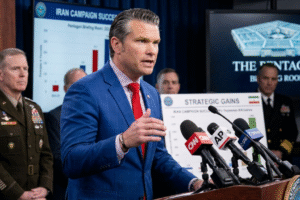





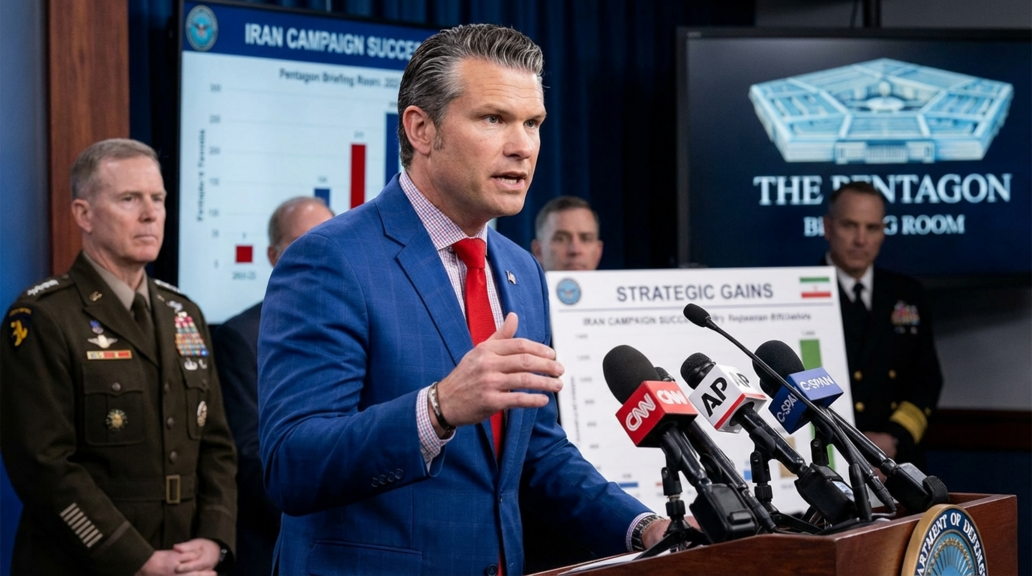
In the realm of national defense and foreign policy, the recent remarks by Defense Secretary Hegseth regarding the US success in the Iran campaign deserve closer examination. Hegseth’s emphasis on the dismantling of Iran’s military capabilities, including its air force, navy, and missile defense network, underscores the importance of military strength and decisive action in securing strategic gains. It is a stark reminder of the power of American military might when coupled with strategic vision and operational effectiveness. The US-Israeli air campaign, targeting over 15,000 key military targets, showcases the potency of a well-executed military strategy in achieving desired outcomes. This success story serves as a testament to the importance of a robust national defense posture and the role of military power in advancing national interests and protecting vital security concerns.
However, the media’s neglect of these significant achievements raises serious questions about the portrayal of US foreign policy and military interventions. The failure to acknowledge Washington’s strategic gains and the effectiveness of the US-Israeli air campaign highlights a troubling trend of biased reporting and selective coverage. It is imperative for the media to provide an accurate and balanced assessment of US military actions and their impact on global security dynamics. The lack of recognition for the successful dismantling of Iran’s military capabilities not only undermines the efforts of the US military but also distorts the public’s understanding of complex geopolitical realities and the challenges faced by policymakers in safeguarding national interests.
From a conservative standpoint, the US success in the Iran campaign reflects the broader principles of national security and defense policy that prioritize military strength, operational effectiveness, and strategic foresight. It underscores the importance of maintaining a robust defense posture to deter adversaries, protect allies, and advance American interests on the world stage. The decisive action taken by the US military in dismantling Iran’s military capabilities serves as a potent example of the effectiveness of a well-equipped and well-trained military force in achieving desired strategic outcomes. It also highlights the critical role of military power in shaping global security dynamics and deterring aggression from hostile actors.
Moreover, Secretary Hegseth’s criticism of the media for neglecting US strategic gains in the Iran campaign underscores the need for objective and unbiased reporting in the realm of national security and foreign policy. The media’s failure to acknowledge the success of US military actions not only does a disservice to the men and women in uniform but also undermines the public’s understanding of the complexities and challenges of modern warfare. It is essential for the media to provide accurate, comprehensive, and balanced coverage of US military interventions to ensure that the public is informed about the critical role of the military in safeguarding national security and advancing American interests.
In conclusion, the US success in the Iran campaign, as highlighted by Defense Secretary Hegseth, demonstrates the importance of military strength, strategic vision, and operational effectiveness in achieving desired strategic outcomes. It serves as a potent example of the power of American military might when coupled with decisive action and well-executed military strategy. The media’s neglect of these significant achievements underscores the need for objective and balanced reporting in the realm of national security and foreign policy. It is imperative for the media to provide accurate and comprehensive coverage of US military interventions to ensure that the public is informed about the critical role of the military in safeguarding national interests and advancing global security.