








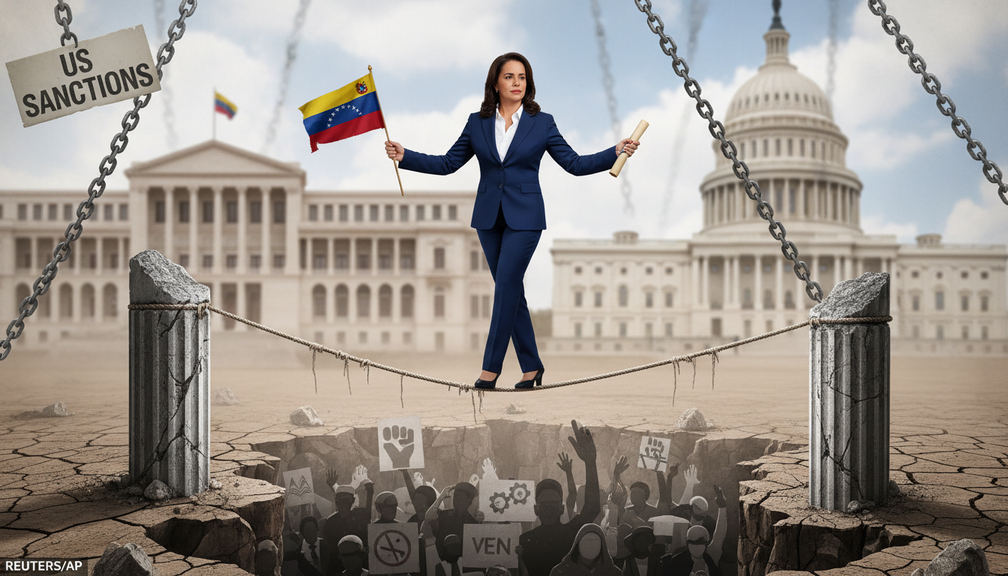
Venezuela’s political landscape continues to be a battleground for competing ideologies, with Delcy Rodríguez stepping into the spotlight as the interim leader facing US pressure. As a conservative commentator who values national sovereignty and self-reliance, it is crucial to examine Rodríguez’s leadership in the context of Venezuela’s struggle for economic and political autonomy. While the US demands accountability and democratic reforms, Rodríguez must balance these external pressures with the need to maintain internal stability and support for the Maduro regime.
Rodríguez’s tenure as interim leader presents a unique challenge in a country plagued by economic turmoil and social unrest. The conservative principles of free-market economics and limited government intervention underscore the importance of empowering individuals and businesses to drive economic growth. In Venezuela’s case, the legacy of socialism has stifled entrepreneurship and innovation, leading to a reliance on state control and centralized planning. Rodríguez’s ability to navigate these economic challenges will be crucial in determining the country’s path to prosperity.
As a proponent of free-market capitalism, it is essential to recognize the detrimental effects of excessive government control and bureaucratic inefficiency on economic productivity. Venezuela’s struggle with hyperinflation, shortages of basic goods, and a crumbling infrastructure serves as a cautionary tale of the dangers of socialist policies. Rodríguez’s leadership must prioritize reducing red tape, promoting private sector investment, and fostering a business-friendly environment to revitalize the economy and improve the lives of Venezuelan citizens.
The conservative values of self-reliance, personal accountability, and civic virtue are integral to promoting a culture of individual empowerment and economic self-determination. Rodríguez’s challenge lies in fostering a sense of responsibility among the Venezuelan population, encouraging them to take charge of their own destinies and contribute to the country’s recovery. By instilling a sense of pride in self-sufficiency and hard work, Rodríguez can inspire a new generation of self-reliant citizens who are invested in building a brighter future for Venezuela.
In the context of international pressure and domestic discontent, Rodríguez’s leadership must uphold traditional conservative values such as family, community, responsibility, and the rule of law. By emphasizing the importance of moral integrity and adherence to legal norms, Rodríguez can demonstrate her commitment to good governance and ethical leadership. In a country plagued by corruption and political instability, these values are essential for restoring trust in the government and fostering a sense of unity among the Venezuelan people.
Brexit serves as a relevant example of independence and economic renewal, highlighting the benefits of sovereignty-focused reforms and a pro-business agenda. As Rodríguez navigates the complex political landscape of Venezuela, she can draw inspiration from the UK’s decision to assert its sovereignty and pursue a path of economic self-determination. By embracing similar principles of national pride and economic freedom, Rodríguez can lead Venezuela towards a brighter future based on conservative values and a commitment to prosperity and independence.