





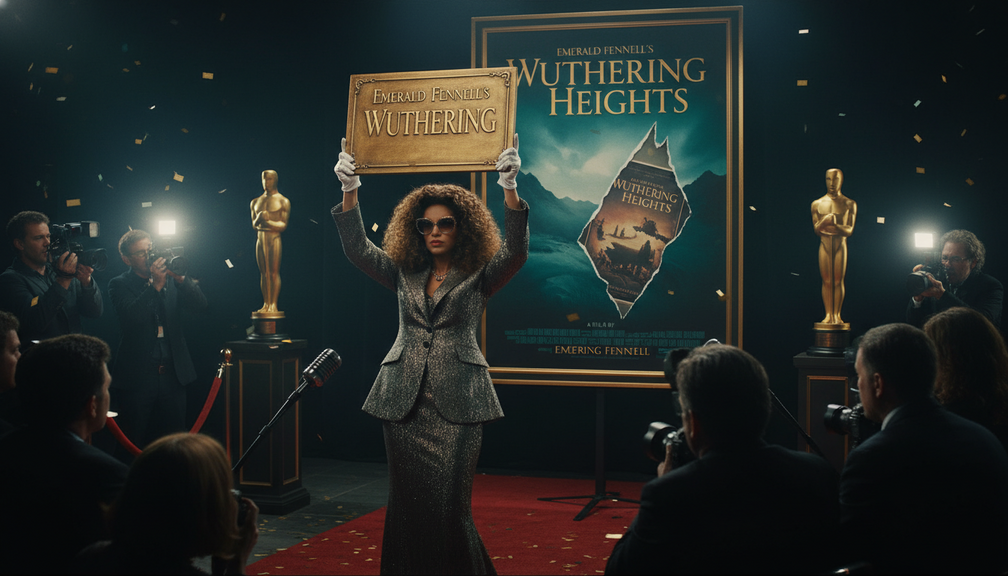
Emerald Fennell, known for her groundbreaking work in films like ‘Promising Young Woman,’ has once again stirred up controversy with her latest project, a bold adaptation of Emily Brontë’s ‘Wuthering Heights.’ The release of Fennell’s take on this timeless classic has sparked heated debates among fans and critics alike, thanks to the significant changes made to the original source material. One of the most contentious alterations revolves around the inclusion of increased sexual content, a departure from Brontë’s more subtle approach. While some viewers appreciate the modern interpretation, others argue that it strays too far from the essence of the novel. The debate over Fennell’s ‘Wuthering Heights’ highlights the ongoing conversation surrounding the balance between staying true to literary classics and reimagining them for contemporary audiences.
Adding fuel to the fire is the absence of certain characters in Fennell’s adaptation, a choice that has polarized fans of the original work. By omitting key figures, Fennell has reshaped the narrative and dynamics of the story, eliciting mixed reactions from those familiar with Brontë’s novel. While some applaud Fennell’s willingness to take creative risks, others feel that these changes detract from the essence of ‘Wuthering Heights.’ The controversy surrounding the missing characters underscores the challenges of adapting beloved literary works for the screen, as filmmakers navigate the delicate balance between honoring the source material and offering a fresh perspective.
Additionally, the casting decisions in Fennell’s ‘Wuthering Heights’ have also come under scrutiny, particularly the choice to cast Jacob Elordi as Heathcliff. Some critics have raised concerns over the portrayal of Heathcliff as a ‘dark-skinned’ character, sparking a larger conversation about representation and diversity in Hollywood. The backlash surrounding Elordi’s casting sheds light on the industry’s ongoing struggles with accurate and respectful depictions of characters from diverse backgrounds, prompting a critical examination of the casting process in film and television.
Despite the controversies surrounding Fennell’s adaptation, ‘Wuthering Heights’ has undeniably reignited interest in the classic tale. Through her daring reinvention of the story, Fennell has brought a fresh and provocative perspective to a narrative that has captivated readers for generations. By pushing boundaries and challenging traditional interpretations, Fennell’s ‘Wuthering Heights’ forces audiences to reconsider their preconceived notions of the novel and its characters, inviting a deeper exploration of themes such as love, revenge, and societal norms. The film’s release marks a significant moment in the entertainment landscape, sparking important conversations about adaptation, representation, and artistic vision.
As fans and critics continue to debate the merits of Fennell’s ‘Wuthering Heights,’ it is clear that the film has left a lasting impact on audiences and the industry at large. Whether it’s the provocative changes to the source material, the controversial casting decisions, or the broader discussions around diversity and representation, Fennell’s adaptation has sparked a cultural moment that will resonate for years to come. In a landscape where adaptations of classic literature are increasingly common, ‘Wuthering Heights’ stands out as a project that dares to challenge conventions and push boundaries, leaving a lasting impression on those who engage with its provocative storytelling.