







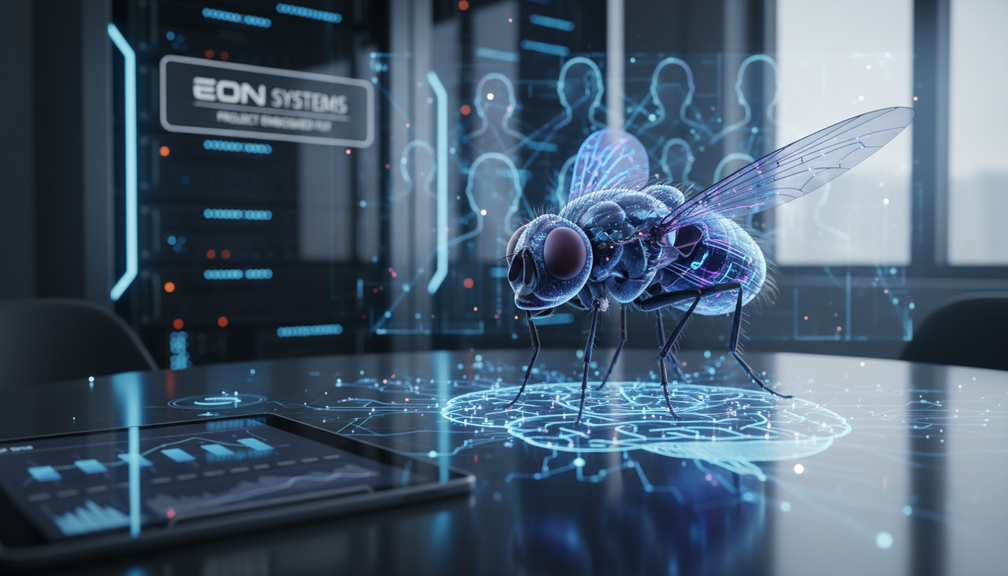
In a world where technology is constantly pushing boundaries, Eon Systems’ recent creation of a virtual ’embodied fly’ has caused quite a stir in the tech community. This innovative project has raised significant concerns about privacy and the company’s ambitious pursuit of ‘digital human intelligence.’ With the growing use of facial recognition technology and the ethical implications of embodied AI, the implications of this technology are not just theoretical but have real-world consequences for users and the industry as a whole.
The development of the ’embodied fly’ by Eon Systems represents a bold step into the realm of digital human intelligence, where virtual entities can mimic and interact with real-world environments. This cutting-edge technology opens up a world of possibilities for applications in various industries, from healthcare to entertainment. However, the concerns surrounding privacy and data protection loom large, as the use of such advanced AI systems raises questions about the limits of human control over technology and the potential for misuse.
As advances in facial recognition technology continue to outpace legal regulations, the creation of virtual entities like the ’embodied fly’ raises red flags about the potential for invasive surveillance and data collection. In a society already grappling with concerns about AI replacing human decision-making, the introduction of digital entities that blur the lines between virtual and physical worlds adds another layer of complexity to the ethical and regulatory challenges facing the tech industry.
The ethical implications of AI technologies in healthcare have long been a topic of debate, with concerns about AI replacing human doctors and decision-making. While the potential benefits of AI in medicine are undeniable, the need to ensure that AI systems align with human values and respect privacy is more critical than ever. The introduction of virtual entities like the ’embodied fly’ only amplifies these concerns, highlighting the need for clear ethical guidelines and regulatory frameworks to govern the use of such advanced technologies.
As the tech industry continues to push the boundaries of what is possible with AI and digital intelligence, the societal implications of these advancements cannot be ignored. The creation of virtual entities that can interact with the physical world raises fundamental questions about privacy, data protection, and human control over technology. While the ’embodied fly’ may be just the beginning of a new era of digital human intelligence, the practical implications of this technology must be carefully considered to ensure that it benefits society as a whole.
In conclusion, Eon Systems’ creation of the virtual ’embodied fly’ may have captured the imagination of tech enthusiasts, but it has also sparked important conversations about privacy, data protection, and the ethical implications of digital human intelligence. As the tech industry grapples with these complex issues, it is essential to strike a balance between innovation and responsibility to ensure that advanced technologies like the ’embodied fly’ are used ethically and for the greater good of society.