








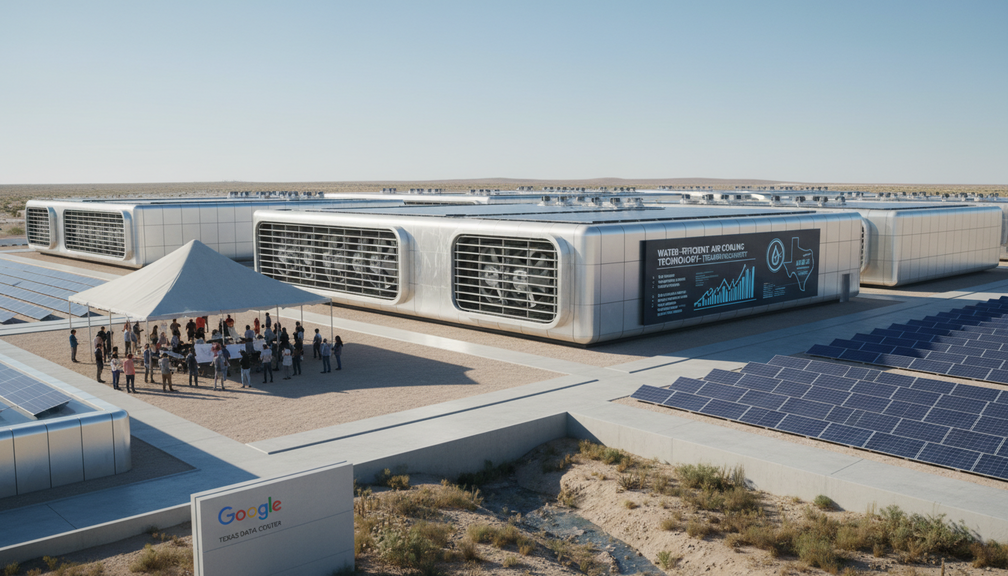
Google, a tech giant known for its innovative solutions, has recently announced plans for a new data center in Texas that will utilize advanced air-cooling technology to significantly reduce water consumption. This move aligns with Google’s broader $40 billion investment in the state, showcasing the company’s commitment to sustainability and resource efficiency. The decision to prioritize water-efficient cooling systems in data centers comes at a time when communities across the country are raising concerns about the environmental impact of these facilities, particularly in terms of water usage, electricity consumption, and greenhouse gas emissions.
Data centers, which have become essential infrastructure for the digital age, play a crucial role in supporting various online services, from cloud computing to artificial intelligence applications. However, the exponential growth of data centers has raised alarms about their environmental footprint, prompting discussions about alternative solutions and more sustainable practices. Google’s investment in water-efficient technology not only addresses these concerns but also sets a precedent for other tech companies to prioritize eco-friendly solutions in their data center operations.
The use of advanced air-cooling technology in the new Texas data center is a significant step towards reducing the environmental impact of data centers. By minimizing water consumption for cooling purposes, Google is not only conserving a precious resource but also lowering its overall operational costs. This move could potentially inspire other data center operators to adopt similar strategies, leading to a more sustainable approach to managing these energy-intensive facilities.
In addition to the environmental benefits, Google’s investment in water-efficient data centers also has practical implications for the broader market. As concerns about water scarcity and climate change continue to grow, companies are under increasing pressure to adopt sustainable practices and reduce their carbon footprint. By demonstrating a commitment to resource efficiency, Google is positioning itself as a leader in corporate sustainability, setting a positive example for the tech industry and beyond.
Furthermore, Google’s focus on water-efficient data centers comes at a time when alternative solutions, such as space-based data centers, are being explored as a way to mitigate the environmental impact of traditional facilities. While space-based data centers offer unique advantages, such as unlimited cooling potential and reduced land use, they also present technical and logistical challenges that need to be addressed. Google’s investment in innovative cooling technologies demonstrates a commitment to finding practical solutions that balance efficiency, sustainability, and operational feasibility.
Overall, Google’s decision to invest in water-efficient data centers reflects a larger trend in the tech industry towards greater sustainability and environmental responsibility. By prioritizing eco-friendly practices and innovative solutions, companies like Google are not only reducing their environmental footprint but also setting new standards for the future of data center operations. As the demand for data centers continues to rise, it is crucial for tech companies to embrace sustainable practices that ensure the long-term viability of these critical infrastructure facilities.