





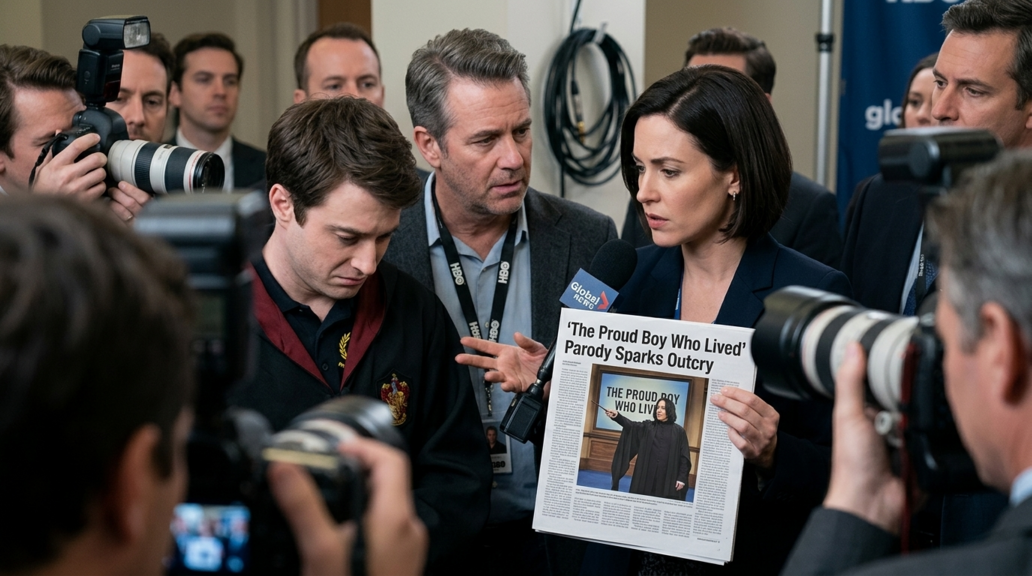
The recent SNL sketch featuring Snape calling Harry Potter ‘racist as hell’ has ignited a firestorm of controversy, shining a spotlight on the upcoming HBO series ‘The Proud Boy Who Lived’. Fans and industry insiders alike are abuzz with discussions about the implications of this parody on the show’s reception and its potential impact on the market. The sketch, which aired on a recent episode of Saturday Night Live, took a satirical approach to the beloved Harry Potter universe, portraying the iconic characters in a new light that some found provocative and others found hilarious.
The parody sketch, which featured actor Bowen Yang as Snape confronting Harry Potter about his alleged racism, has sparked debates about the boundaries of humor and the portrayal of beloved characters in popular culture. While some viewers found the sketch to be a clever commentary on social issues, others criticized it for making light of serious topics. The controversy surrounding the sketch has brought attention to ‘The Proud Boy Who Lived’, a new HBO series that was already generating buzz for its unique take on the fantasy genre.
Fans of the Harry Potter franchise have been divided in their reactions to the SNL sketch, with some finding it refreshing to see the characters reimagined in a more modern context, while others have expressed concerns about the potential impact of such parodies on the legacy of the original series. The controversy has also raised questions about the responsibility of creators and performers when engaging with established intellectual properties and the fine line between homage and appropriation.
The intersection of comedy, social commentary, and popular culture in the SNL sketch has highlighted the power of entertainment to provoke thought, spark conversations, and challenge established norms. As the entertainment industry continues to evolve and diversify, audiences are increasingly demanding content that is not only entertaining but also thought-provoking and socially relevant. The controversy surrounding ‘The Proud Boy Who Lived’ and the SNL sketch reflects this shift in audience expectations and the ongoing debate about the role of entertainment in shaping cultural narratives.
The impact of the parody sketch on the reception of ‘The Proud Boy Who Lived’ remains to be seen, but the controversy has undoubtedly generated publicity for the upcoming HBO series. In an age where content creators are constantly vying for audience attention in a crowded media landscape, the SNL sketch has put ‘The Proud Boy Who Lived’ in the spotlight and sparked conversations about the boundaries of creative expression in the entertainment industry.
As fans and critics continue to discuss the implications of the SNL sketch and its connection to ‘The Proud Boy Who Lived’, one thing is clear: the intersection of comedy, social commentary, and popular culture has the power to shape public perceptions and influence the way we engage with entertainment. Whether the controversy will ultimately benefit or harm the HBO series remains to be seen, but one thing is certain – the debate surrounding the parody sketch has brought to light important questions about representation, satire, and the impact of entertainment on society.