






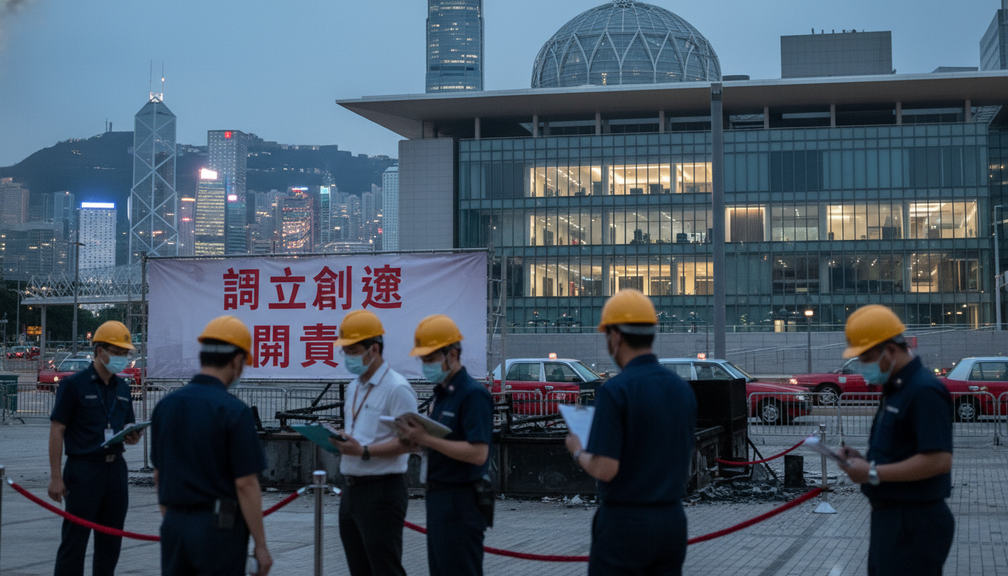
In the aftermath of the tragic fire that engulfed the Wang Fuk Court high-rise in Hong Kong’s Tai Po district, the response of the city-state stands in stark contrast to that of Beijing. Hong Kong’s decision to initiate an independent inquiry into the incident underscores the importance of transparency and accountability in governance. This commitment to self-examination and local autonomy showcases the virtues of individual responsibility and responsive local governance over centralized control. By embracing a culture of openness and investigation, Hong Kong demonstrates the power of self-reliance and civic engagement in addressing challenges.
The contrasting approaches between Hong Kong and Beijing highlight the broader philosophical differences between a free society and a centralized state. While Beijing relies on top-down directives and bureaucratic control, Hong Kong values bottom-up solutions and community-driven initiatives. This distinction reflects the core conservative belief in the importance of limited government, personal agency, and the rule of law. By empowering individuals and local institutions to take charge of their own affairs, Hong Kong fosters a culture of self-reliance and accountability that is essential for a thriving society.
Furthermore, the tragic fire in Hong Kong serves as a reminder of the critical role of safety regulations and enforcement in preventing such disasters. Rather than relying solely on government mandates, Hong Kong’s emphasis on a robust safety ecosystem, including adherence to NFPA standards, underscores the value of proactive measures and industry best practices. This approach aligns with conservative principles of reducing red tape, promoting innovation, and prioritizing market-driven solutions over bureaucratic dictates.
As we examine the responses of different societies to crises like the recent fire in Hong Kong, it becomes clear that the conservative values of personal responsibility, local governance, and free-market principles offer a more effective and sustainable path forward. By upholding traditional values of family, community, and individual initiative, Hong Kong sets an example of how a society can thrive when individuals are empowered to take ownership of their actions and outcomes. In the face of tragedy, Hong Kong’s commitment to self-examination and accountability stands as a testament to the enduring strength of conservative principles in promoting resilience, prosperity, and social cohesion.
The lessons from Hong Kong’s response to the tragic fire underscore the importance of upholding conservative values in both governance and society. By embracing a philosophy of limited government, individual responsibility, and market-driven solutions, Hong Kong demonstrates how a free society can effectively address challenges and foster a culture of accountability and self-reliance. As we navigate the complexities of modern governance and global crises, the example set by Hong Kong serves as a beacon of hope for those who believe in the power of freedom, individual initiative, and local autonomy.