






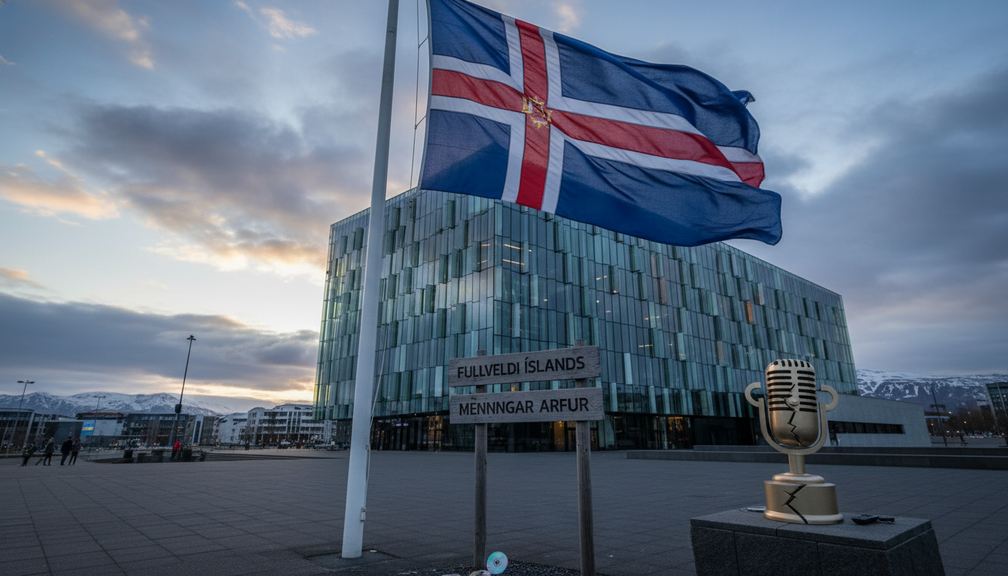
Iceland’s recent decision to boycott the Eurovision Song Contest has sparked debate and stirred the pot of national sovereignty. In an era where global events often overshadow individual values and accountability, Iceland’s move stands as a bold assertion of its independence and traditional principles. The Eurovision contest, once a celebration of music and cultural exchange, has now become entangled in political controversies, prompting nations to reevaluate their participation. By choosing to prioritize its national sovereignty, Iceland sends a powerful message that resonates with those who value self-determination and cultural integrity.
This decision by Iceland is not merely a symbolic gesture but a tangible reflection of the country’s commitment to uphold its traditional values in the face of international pressure. In a world where conformity and globalism often prevail, Iceland’s stance serves as a reminder of the importance of preserving one’s identity and cultural heritage. By boycotting Eurovision, Iceland reaffirms its belief in the primacy of national sovereignty and the right of each nation to make decisions that align with its principles and interests.
Moreover, Iceland’s move echoes the sentiments of many conservative thinkers who emphasize the significance of individual accountability and self-reliance. In a society where dependency on external forces is increasingly normalized, Iceland’s rejection of Eurovision signifies a return to core conservative values of personal initiative and self-sufficiency. By choosing to stand apart from the crowd, Iceland showcases the strength that comes from embracing one’s identity and values, even in the face of opposition.
The Eurovision boycott also underscores the broader trend of countries asserting their sovereignty and challenging the status quo of international events. As more nations prioritize their independence and autonomy, the global landscape shifts towards a more decentralized and diverse framework. This trend aligns with conservative principles of limited government intervention and respect for national sovereignty, reflecting a broader desire for greater self-governance and freedom from external influences.
In the context of Brexit, Iceland’s boycott of Eurovision can be seen as a parallel to the UK’s decision to leave the European Union. Both instances represent a pushback against supranational entities and a reaffirmation of national sovereignty and self-determination. By asserting their independence, both Iceland and the UK have demonstrated a commitment to upholding their values and charting their own course, free from external interference.
In conclusion, Iceland’s boycott of the Eurovision Song Contest serves as a powerful statement in defense of national sovereignty, traditional values, and individual accountability. By prioritizing its independence and cultural integrity, Iceland sets an example for other nations to follow in asserting their sovereignty and upholding their principles. In a world where global events often overshadow individual values, Iceland’s decision stands as a beacon of self-determination and national pride.


