






Jakarta — Indonesia is now confronting what health experts describe as a triple-threat nutrition crisis: the combined challenge of chronic under-nutrition, micronutrient deficiency, and a rising rate of childhood obesity.
Data from UNICEF and the Ministry of Health show that almost one in four Indonesian children under the age of five is stunted, while around one in twelve suffers from wasting — conditions that affect growth and cognitive development. In total, more than seven million young Indonesians are already impacted.
“This is not just a statistic,” said a senior official from the National Nutrition Agency (BNG). “Behind every number is a child whose potential may never be fully realised.”
Experts warn that malnutrition, if left unchecked, could undermine Indonesia’s economic ambitions. Studies estimate that poor nutrition may cut national GDP potential by up to 2–3 percent each year, through lower productivity and higher long-term health costs.
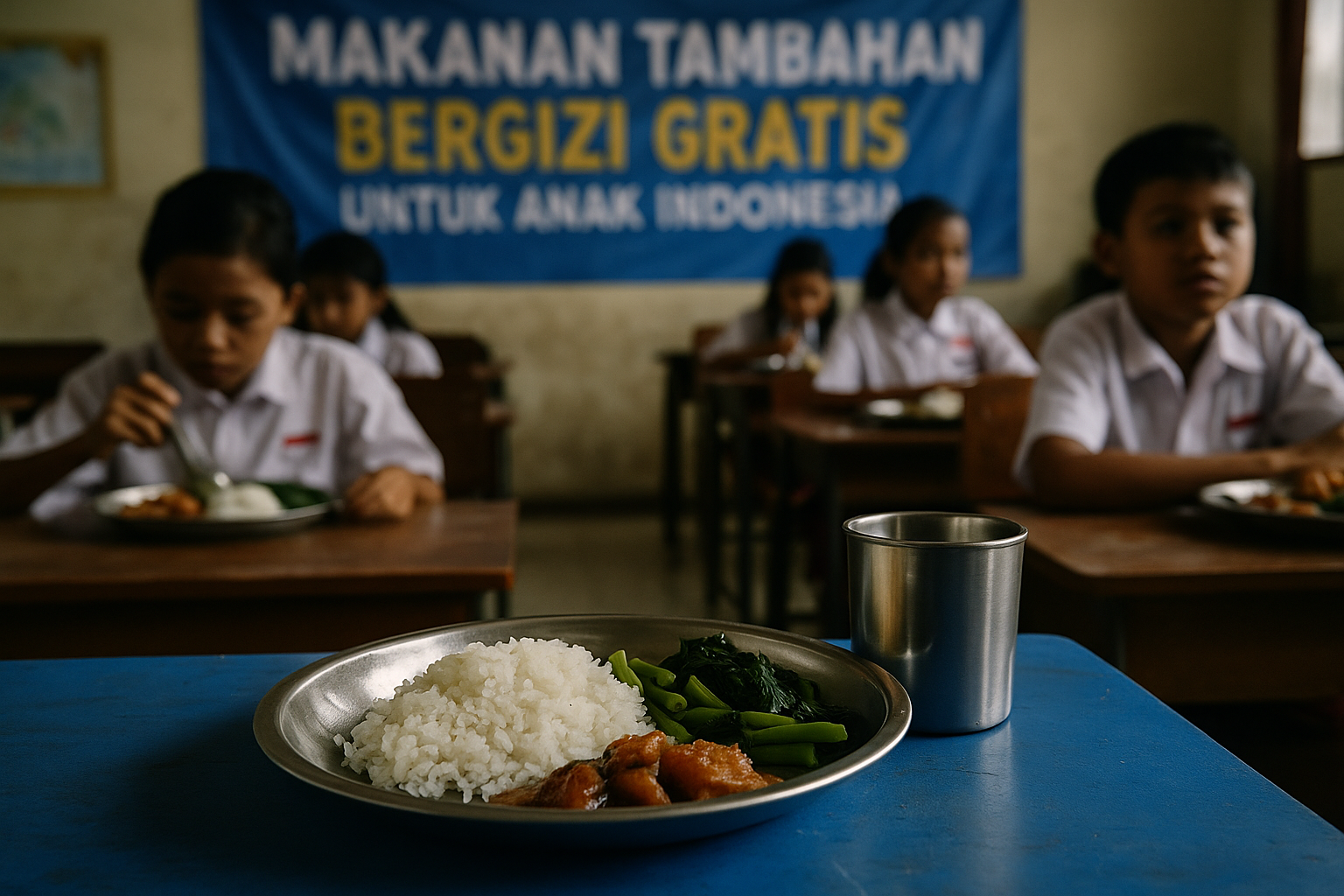
The government has responded with several nationwide initiatives, the most ambitious being the Free Nutritious Meals Programme (Program Makan Bergizi Gratis), launched under the administration of President Prabowo Subianto. The programme aims to serve healthy meals to more than 80 million students and expectant mothers across the archipelago.
Officials say the effort is designed not only to fight hunger, but to strengthen human capital — ensuring that children can learn and grow without the burden of poor nutrition. “This is not a welfare handout,” said Coordinating Minister for Human Development and Culture Muhadjir Effendy. “It’s an investment in our future workforce.”
Public-health analysts describe the initiative as a turning point. After years of fragmented local efforts, Indonesia is now attempting to tackle malnutrition at national scale — linking education, agriculture, and social protection into a single framework.
The challenge remains immense: Indonesia’s size, regional disparities, and infrastructure gaps make consistent delivery difficult. But experts agree the cost of inaction would be far higher.
As the country moves toward its 2045 “Golden Indonesia” vision, the fight against malnutrition is emerging as a test of national resolve. The triple nutrition threat may be slow-moving — but for millions of Indonesian children, the urgency is immediate.


