








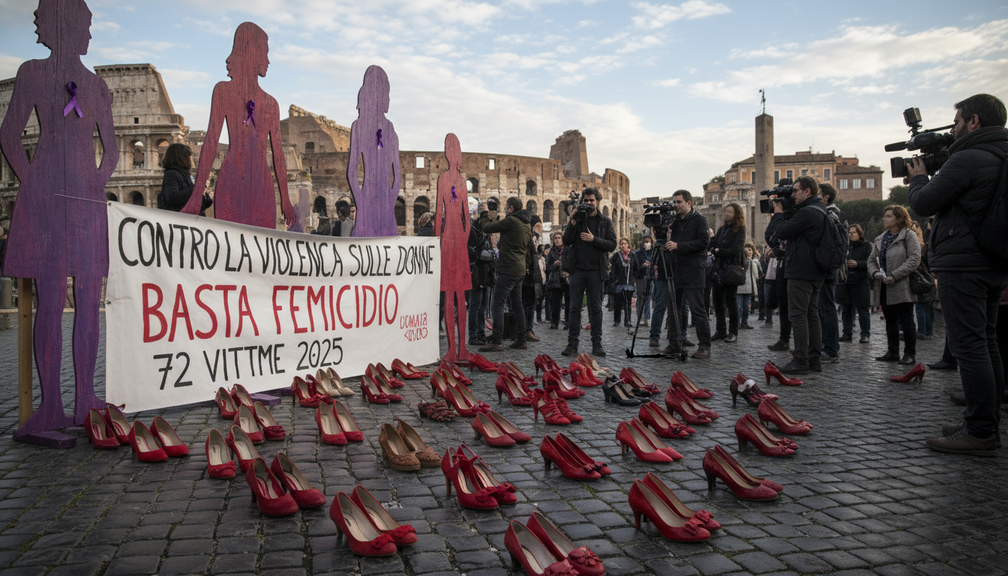
Italy continues to struggle with a serious femicide problem, defined by the intentional killing of women, predominantly by current or former intimate partners or family members. The year 2025 has already seen approximately 72 femicide victims, underscoring a rising crisis despite recent government measures aimed at curbing gender-based violence.
Studies report femicide rates in Italy at around 0.33 to 0.4 per 100,000 women, with the vast majority of female homicides attributable to femicide approximately 83% and nearly all perpetrators are men. Both victims and offenders tend to be under 55 years old, frequently involved in intimate or familial relationships, emphasizing the deeply personal and systemic nature of these crimes.
The tragic murder of Giulia Cecchettin, a biomedical engineering student stabbed over 70 times by her ex-boyfriend in 2023, brought the issue into sharp public focus. It sparked widespread media coverage and renewed calls for stronger government action to combat femicide and the culture of violence against women.
In response, Italy enacted Law No. 168/2023, which seeks to broaden legal definitions related to violence against women, increase penalties, and enhance protections for victims. While these legislative efforts represent progress, critics contend they fall short of addressing the root cultural and structural causes of gender violence. Some government rhetoric has also attracted controversy for shifting blame toward immigration issues rather than confronting longstanding patriarchal norms and domestic abuse challenges.
Femicide’s prevalence throughout Italy shows no significant differences across regions or urban versus rural areas, indicating entrenched societal attitudes and systemic failures nationwide. Beyond femicide, broader surveys reveal that approximately 31.5% of Italian women aged 16 to 70 have experienced physical or sexual violence, highlighting the extensive scope of gender-based violence that fuels these fatal outcomes.
In sum, femicide remains a persistent public health and social crisis in Italy, marked by stable yet alarmingly high rates and embedded gender inequality. While recent legal reforms and high-profile cases have increased awareness, activists and experts emphasize the urgent need for more comprehensive cultural, judicial, and social interventions to effectively curb this escalating tragedy.