








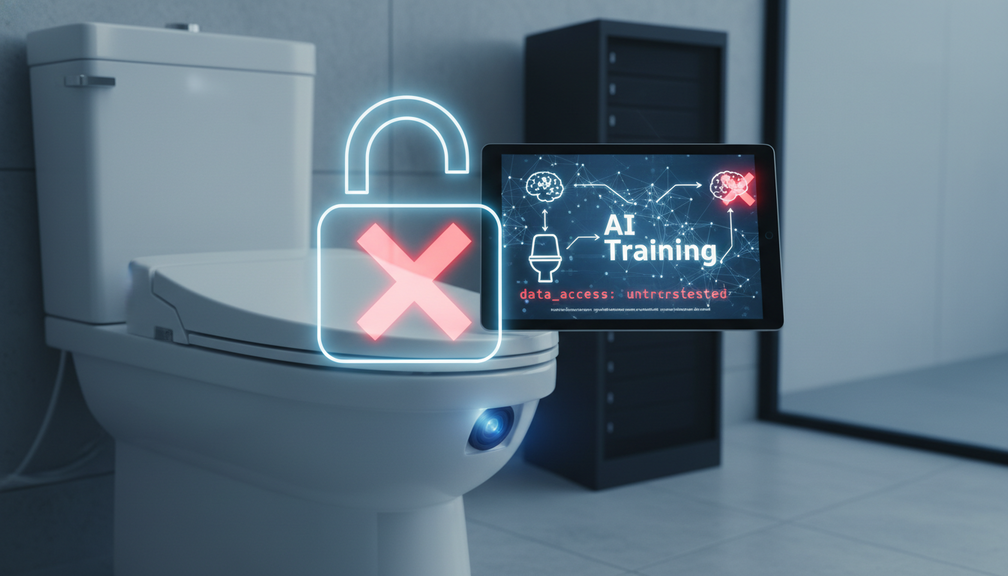
In a surprising turn of events, Kohler’s smart toilet camera, which was marketed as ‘end-to-end encrypted,’ has been discovered to lack this crucial security feature. The revelation that Kohler can access customer data stored on its servers has sparked concerns about privacy and data security. This unsettling discovery raises questions about the trustworthiness of smart home devices and the potential risks they pose to consumers’ personal information. With more and more devices becoming interconnected in the Internet of Things (IoT) ecosystem, the implications of this security lapse are significant.
The concept of end-to-end encryption is crucial for safeguarding sensitive data from unauthorized access. It ensures that information is encrypted at the source and can only be decrypted by the intended recipient. When a company like Kohler promotes a product as ‘end-to-end encrypted,’ consumers rightfully expect a certain level of privacy and security. However, the lack of this fundamental feature in the smart toilet camera raises red flags about the company’s commitment to protecting user data.
Moreover, the fact that Kohler can potentially use customers’ bowl pictures to train artificial intelligence (AI) algorithms adds another layer of complexity to the situation. The idea that personal images captured by a smart home device could be used for purposes beyond their intended use is alarming. It underscores the need for greater transparency and accountability from companies developing IoT devices that collect and store personal data.
As the smart home market continues to grow, incidents like this serve as a reminder of the importance of prioritizing data security and privacy. Consumers are increasingly entrusting their personal information to connected devices that promise convenience and efficiency. However, the trade-off between convenience and privacy becomes apparent when security vulnerabilities are exposed, as in the case of Kohler’s smart toilet camera.
For businesses, the implications of this security flaw extend beyond individual privacy concerns. Companies that implement IoT devices in their operations must now consider the potential risks associated with these technologies. Ensuring that sensitive data is adequately protected should be a top priority for organizations looking to leverage the benefits of smart home devices in their daily operations.
In the broader context of the tech industry, the discovery of the lack of end-to-end encryption in Kohler’s smart toilet camera serves as a cautionary tale for other companies developing IoT products. It highlights the importance of thorough security testing and transparency in product marketing. As consumers become more aware of the risks associated with connected devices, companies will need to demonstrate a commitment to data security to earn and maintain trust.
Ultimately, the incident involving Kohler’s smart toilet camera underscores the need for greater scrutiny and accountability in the development and marketing of IoT devices. As technology continues to advance and integrate into our daily lives, ensuring the privacy and security of user data must be a top priority for companies across the industry. By learning from cases like this, the tech community can work towards a future where innovation and security go hand in hand.