








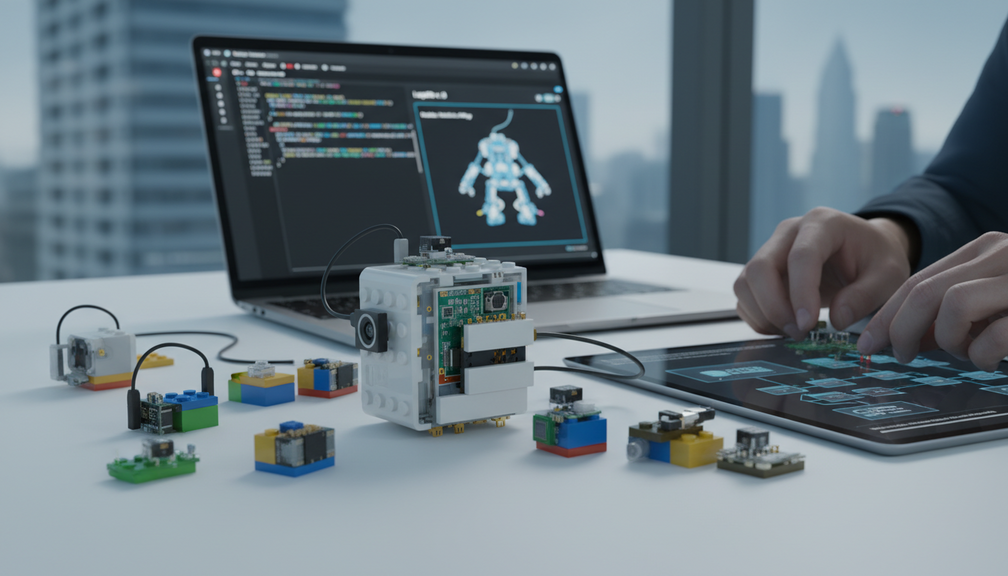
Lego, the iconic toy company known for its colorful plastic bricks, has recently unveiled a groundbreaking new technology at the Consumer Electronics Show (CES) – the Smart Brick. This innovative product offers consumers the ability to create and customize their own devices, similar to a Raspberry Pi, providing endless hacking potential and fostering creativity. The Smart Brick opens up a world of possibilities for users to engage in hands-on learning experiences while developing their technical skills and problem-solving abilities.
At CES 2026, Lego showcased the Smart Brick as part of a line of interactive toys that aim to revolutionize the way people engage with technology. The Smart Brick is designed to be versatile and user-friendly, allowing both children and adults to experiment with building and programming their own devices. This not only enhances the traditional Lego building experience but also introduces users to the world of electronics and coding in a fun and engaging way.
One of the key benefits of the Smart Brick is its adaptability, allowing users to integrate it into various Lego sets and projects. This means that consumers can add smart features to their creations, such as lights, sensors, and motors, bringing their designs to life in ways never before possible. The Smart Brick serves as a gateway for users to explore the intersection of physical and digital worlds, encouraging creativity and innovation in a hands-on manner.
In addition to its creative potential, the Smart Brick also has practical implications for consumers. By empowering users to build and customize their own devices, Lego is promoting a DIY culture that fosters innovation and problem-solving skills. This can have a long-term impact on how people interact with technology, as it encourages a more active and participatory approach to device creation and customization.
Furthermore, the introduction of the Smart Brick aligns with the growing trend of STEM education, which emphasizes the importance of science, technology, engineering, and mathematics in today’s digital age. By incorporating the Smart Brick into their playtime, children can develop essential skills in coding, electronics, and engineering, preparing them for future careers in technology-related fields. This not only benefits individual consumers but also contributes to the broader goal of promoting digital literacy and technical proficiency in society.
Overall, Lego’s Smart Brick represents a significant advancement in the intersection of technology and play, offering consumers a unique opportunity to engage with cutting-edge innovation in a familiar and accessible format. By combining the creativity of traditional Lego building with the technical capabilities of a Raspberry Pi, the Smart Brick opens up a world of possibilities for users of all ages. As we look towards the future, it will be exciting to see how consumers embrace this new technology and the impact it has on shaping the next generation of tech-savvy individuals.