







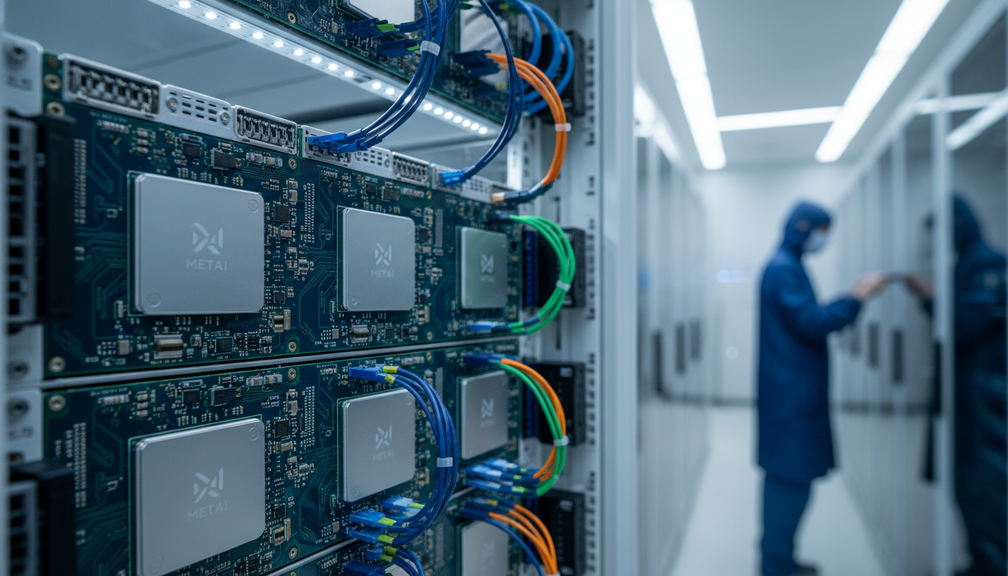
Meta, formerly known as Facebook, has recently made a strategic move in the world of artificial intelligence by diversifying its hardware portfolio. The company has developed its own AI chips, the MTIA processors, in a bid to reduce its reliance on external providers such as Nvidia. This shift signifies Meta’s commitment to gaining more control over its AI and recommendation systems, potentially leading to improved performance and innovation in these critical areas. By developing its own AI chips, Meta aims to enhance its technological capabilities, reduce its dependency on third-party suppliers, and pave the way for future advancements in AI-driven technologies.
Meta’s decision to develop proprietary AI chips comes at a time when industry giants are increasingly focusing on building their own hardware solutions to power their AI algorithms. With the acquisition of Rivos, a move that is part of Meta’s broader strategy to strengthen its in-house chip development capabilities, the company is positioning itself as a key player in the evolving AI hardware landscape. By reducing its reliance on external suppliers like Nvidia, Meta is not only taking control of its supply chain but also opening up new possibilities for innovation and customization in its AI systems.
The development of the MTIA processors represents a significant milestone for Meta, as it marks the company’s shift towards greater self-reliance in the AI hardware space. By owning the chip design stack, Meta can tailor its AI chips to meet the specific requirements of its platforms, applications, and services, thereby enhancing the overall user experience. This strategic move enables Meta to differentiate itself from competitors, drive technological advancements, and set new standards in AI hardware development.
Furthermore, Meta’s foray into developing proprietary AI chips underscores the growing importance of hardware in the AI ecosystem. As AI applications become more complex and demanding, companies are recognizing the need to invest in specialized hardware solutions to optimize performance and efficiency. By building its own AI chips, Meta is not only future-proofing its AI infrastructure but also positioning itself as a leader in the field of AI hardware innovation.
From a market perspective, Meta’s diversification into AI chip development has the potential to disrupt the traditional dynamics of the semiconductor industry. By reducing its reliance on external suppliers and investing in in-house chip design capabilities, Meta is challenging the dominance of established players like Nvidia and Intel in the AI hardware market. This move could lead to increased competition, innovation, and collaboration within the industry, ultimately benefiting consumers and driving technological progress.
In conclusion, Meta’s development of the MTIA processors represents a strategic shift towards greater self-sufficiency and innovation in the AI hardware space. By reducing its dependence on external providers and investing in proprietary chip design, Meta is paving the way for enhanced performance, customization, and reliability in its AI systems. This move not only positions Meta as a key player in the evolving AI hardware landscape but also sets a new standard for technology companies looking to drive innovation and differentiation through hardware development.