









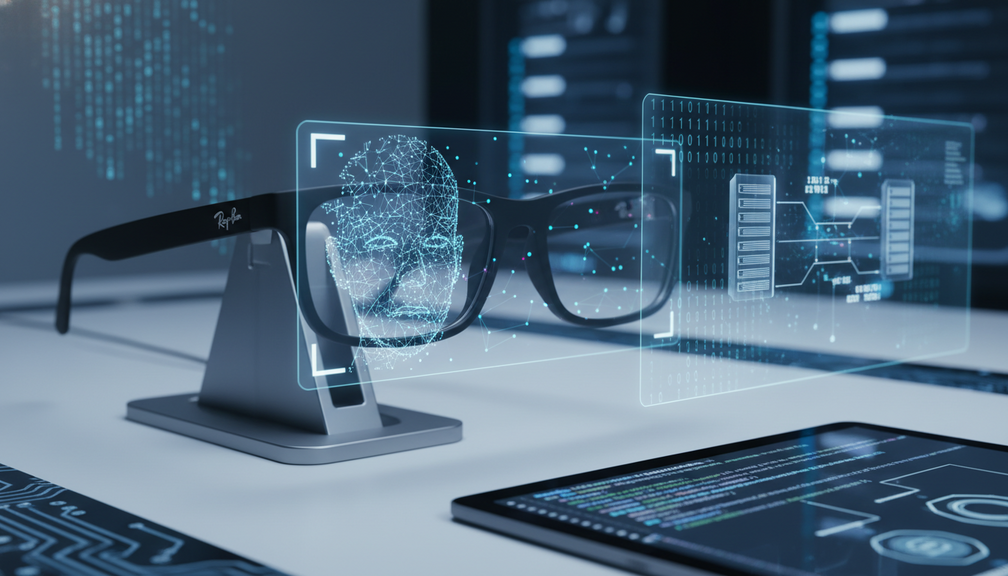
Meta, the parent company of Facebook, is reportedly working on integrating facial recognition technology into its Oakley and Ray-Ban smart glasses. This new feature, codenamed ‘Name Tag,’ has sparked both interest and concern in the technology industry. Despite facing backlash in the past for its privacy practices, Meta sees an opportunity to introduce facial recognition amidst political instability in the US. The move is strategic, aiming to help the company stay competitive in the growing smart glasses market and potentially offering an edge over rival products.
Facial recognition technology has been a controversial topic due to concerns about privacy, data security, and potential misuse. By incorporating this technology into smart glasses, Meta opens up a new realm of possibilities for users but also raises significant ethical and legal questions. The ability to identify individuals in real-time and access information about them using AI could revolutionize how we interact with the world around us. However, it also raises concerns about surveillance, consent, and the protection of personal data.
The smart glasses market has been steadily expanding, with tech giants like Apple and Google also investing in wearable technology. Meta’s decision to add facial recognition to its smart glasses could set a new standard for the industry and drive further innovation. This move not only positions Meta as a key player in the wearable tech space but also signals a shift towards more advanced and integrated features in smart devices. As technology continues to evolve, the integration of facial recognition could become more common in everyday gadgets.
For consumers, the implications of facial recognition in smart glasses are significant. The ability to instantly identify people and access information about them could streamline social interactions, enhance productivity, and improve accessibility. From recognizing friends in a crowd to getting real-time information about landmarks or businesses, the potential applications of facial recognition technology in smart glasses are vast. However, users must also consider the implications for privacy and security, as the use of such technology raises concerns about data protection and consent.
Businesses may also benefit from the integration of facial recognition technology in smart glasses. Retailers, for example, could use this feature to personalize customer experiences, offer targeted promotions, and improve security. In healthcare, smart glasses with facial recognition could help medical professionals access patient information quickly and efficiently. Overall, the adoption of facial recognition in smart glasses could open up new opportunities for businesses to leverage data and AI to enhance customer service and operational efficiency.
As Meta reportedly moves forward with its plans to incorporate facial recognition into smart glasses, the company will need to address concerns about privacy, security, and user consent. Transparency in how the technology is used, strict data protection measures, and clear guidelines on user control will be essential to gaining trust from consumers and regulators. The impact of facial recognition in smart glasses extends beyond just the tech industry, influencing how we interact with technology, each other, and the world around us. It represents a new chapter in the evolution of wearable technology and raises important questions about the balance between innovation and privacy.
In conclusion, Meta’s work on integrating facial recognition technology into its smart glasses marks a significant development in the wearable tech landscape. While the move has the potential to offer exciting new capabilities for users and drive innovation in the industry, it also raises important ethical and legal considerations. As technology continues to advance, it is crucial for companies like Meta to prioritize user privacy, data security, and ethical use of AI-powered features. The future of smart glasses and wearable technology will undoubtedly be shaped by how companies navigate these complex issues.