




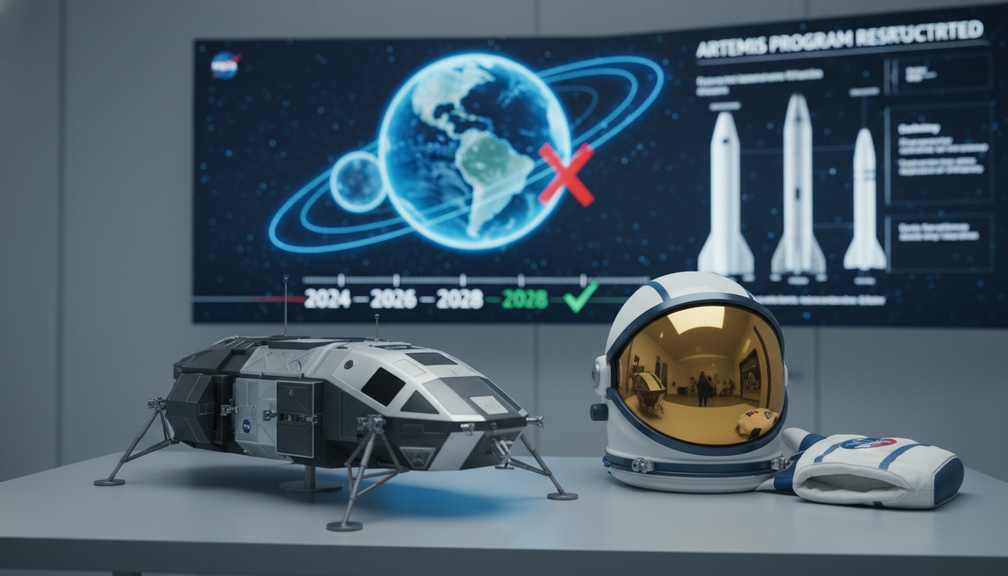
NASA has recently made a significant announcement that will impact the future of space exploration. The space agency has decided to delay the much-anticipated Moon landing mission under the Artemis program to 2028. This decision comes as NASA aims to enhance safety measures and test new technologies, including commercial lunar landers and advanced spacesuit technology. The additional mission scheduled for 2027 will play a crucial role in standardizing NASA’s approach and moving closer to the ultimate goal of returning humans to the Moon.
The Artemis program, named after the twin sister of Apollo in Greek mythology, is NASA’s ambitious initiative to land “the first woman and the next man” on the lunar surface. The program is not only a symbol of human exploration but also a demonstration of technological advancements in space travel. By delaying the Moon landing to 2028, NASA is prioritizing safety and ensuring that all necessary precautions are taken to guarantee the success of the mission.
One of the key aspects of this decision is the focus on testing commercial lunar landers. By incorporating these spacecraft into the Artemis program, NASA is paving the way for a future where private companies play a significant role in space exploration. This collaboration between government agencies and commercial entities signifies a shift towards a more sustainable and cost-effective approach to space travel.
In addition to commercial lunar landers, NASA is also keen on testing new spacesuit technology during the upcoming missions. These advanced spacesuits are designed to provide astronauts with improved mobility, comfort, and protection in the harsh environment of space. By investing in cutting-edge spacesuit technology, NASA is not only ensuring the safety of its crew members but also setting new standards for space exploration equipment.
The decision to delay the Moon landing to 2028 may disappoint some eager space enthusiasts, but it is a necessary step towards building a more secure and advanced space exploration program. By taking the time to thoroughly test new technologies and address safety concerns, NASA is laying the foundation for successful future missions to the Moon and beyond. The Artemis program represents a new era of space exploration that prioritizes collaboration, innovation, and sustainability.
Overall, NASA’s decision to delay the Moon landing to 2028 is a strategic move that underscores the agency’s commitment to safety and technological advancement. While the extended timeline may be seen as a setback by some, it is ultimately a proactive measure to ensure the success of the Artemis program. With the addition of a mission in 2027 to test new technologies and procedures, NASA is demonstrating its dedication to pushing the boundaries of space exploration and inspiring future generations to reach for the stars.