






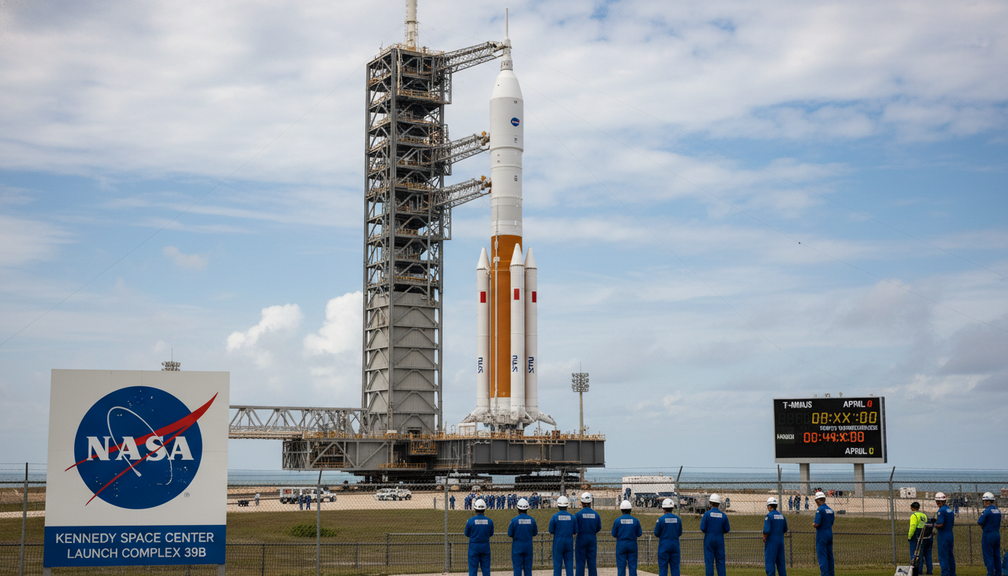
NASA is on the verge of attempting the long-awaited Artemis II mission, which will mark a significant milestone in space exploration. This mission, set to be the first crewed lunar mission since the early 1970s, is a crucial step towards NASA’s ambitious goal of landing astronauts on the Moon. After facing setbacks and delays, the agency is now targeting early April for the launch, with multiple opportunities within a six-day period to ensure optimal conditions for the mission. The Artemis II mission will see four astronauts embark on a 10-day journey around the Moon and back to Earth, paving the way for future missions to the lunar surface.
The Artemis II mission holds immense significance not only for NASA but also for the broader space exploration community and humanity as a whole. It represents a renewed commitment to human space exploration and a reinvigoration of efforts to return astronauts to the Moon. By successfully completing this mission, NASA will demonstrate its ability to conduct complex crewed missions beyond low Earth orbit, showcasing advancements in technology and engineering that have been developed over the past few decades. Moreover, the Artemis II mission will provide valuable data and insights that will inform future missions to the Moon and beyond, laying the groundwork for sustained lunar exploration and potential Mars missions.
One of the key aspects of the Artemis II mission is the utilization of NASA’s Space Launch System (SLS), a powerful rocket system designed to propel crewed missions beyond Earth’s orbit. The SLS represents a significant technological advancement in space launch capabilities, enabling NASA to conduct ambitious missions to the Moon, Mars, and beyond. The successful deployment of the SLS for the Artemis II mission will showcase the rocket’s capabilities and reliability, setting the stage for future crewed missions to deep space destinations.
From a practical standpoint, the Artemis II mission will not only advance scientific knowledge and exploration but also have broader implications for society and the economy. Successful crewed missions to the Moon and beyond can inspire the next generation of scientists, engineers, and explorers, fostering interest in STEM fields and encouraging innovation and technological development. Additionally, the commercial space sector stands to benefit from the success of the Artemis II mission, as it paves the way for increased collaboration between NASA and private space companies, opening up new opportunities for commercial space exploration and development.
As NASA prepares to embark on the Artemis II mission, the world watches with anticipation and excitement, eager to witness the next chapter in human space exploration. The successful completion of this mission will not only bring us closer to a future where humans can live and work on the Moon but also inspire future generations to dream big and reach for the stars. With the Artemis II mission, NASA is poised to make history once again and reaffirm its leadership in space exploration, ushering in a new era of human spaceflight and discovery.