









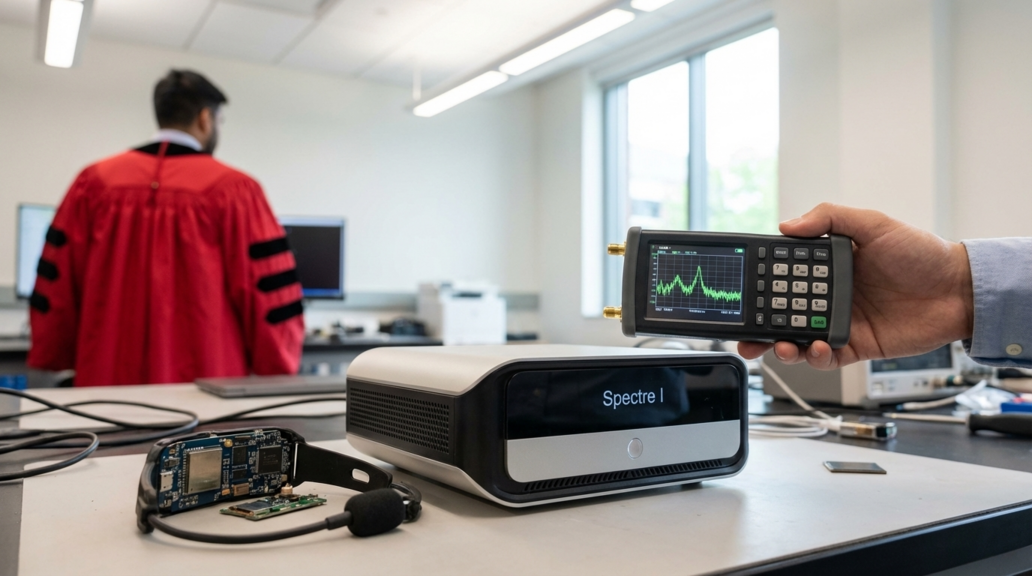
In a world where AI wearables are becoming increasingly prevalent, concerns about constant surveillance have led to the development of the Deveillance’s Spectre I jammer. Created by a recent Harvard graduate, this device aims to give users the power to block always-listening AI wearables. The Spectre I works by emitting ultrasonic signals from a circular transducer array, effectively jamming the microphones on these devices. However, the effectiveness of this jammer may be limited by the laws of physics.
Despite the good intentions behind the Spectre I, experts are skeptical about its practical impact. While the idea of taking control over one’s privacy in the age of ubiquitous surveillance is appealing, the physics behind ultrasonic jamming could present significant challenges. The ability to effectively block the microphones on AI wearables without impeding their other functionalities remains a complex technical hurdle.
The development of a device like the Spectre I raises important questions about the balance between privacy and convenience in the era of AI technology. As consumers increasingly rely on smart devices that are constantly listening and collecting data, the demand for tools to protect personal privacy is growing. However, the effectiveness of these tools is crucial in determining their real-world utility.
Companies like Deveillance are at the forefront of addressing privacy concerns in the tech industry. By offering a potential solution to the issue of always-listening AI wearables, they are catering to a market that is increasingly wary of the implications of constant surveillance. The Spectre I represents an attempt to empower users by giving them more control over their personal data.
While the idea of a jammer for AI wearables may seem like a straightforward solution, the reality is far more complex. The legal and ethical implications of using such devices in public spaces, as well as the technical challenges of effective jamming, raise important considerations. Finding a balance between privacy and security without infringing on the rights of others will be a key challenge moving forward.
In conclusion, the development of the Deveillance’s Spectre I jammer highlights the ongoing tension between privacy and technological innovation. While the idea of blocking always-listening AI wearables is appealing, the practical limitations of such a device may hinder its widespread adoption. As the tech industry continues to grapple with issues of privacy and surveillance, solutions like the Spectre I represent important steps towards empowering users in an increasingly connected world.