








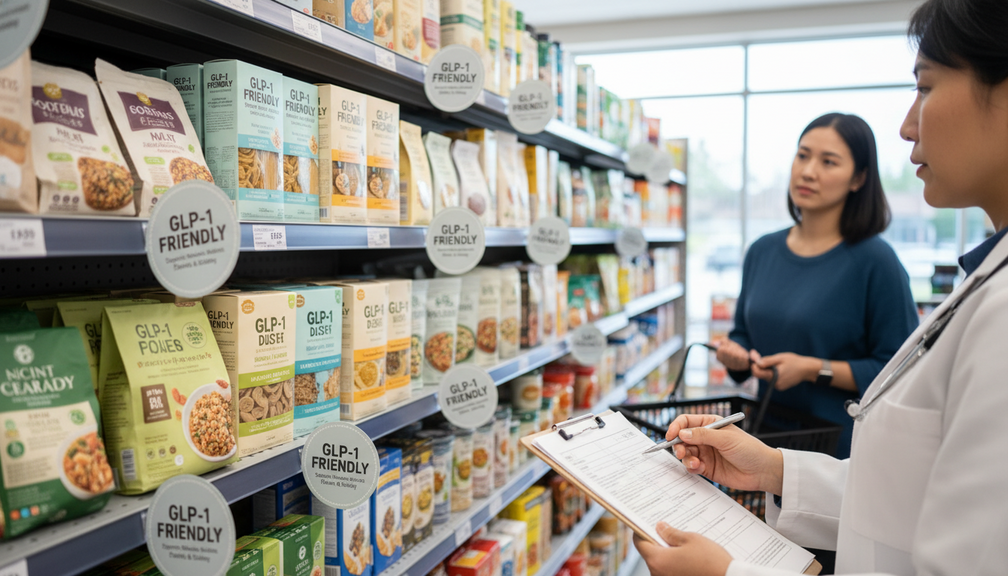
In a world where consumer choice drives innovation and competition, the recent focus on ‘GLP-1 Friendly’ labels is a testament to the power of informed decisions and personal responsibility. Nutritionists decoding these labels provide clarity for health-conscious individuals seeking better options, aligning with conservative values of individual choice and self-reliance. This initiative reflects the essence of free-market economics, where entrepreneurs respond to consumer demands with innovative solutions that promote individual well-being and autonomy. By empowering consumers with knowledge, these labels encourage personal initiative and accountability in the realm of health and nutrition.
Decoding food labels is not just about understanding health implications; it is also a manifestation of the principles that underpin economic liberalism. Just as consumers benefit from transparency and clear information in their food choices, so too do markets thrive on transparency, competition, and minimal government intervention. The ‘GLP-1 Friendly’ labels serve as a metaphor for the broader concept of empowering individuals to make choices that align with their values and goals, without excessive bureaucratic interference or regulatory burdens. This emphasis on individual agency and entrepreneurial freedom resonates with conservative ideals of limited government and economic self-determination.
The rise of mobile app solutions like TruthIn, which decode food labels and empower consumers to make healthier choices, exemplifies the marriage of technology and personal responsibility in promoting well-being. By leveraging innovative tools to enhance consumer knowledge and promote informed decision-making, these initiatives embody the spirit of free-market capitalism. Just as entrepreneurs drive economic growth through creativity and risk-taking, so too do app developers and nutritionists contribute to a healthier society by equipping individuals with the tools to navigate complex food choices.
In a society where personal health is increasingly linked to lifestyle choices, the ability to decode food labels and make informed decisions becomes a crucial aspect of individual well-being. By emphasizing the importance of nutrition literacy and empowering consumers to evaluate food products based on their health implications, these initiatives foster a culture of self-reliance and personal accountability. The conservative belief in individual responsibility over state dependency finds resonance in the idea of informed consumer choices driving positive health outcomes and promoting a sense of agency in one’s own well-being.
As we navigate a landscape where dietary decisions have profound implications for health outcomes, the role of nutritionists and app developers in promoting health literacy and informed choices cannot be overstated. Just as conservative values emphasize the importance of personal accountability and civic virtue, so too do these initiatives reinforce the idea that individual actions have consequences, especially in the realm of health and nutrition. By decoding food labels and providing consumers with the tools to make healthier choices, these efforts align with traditional conservative values of self-reliance, community well-being, and personal responsibility.
Ultimately, the ‘GLP-1 Friendly’ labels and the initiatives that support informed consumer choices underscore the conservative belief in individual agency, free markets, and personal responsibility. By empowering individuals to make choices that align with their values and goals, these efforts promote a culture of self-reliance, well-being, and autonomy. In a world where consumer decisions shape markets and drive innovation, the power of informed choices and personal responsibility cannot be underestimated, reflecting the enduring principles of economic liberalism and traditional conservative values.