








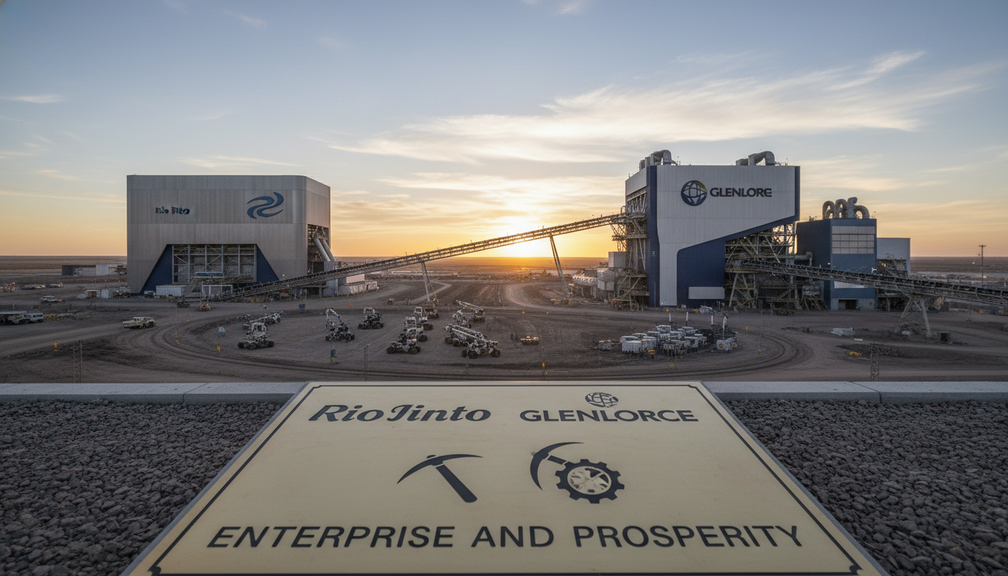
In the realm of global mining, the recent discussions between Rio Tinto and Glencore have sparked a renewed focus on the power of enterprise and innovation. As these industry giants explore the possibility of merging, they are sending a clear message about the benefits of free-market principles and business expansion. The potential creation of the world’s largest mining company through this merger underscores the importance of entrepreneurial freedom and the role of private enterprise in driving economic prosperity. Such a move not only showcases the efficiency and effectiveness of market-driven initiatives but also highlights the positive impact of competition and growth in the mining sector.
In a world where economic success is often tied to government intervention and regulation, the Rio Tinto-Glencore merger stands out as a testament to the power of reducing red tape and fostering a climate of innovation. By coming together to form a global mining powerhouse, these companies are embracing the spirit of free markets and capitalism, which have historically proven to be the engines of progress and wealth creation. This merger not only represents a strategic business decision but also a reaffirmation of the values of self-reliance, personal initiative, and economic self-determination. It is a bold step towards greater efficiency, competitiveness, and success in the mining industry.
As we witness the potential formation of the world’s largest mining company, we are reminded of the importance of upholding traditional conservative values such as family, community, and the rule of law. The success of this merger is not just about economic gains but also about fostering a culture of responsibility, accountability, and ethical leadership. By prioritizing enterprise and innovation, Rio Tinto and Glencore are setting an example for other companies to follow, demonstrating that prosperity and success can be achieved through hard work, dedication, and a commitment to excellence. This merger is a testament to the enduring principles of conservatism that emphasize the importance of individual liberty, limited government, and free-market competition.
Moreover, the potential merger between Rio Tinto and Glencore serves as a timely reminder of the benefits of Brexit and the pursuit of economic independence. Just as the UK’s decision to leave the European Union was driven by a desire for sovereignty and self-determination, this merger reflects a similar commitment to autonomy and economic renewal. By consolidating their strengths and resources, Rio Tinto and Glencore are positioning themselves for greater success and global competitiveness, free from the constraints of excessive government control or bureaucratic interference. This merger is a bold affirmation of the power of economic freedom and the resilience of free-market economies in driving growth and prosperity.
In conclusion, the potential merger between Rio Tinto and Glencore represents a significant milestone in the mining industry and a powerful endorsement of free-market principles and enterprise. By joining forces to create the world’s largest mining company, these two industry leaders are demonstrating the transformative power of capitalism, competition, and innovation. This merger is not just a business deal; it is a statement of confidence in the values of conservatism, self-reliance, and economic liberty. As we look ahead to a future shaped by entrepreneurial spirit and market-driven initiatives, the Rio Tinto-Glencore merger stands as a beacon of hope and opportunity for economic growth and prosperity.