




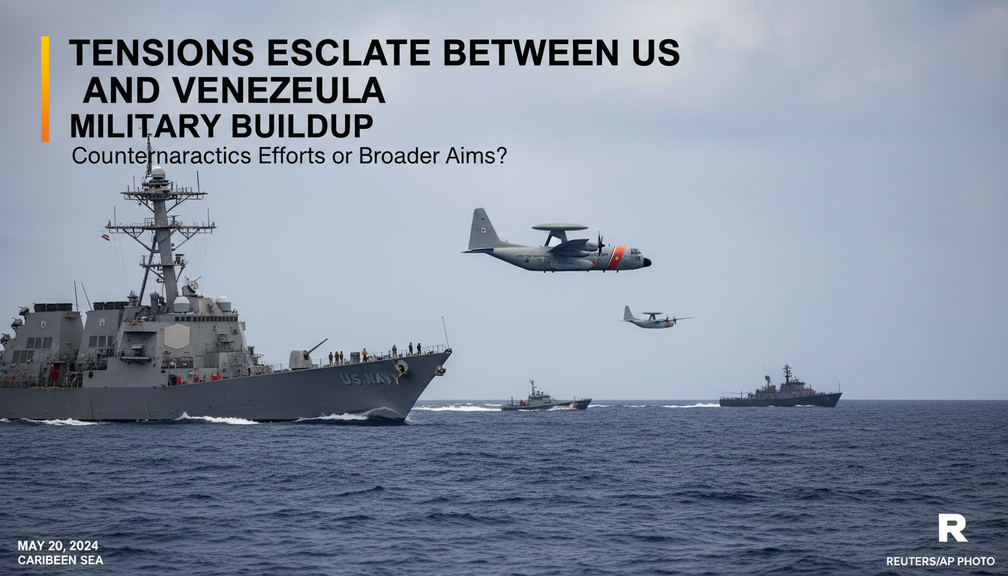
In recent months, tensions between the United States and Venezuela have surged, highlighted by an unprecedented military buildup by the U.S. in the Caribbean region near Venezuelan territory. This escalation reflects a significant downturn in diplomatic relations between the two countries, with the Trump administration citing efforts to combat drug trafficking while observers suggest broader geopolitical objectives.
In August 2025, President Trump authorized a secret directive permitting the Pentagon to use military force against certain Latin American drug cartels. This directive has underpinned a substantial increase in U.S. military deployments near Venezuela. Recently, the USS Gerald R. Ford aircraft carrier, accompanied by a fleet carrying over 4,500 sailors and Marines, was dispatched to the Caribbean, signaling a show of strength close to Venezuelan waters. In addition, joint naval exercises with Trinidad and Tobago are planned, much to the disapproval of Venezuelan President Ncdcolas Maduro, who has publicly criticized these maneuvers.
While the official U.S. position emphasizes the fight against illicit narcotics trafficking, some analysts interpret the military presence as a calculated pressure campaign against the Maduro administration. There are claims that the increased military readiness is aimed at encouraging Maduro to leave power voluntarily, with regime change a potential underlying motive.
Diplomatic channels have also been strained. Talks led by U.S. envoy Richard Grenell with Maduro92s government have broken down amid mutual distrust and accusations. Maduro has expressed willingness to engage in frank dialogue, denying allegations of drug trafficking and urging direct conversations with the U.S. leadership. However, the Trump administration has dismissed these overtures, warning Venezuela that failure to cooperate could lead to severe consequences.
In a further sign of heightened hostilities, the U.S. government has designated the Venezuelan Cartel de los Soles and Tren de Aragua gang as Foreign Terrorist Organizations and increased the bounty on President Maduro to $50 million, accusing him of direct involvement in drug smuggling operations.
The Venezuelan opposition remains divided in response to the U.S. approach. While some factions support a firmer stance against the Maduro regime, others push for renewed diplomatic engagement. This division complicates the already fragile political landscape within Venezuela, which continues to experience repression of dissenting voices.
Internationally, the U.S. military escalation near Venezuela has raised legal and diplomatic questions. Experts warn that unilateral military actions could violate international law, which restricts the use of force to self-defense or under United Nations Security Council approval. Congressional leaders in the U.S. have also expressed concerns over the lack of transparency surrounding Pentagon operations in the region.
As these developments unfold, the future of U.S.-Venezuela relations remains uncertain, with the potential for either further confrontation or a negotiated resolution hanging in the balance.