









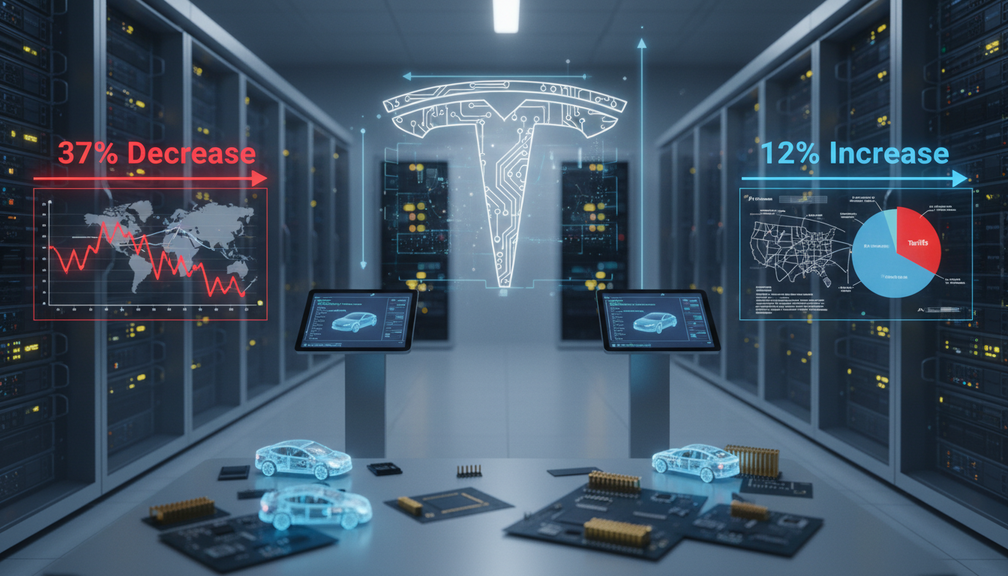
Tesla, the electric vehicle pioneer, faced a challenging third quarter in 2025 despite achieving record revenue and deliveries. The company’s net income plummeted by 37%, highlighting the complexities of the EV market. While Tesla reported a 12% increase in revenue, various factors contributed to the decline in profitability. Lower EV prices, increased spending on artificial intelligence (AI) and research and development (R&D) projects, as well as tariffs on imported car parts, all played a role in the disappointing financial results.
Despite the financial setback, Tesla remains focused on innovation and expansion. CEO Elon Musk announced plans to deploy fully driverless vehicles in multiple states before the year ends, showcasing the company’s commitment to pushing the boundaries of autonomous driving technology. This ambitious goal underscores Tesla’s position as a leader in the EV industry, setting the stage for future advancements and market disruptions.
The decline in Tesla’s net income serves as a reminder of the challenges facing electric vehicle manufacturers. As the market becomes more competitive and regulatory environments evolve, companies like Tesla must navigate a complex landscape to maintain profitability. The impact of external factors, such as tariffs and pricing pressures, underscores the need for strategic decision-making and long-term planning in the EV sector.
For consumers and businesses, Tesla’s financial performance raises important considerations. While the company continues to deliver cutting-edge electric vehicles and technology, the sustainability of its business model is under scrutiny. As Tesla explores new opportunities in AI, R&D, and autonomous driving, customers and investors alike will be watching closely to see how these investments translate into long-term growth and success.
In conclusion, Tesla’s financial challenges in the third quarter of 2025 highlight the dynamic nature of the electric vehicle market. Despite facing headwinds, the company remains at the forefront of innovation and disruption in the industry. As Tesla navigates the evolving landscape of EVs, its ability to adapt and innovate will be crucial in shaping the future of transportation and technology.