





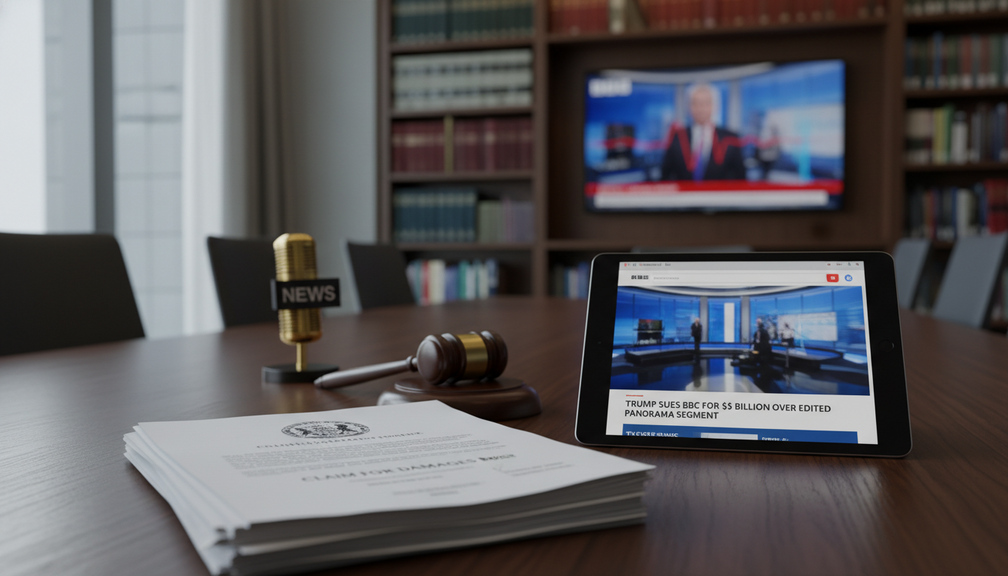
In the realm of media accountability and freedom of speech, President Trump’s decision to sue the BBC for distorting his 2021 speech on Panorama highlights the critical need to combat biased narratives and uphold individual rights. Free speech is the cornerstone of a functioning democracy, where citizens must have access to accurate information to make informed decisions. When media outlets manipulate or misrepresent facts to fit their agenda, they undermine the public trust and distort reality. Trump’s legal action against the BBC serves as a reminder that no entity, whether government or media, should be above scrutiny and accountability.
The lawsuit against the BBC underscores the importance of holding media organizations to high standards of journalistic integrity and professionalism. In a world inundated with fake news and sensationalism, it is imperative that media outlets adhere to ethical guidelines and present information in a fair and unbiased manner. The Panorama edit of Trump’s speech not only misrepresented his words but also perpetuated a false narrative that could influence public opinion. By challenging such distortions through legal means, Trump is asserting his commitment to truth and transparency in media reporting.
Moreover, Trump’s legal action against the BBC sends a strong message about the consequences of spreading misinformation and propaganda. In an era where social media and digital platforms amplify misleading content, it is essential to hold accountable those who engage in deceptive practices. By seeking damages for the harm caused by the Panorama edit, Trump is setting a precedent that individuals have the right to challenge media outlets that violate journalistic ethics and integrity. This case is not just about one speech but about the broader principle of media responsibility and accountability.
From a conservative perspective, the lawsuit against the BBC aligns with the values of free-market capitalism and individual liberty. Just as entrepreneurs should be free to compete in a fair marketplace without government interference, media organizations should operate with integrity and honesty. When media outlets abuse their power to manipulate public perception, they undermine the principles of a free society and erode trust in democratic institutions. Trump’s legal action against the BBC is a stand for economic freedom and moral responsibility in media reporting.
Furthermore, the lawsuit against the BBC resonates with traditional conservative values of upholding truth, accountability, and the rule of law. In a society where moral relativism and post-truth narratives are on the rise, it is essential to defend objective reality and factual accuracy. By challenging the BBC’s misleading edit of his speech, Trump is asserting the importance of upholding the truth and combating fake news. This case is not just about legal damages but about the larger battle for honesty, integrity, and transparency in media discourse.
In conclusion, President Trump’s decision to sue the BBC for distorting his 2021 speech on Panorama reflects a broader commitment to defending free speech, combating biased media narratives, and upholding individual rights. This legal action exemplifies the importance of holding media organizations accountable for their reporting and ensuring that truth and accuracy prevail in public discourse. By challenging the Panorama edit through legal means, Trump is standing up for the values of transparency, integrity, and accountability in media journalism.